
NASA directs ISS crew to seek shelter on Dragon during Russian leak repair

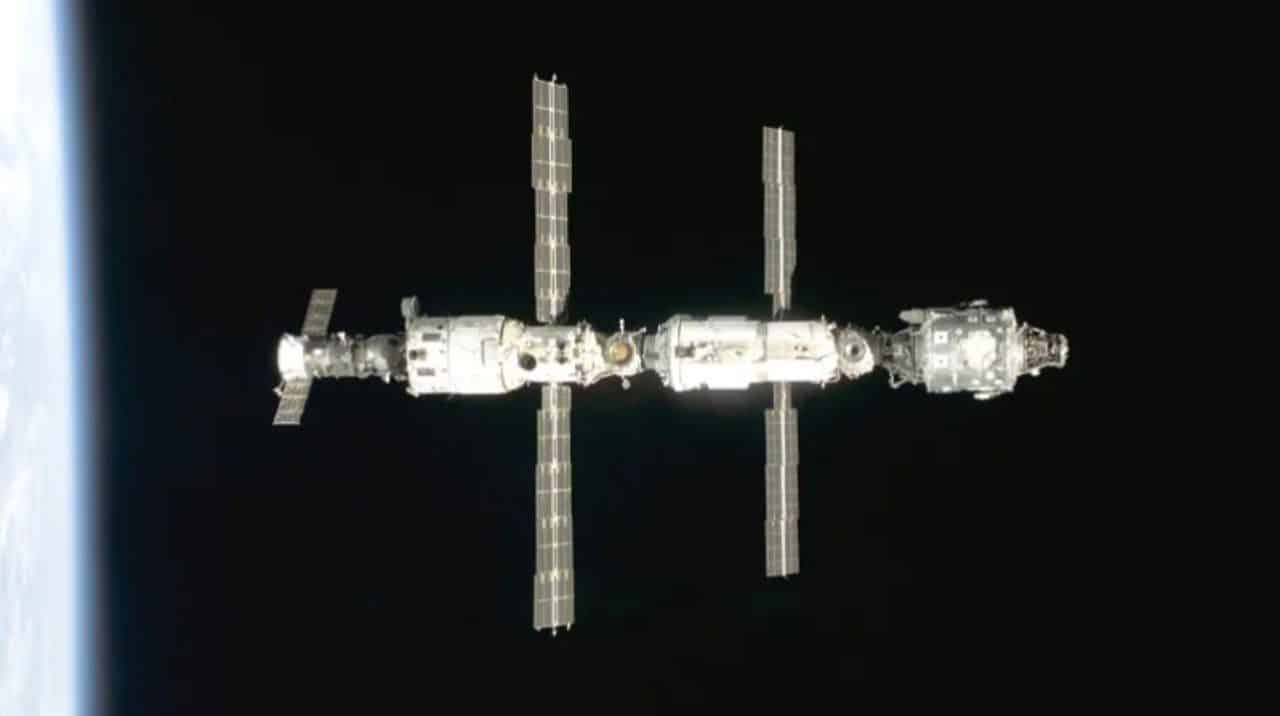
Astronauts aboard the International Space Station (ISS) sought shelter in a docked spacecraft on Friday, June 5. The measure occurred while Russian cosmonauts were carrying out a repair procedure on an air leak in the Russian segment of the station. Five crew members spent about two hours inside SpaceX’s Crew Dragon capsule. NASA reassessed the situation and approved the return to normal station after the pause in Russian work.
The incident involved the Zvezda module. Technicians at the Russian space agency Roscosmos detected an increase in the leak rate in the previous week. They planned to cut a support to better access a suspected area in the PrK transfer tunnel. The operation posed additional structural risk, which led NASA to act cautiously.
NASA activates safety protocol for five astronauts
The American agency instructed the four members of the Crew-12 mission and astronaut Chris Williams to assume a high security posture. Jessica Meir, Jack Hathaway, Sophie Adenot and Andrey Fedyaev, along with Williams, entered the Crew Dragon at around 9:04 am (Brasília time). Two Russian cosmonauts remained on the Russian segment to deal with the problem.
Roscosmos identified two suspected leak points. One of them was quickly sealed. The second required more evaluation. The decision to pause the cut of support came after joint analysis. NASA supported Russia’s change in approach.
- Crew-12 crew: Jessica Meir, Jack Hathaway, Sophie Adenot and Andrey Fedyaev
- Additional astronaut: Chris Williams, who arrived via Soyuz MS-28
- Russian cosmonauts involved: Sergey Kud-Sverchkov and Sergei Mikaev
- Shelter vehicle: Crew Dragon Freedom
Leak persists since 2019 in the Zvezda module
The problem in the PrK tunnel, which connects Zvezda to a docking port, arose years ago. The leak rate varied over time. In April, new measurements during the operation of a Progress cargo ship warned of worsening. Roscosmos recorded an increase to around 900 grams per day at times.
Engineers have applied temporary and permanent sealants in the past. The Zvezda module was partially isolated from other sections to contain air escape. Discussions between NASA and Roscosmos addressed the severity of the case in 2024, when the rate worsened again.
Repair postponed for new measurements and assessments
Roscosmos halted structural repair work on Friday morning. Teams are now taking additional measurements and reviewing data. The focus includes areas already treated with sealant. There is no set deadline for resumption.
NASA highlighted continued collaboration with international partners. The station operates with seven crew members in total. The two Russian cosmonauts did not need to take shelter during the procedure.
History of similar incidents on the ISS
Pressurization problems in the Russian section generated recurring concern. In 2019, the first significant crack was detected. Since then, the leak has fluctuated but never directly threatened the immediate safety of the crew. Mitigation measures allowed for normal operations for the most part.
Experts monitor the long-term impact on the Zvezda module. The ISS remains functional for scientific experiments and orbital maintenance. Interagency partnerships ensure a coordinated response to these technical challenges.
Current situation and next steps
All astronauts returned to routine activities after the alert. There was no immediate risk to life or the integrity of the station. Roscosmos is expected to share updates on the definitive repair plan.
The Crew Dragon remains docked and ready for emergency use, as usual. Scientific operations on the ISS continue as scheduled.





