


German automaker BMW has revealed the technical and visual details of the new 2027 i3. The all-electric sedan represents a milestone in the company’s engineering by introducing the Neue Klasse platform into the traditional Série 3 family. Series production of the vehicle begins in August 2026 at the Munique manufacturing unit. The first deliveries to the global market take place in the last quarter of the same year. The launch consolidates the brand’s electrification strategy in one of the most sought-after segments of the global automotive industry.
The model arrives to redefine energy efficiency and performance standards in the premium category. The manufacturer projects a starting price of between US$50,000 and US$60,000 for the entry-level version on the North American market. The transition to the new architecture allows for significant gains in autonomy, internal space and battery recharge speed. The company maintains its offering of combustion vehicles in the same line. Essa decision serves different consumer profiles during the global technological transition phase.
Unprecedented Arquitetura and sedan performance
The structural basis of the project concentrates profound innovations in battery systems and electronic data processing. The vehicle uses the Heart of Joy processor to coordinate all dynamic and safety functions. Esse component operates with very high response speed. The technology improves the interaction between the driver’s physical controls and automated driving assistants. The battery integrates the chassis in a structural and definitive way. Essa engineering solution increases the torsional rigidity of the body and reduces the total weight of the mechanical assembly.
The initial version i3 50 xDrive uses two high-performance electric motors mounted on the axles. The system generates 463 hp of combined power and a maximum torque of 645 Nm. All-wheel drive distributes power between the wheels intelligently and continuously. The mechanism guarantees superior stability in adverse track conditions and sudden accelerations. The low center of gravity, an inherent characteristic of modern electric vehicles, favors the sporty dynamics that have defined the German automaker’s sedans for decades.
The manufacturer’s internal tests indicate a range of up to 708 km on a cycle equivalent to the EPA’s strict standard. The expressive range results from the application of new battery cells with greater energy density. The 800-volt electrical architecture optimizes overall consumption and drastically reduces stopping times on long journeys. The system supports direct current charging of up to 400 kW. Essa technical capacity adds hundreds of kilometers of autonomy in just a few minutes plugged into the station. The vehicle also offers a bi-directional charging function, operating as a power source for homes or external equipment.
Design exterior and aerodynamic solutions
The body design derives directly from the Vision Neue Klasse concept presented to the public in 2023. The designers adapted the conceptual lines to the rigorous demands of series production and safety regulations. The overall dimensions remain very close to those of the current combustion-powered Série 3. Engineers applied millimeter increments to the length, width and total height of the car. The compact format preserves agility in urban traffic and the model’s classic visual balance.
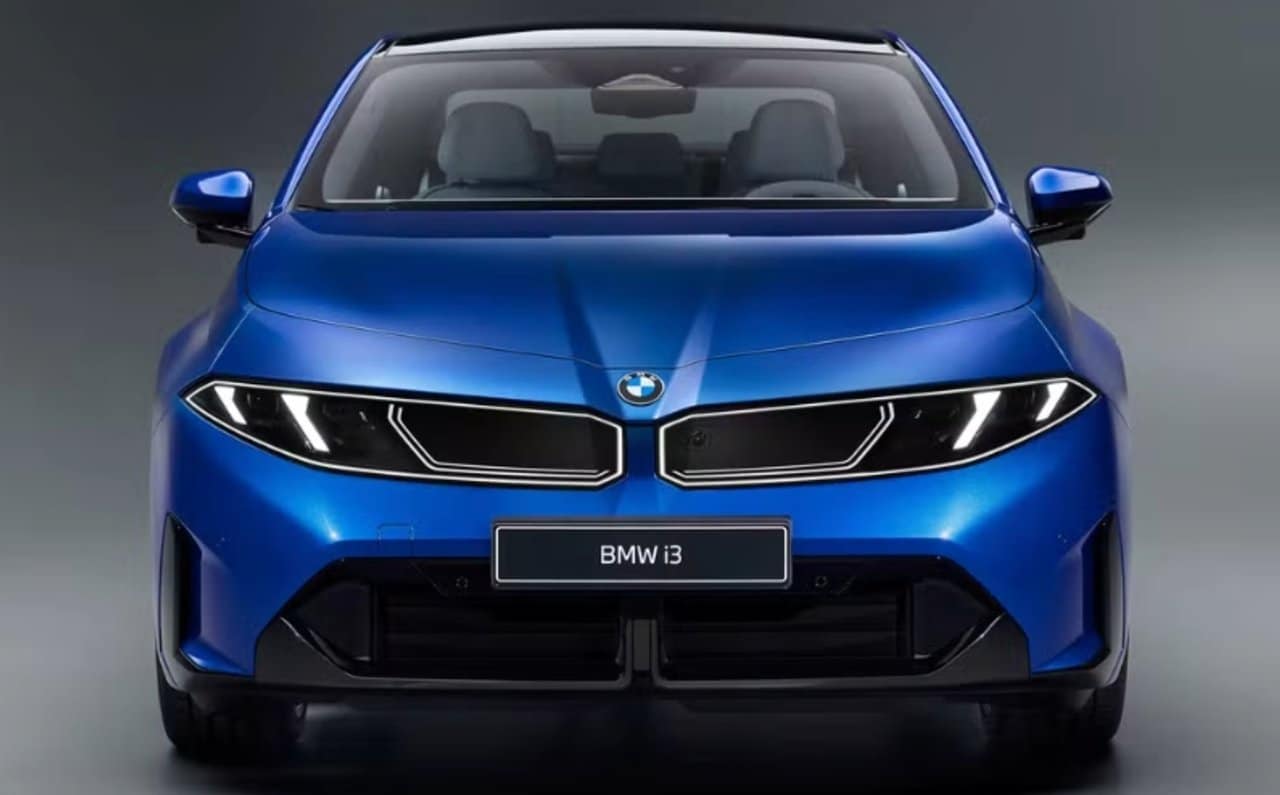
The front features a modern interpretation of the brand’s traditional grille, now sculpted in a horizontal format. The piece features LED technology headlights divided into four distinct light units. Essa configuration creates a unique visual signature for the new electrical line. The recessed door handles and smooth body surfaces substantially reduce the aerodynamic drag coefficient. Rodas with a specific design to optimize air flow completes the external aesthetic package. The design department’s focus is on balanced and functional proportions.
Inovações in the interior and multimedia system
The sedan’s cabin incorporates interface technologies recently developed by the automaker and tested in the iX3 model. The panel adopts the Panoramic Vision system, a direct evolution of the traditional head-up display. The expandable screen projects crucial driving information directly onto the base of the front windshield. The feature allows the driver to view essential navigation and speed data without taking their eyes off the road. The center of the panel houses a 17.9-inch multimedia center equipped with the new Sistema Operacional X.
The cabin prioritizes visual minimalism and functionality in all controls available to occupants. The internal space offers comfort equivalent to that of the previous generation, with specific improvements in the ergonomics of the seats. The more square shape of the rear part of the roof increases the headroom available for rear seat passengers. The automaker restructured the arrangement of the elements to maximize the feeling of spaciousness.
- Artificial intelligence-based voice Assistente for controlling climate and media functions.
- Bancos with lining options in sustainable synthetic leather or high-quality natural material.
- Configurações with standard seats or with sport flaps for greater lateral support when cornering.
- Intuitive user Interface designed for quick driver adaptation after the first few uses.
Deep integration of artificial intelligence transforms the daily in-vehicle experience. The virtual assistant responds to complex voice commands and manages everything from cabin temperature to satellite navigation system routing. The absence of traditional physical buttons transfers most operations to the high-resolution central screen or voice commands. Essa shift cleans the center console and creates new storage spaces for small objects.
Testes dynamics and portfolio expansion
The project validation phase included rigorous assessments in extreme weather environments. The prototypes were run extensively on ice-covered tracks in the Suécia to calibrate the traction and stability control systems. Engineers confirmed the vehicle’s precise control on very low-grip surfaces during evasive maneuvers. The suspension received fine tuning to balance ride comfort on uneven asphalt with the precision required in tight curves. Dynamic behavior meets the demands of the brand’s traditional customers.
The company’s strategic planning foresees the rapid expansion of the vehicle family based on the Neue Klasse platform. The automaker is developing additional i3 variants, including more affordable configurations equipped with just one electric motor on the rear axle. The official schedule also includes the future launch of versions signed by the M division. Esses models will focus on extremely high track performance and exclusive aerodynamic specifications.
The new architecture will serve as the technological basis for several other launches by the manufacturer over the next decade. The electric sedan positions the brand competitively against direct rivals in the premium zero-emission segment. The strategy of maintaining combustion and electric options in the same portfolio guarantees commercial flexibility in markets with different rates of technological adoption. The assembly line at Munique sets the quality and automation standard for future factories that will produce new generation models around the world.




