

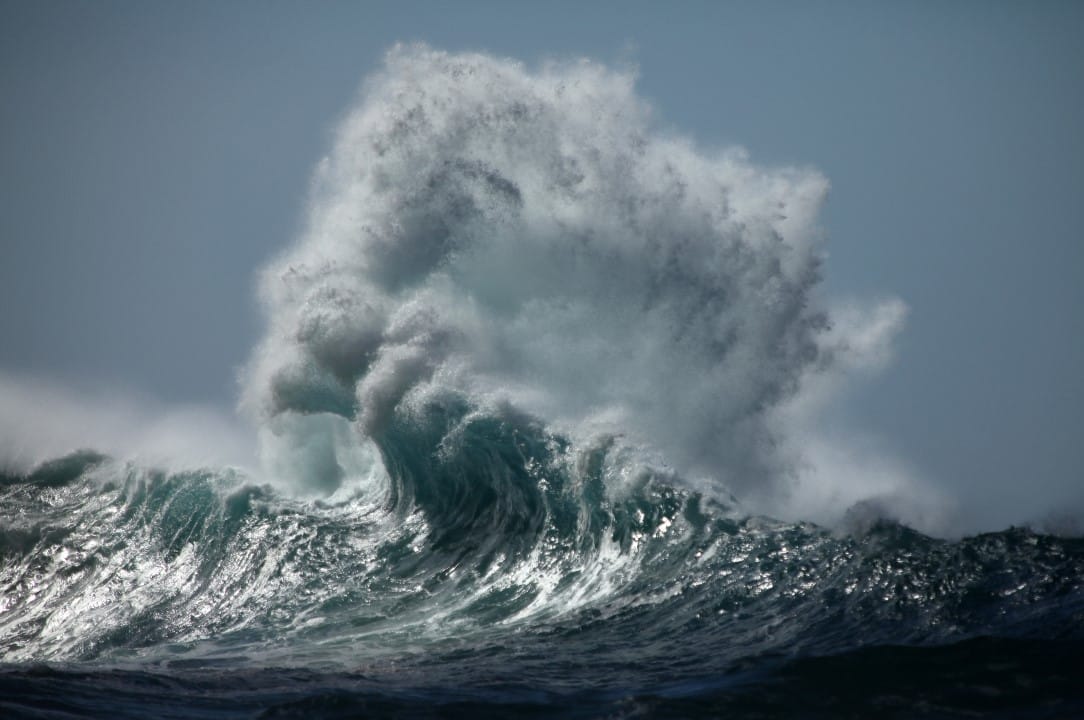
Waves of up to 11 meters hit the south coast of Wellington on Tuesday. Authorities ordered the evacuation of hundreds of residents of beachfront properties. Mayor Andrew Little declared a state of emergency last night for the southern and eastern neighborhoods of the New Zealand capital. Strong winds worsened the situation, with gusts reaching 128 km/h at the local airport.
The Wellington region’s emergency management office issued a mandatory evacuation order for homes in Ōwhiro Bay, Island Bay, Houghton Bay and Breaker Bay. The deadline to leave was 9am. Anyone who remained in the area after hours assumed the risk, as emergency teams would not enter the affected areas.
Waves surpass previous records in the region
Waves measured in Wellington Harbor reached 11 meters, according to MetService. The event surpassed that of 2021, when swells of about 6.5 meters caused damage in Breaker Bay. A distant low pressure system generated the swells combined with strong winds from the southwest. The peaks occurred with periods of 13 to 15 seconds between waves, which increased energy and allowed greater advance over the coastline.
Residents reported urgent preparations the night before. Some filled sandbags to protect garages, while others gathered documents and medicines. Wellington’s Southern Baptist Church served as a reception point for those who had nowhere to go.
- Properties in Ōwhiro Bay, Island Bay, Houghton Bay and Breaker Bay ordered to evacuate
- South Coast highways were closed for most of the day
- Interislander and Bluebridge ferries have canceled Cook Strait crossings
- A small plane overturned at Wellington airport because of the wind
Airport and transport suffer disruptions
Gusts approaching 100 km/h affected operations at Wellington airport. Some flights were canceled and a small Golden Bay Air plane turned onto its side while parked. Firefighters secured the aircraft to the ground. The Te Ara Tupua footpath and cycle path along the harbor has also been closed for safety.
Police officers set up cordons on access roads to the coast. Teams guided pedestrians to leave the area and gave rides to some who were walking along the waterfront. The municipal council reinforced the warning for the population to avoid proximity to the sea.
Preventive measures and comparison with past events
The state of emergency allowed for rapid coordination between local agencies. Authorities highlighted that the risk came from the combination of rough seas and intense winds. In 2021, smaller waves had already caused flooding and damage to homes. This time, the forecast indicated swells of 8 to 9 meters in the capital and up to 10.5 meters on the Wairarapa coast.
Meteorologists explained that long-term swells carry more energy and can invade normally protected areas. The heavy swell warning was in effect from the early hours of Tuesday and remained in effect until the following morning. The high tide increased the potential for impact on retaining walls and coastal roads.
Gradual return after wave peak
By late afternoon, the biggest waves had passed. The state of emergency was lifted and residents were authorized to return to their homes. Authorities have directed careful inspection of structures before reoccupying. There were no immediate reports of serious injuries, although two women were knocked down by water in the street in Island Bay.
The event exposed the vulnerability of coastal communities to extreme weather phenomena. Wellington, surrounded by sea, faces these episodes frequently, but the scale this time required a large-scale evacuation. Local residents emphasized the need to respect the warnings, even in areas that appear to be protected by islands or landforms.
Impacts on infrastructure and final recommendations
Public transport operated with delays and detours throughout the day. Authorities asked users to have alternative plans. Road gates were progressively removed as conditions improved.
MetService monitored the low pressure system that caused the event. Experts reinforced recommendations to avoid beaches and rocky shores on swell days. The experience served as a reminder of the power of the ocean, especially when winds and seas align in adverse conditions.