

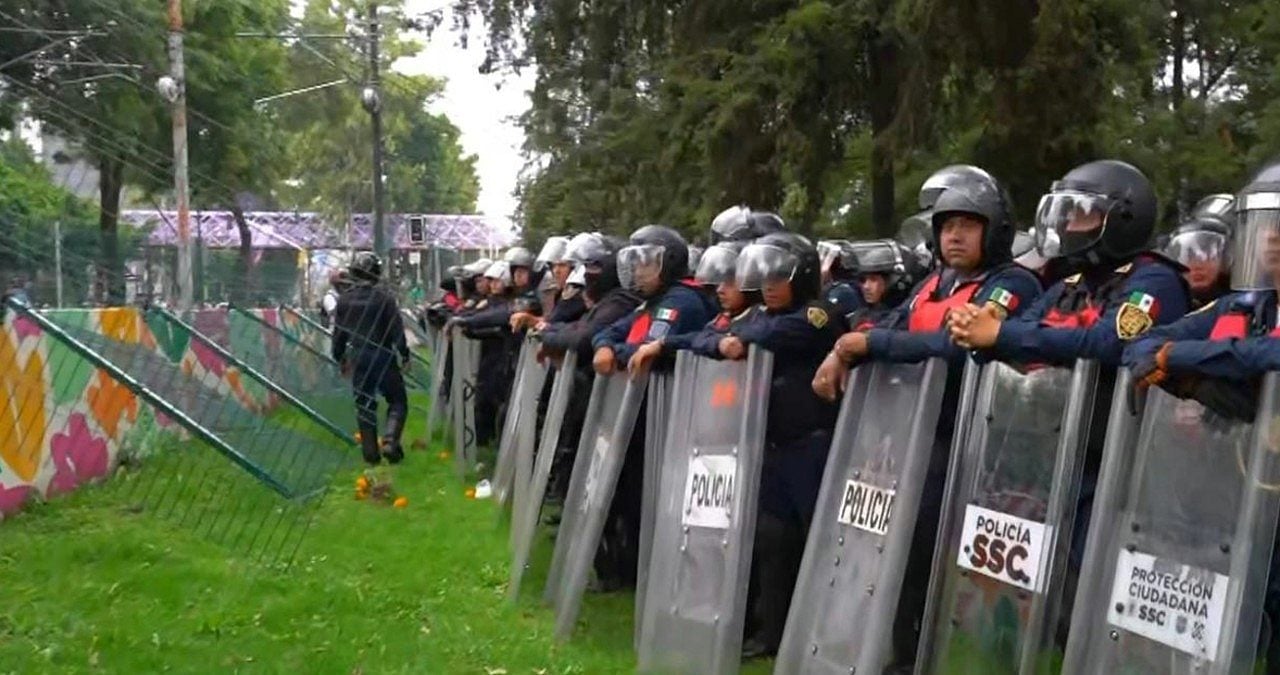
An atmosphere of great tension took place near the legendary Azteca Stadium, in Mexico City, just hours before the opening match of the World Cup between Mexico and South Africa. Protesters clashed with a robust police contingent, using the event’s global visibility to draw attention to the very serious crisis of more than 130,000 missing Mexicans in the country, victims of violence linked to drug trafficking.
Demonstration for Justice and the Police Response
Approximately an hour before kickoff, a group of protesters approached the security barriers at the Azteca Stadium. The objective was clear: to take advantage of the spotlight of the biggest football tournament on the planet to give voice to a national tragedy of alarming proportions. Protesters carried banners and signs that remembered the thousands of citizens who simply disappeared, a painful echo of the endemic violence plaguing Mexico.
The response of the security forces was immediate and energetic. Hundreds of police officers, equipped with transparent shields, formed an insurmountable barrier, preventing the group from advancing towards the stadium. The situation quickly escalated into a confrontation, with protesters throwing stones and other objects at the agents. Images captured at the scene showed a police officer with a bleeding head, highlighting the intensity of the clashes. The tense scene persisted, with protesters and police separated by a rail, but with the atmosphere still charged. The choice of time and place highlighted the urgency of the request for justice and visibility amid the football celebration.
The Start of the World Cup on the Sacred Stage of Mexican Football
As the clash unfolded outside, inside the Azteca Stadium, a colorful and vibrant party set the tone for the opening of the World Cup. Thousands of Mexican fans filled the stands, transforming the legendary stage into a cauldron of expectations and patriotic fervor. For the host team, the objective was to debut on the right foot and assert the strength of playing at home, with the fans acting like a true 12th player.
The first half of the game between Mexico and South Africa was marked by the intensity and initial dominance of the home team. After just eight minutes, the audience exploded in euphoria. A mistake in the ball by South African Sithole was capitalized by Lira, who promptly served striker Quiñones. With a low shot, the number 16 opened the scoring of the World Cup, sending the Azteca Stadium into delirium. This early goal gave even more confidence to the Mexicans, who continued to control possession and dictate the pace of the match. The atmosphere inside the stadium contrasted sharply with the hustle and bustle outside, where the quest for justice and the passion for football collided.
Performance on the Field: Mexico’s Dominance and Missed Opportunities
After Quiñones’ goal, the Mexican team maintained control of the game, although the initial momentum diminished slightly. The cheers of “olé” from the fans accompanied each exchange of passes by the home team, while the boos from the stands marked any attempt to advance by South Africa. The South African team, in turn, showed notable difficulties in creating clear chances of goal, achieving its first shot just in the 37th minute of the first half, a header from Foster that went to the right of the goal.
At the end of the first half, Mexico still created opportunities to extend the advantage. Quiñones, scorer of the first goal, stood out again when he hit goalkeeper Williams’ left post, after a play in which the ball remained alive in the area. Shortly afterwards, Brian Gutiérrez wasted a crucial chance, shooting wide and missing an excellent opportunity to leave Mexico with a more comfortable lead before the break. The Mexican performance highlighted the incessant search for a convincing result in their debut, with the team seeking to impose its pace and exploit the opponent’s defensive weaknesses, but also failing in finishing.
First Half Game Statistics
Analysis of the numbers from the first half reinforces the scenario of Mexican dominance in the confrontation against South Africa. The host team demonstrated superiority both in possession of the ball and in creating offensive plays.
Check out the main data from the first stage:
- Ball possession: Mexico 57% x 43% South Africa
- Total passes: Mexico 284 x 201 South Africa
- % of correct passes: Mexico 89% x 85% South Africa
- Finishings: Mexico 12 x 2 South Africa
* In goal: Mexico 3 x 1 South Africa
* Out: Mexico 2 x 1 South Africa
* On the post: Mexico 1 x 0 South Africa
* Blocked: Mexico 6 x 0 South Africa
- Corners: Mexico 2 x 1 South Africa
- Impediments: Mexico 1 x 1 South Africa
- Goalkeeper saves: Mexico 1 x 4 South Africa
- Disarms: Mexico 7 x 7 South Africa
- Fouls committed: Mexico 4 x 6 South Africa
- Yellow cards: Mexico 1 x 1 South Africa
The data shows Mexico’s offensive intention and the resilience of the South African goalkeeper, who made four important saves to keep the score to a minimum. The superiority in numbers reflects the home team’s tactic of seeking control of the match from the first minutes, exploiting the strength of their attack and precision in passing.
A Day of Contrasts in Mexico City
The opening day of the World Cup in Mexico City unfolded amid profound contrasts. While inside the Azteca Stadium, the fans celebrated Quiñones’ goal and the start of their team’s journey in the tournament, outside its walls, the country’s social reality imposed itself with urgency and pain. The demonstration in memory of the more than 130 thousand disappeared reinforced that, even in moments of great celebration and sporting unity, humanitarian and political issues remain pressing and seek space in the global spotlight.
This scenario of simultaneous tension and celebration underlined the complexity of the host nation, where the passion for football coexists with profound social challenges and a relentless search for justice. The World Cup, therefore, was not limited to being just a sporting event, but also an involuntary stage for voices calling for attention to long-neglected problems, making the opening of the tournament in Mexico a remarkable and multifaceted chapter.