

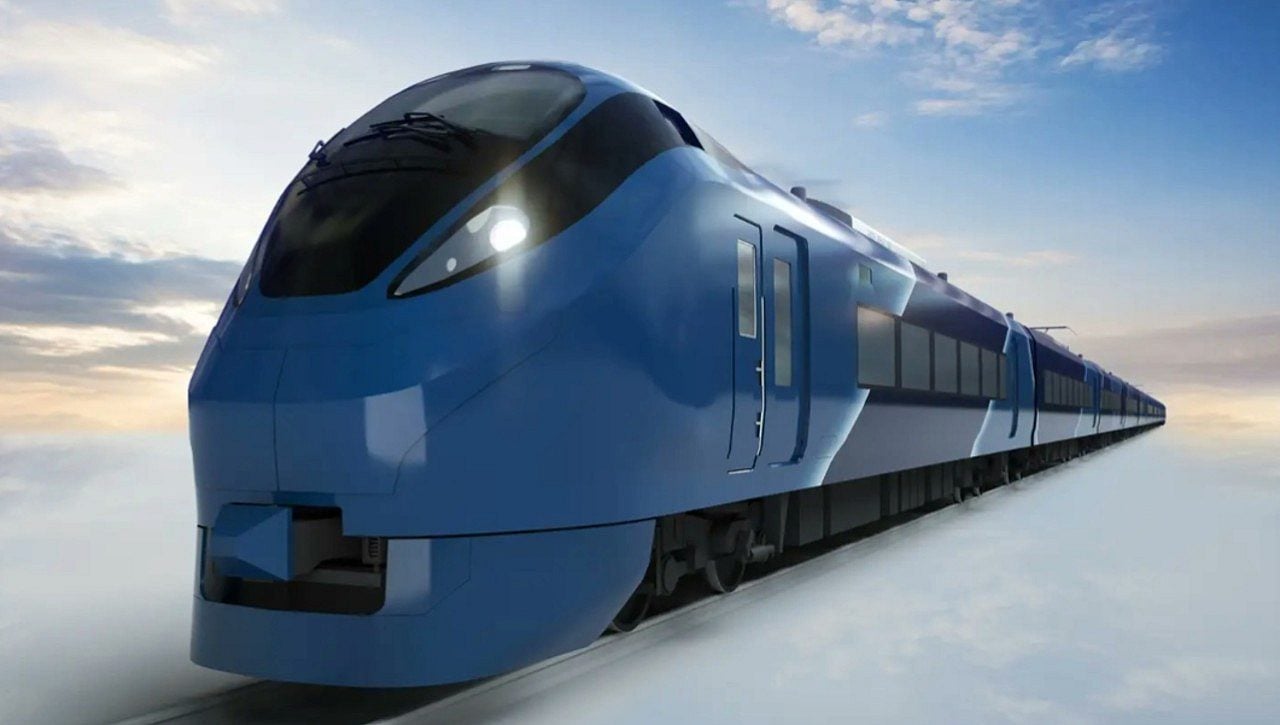
JR East revealed this Tuesday the name of its new overnight express train. The 10-car vehicle will be called Luna Azul and is expected to enter service around April 2027. It will connect Shinagawa in Tokyo to Aomori in the north of the Tohoku region. The project revives the concept of old Japanese night trains with a focus on comfort and a different travel experience.
The name Luna Azul means “blue moon” in Spanish. The choice reflects the train’s concept, based on shades of blue, superior quality and a welcoming feeling. The exterior design is inspired by Japan’s historic “Blue Trains”. All seats will be in private compartments.
Name and concept highlight blue train heritage
JR East introduced Luna Azul as part of the strategy to make rail travel a destination in itself. The train aims to attract both individual travelers and groups of friends and families. The company seeks to offer an experience that goes beyond simple travel.
The blue exterior is a direct reference to old night trains. The logo, still in the trademark registration phase, incorporates light elements that form a blue moon. This visual identity must appear throughout the composition.
- Private compartments for 1 to 4 people
- Total capacity of 125 passengers in night configuration
- Lounge car dedicated to food and drinks
- Adaptation for accessibility, with rooms for wheelchair users
The train will reuse an E657 train currently in daytime operation on the Joban line. The conversion will transform the spaces into private Green Class options, with the possibility of converting them into beds for overnight stays.
Configuration varies depending on the season
During spring through autumn, Luna Azul will run the full night route between Shinagawa and Aomori, via lines such as Joetsu and Uetsu. The trip should last between 12.5 and 15 hours, with a frequency of two pairs per week. Scheduled times include departure around 9pm and arrival around 9:30am in the descending direction.
In winter, service will focus on a shorter daytime route from Shinagawa to Naganohara-Kusatsuguchi in the Gunma region. In this modality, the train will run with seven cars and capacity for 150 passengers. The frequency increases to six pairs per week.
JR East is still considering expanding routes in the future. Exact details of hours, prices and operating dates will be announced later. The company plans to market the service mainly through travel packages.
Compartment details prioritize privacy
All Luna Azul seats will be individual in private cabins. Options include rooms for one person, couples or groups of up to four passengers. Some larger compartments allow conversion into flat beds for greater comfort during the night.
An entire car will function as a lounge. There, passengers will be able to consume drinks and snacks sold on board. The company also prepares observation spaces to enjoy the night or morning landscape.
The winter configuration eliminates some cars to adapt the train to the shorter route. Even so, it maintains a high standard of privacy and comfort. JR East highlighted that the train meets accessibility needs with two rooms adapted for wheelchair users.
Prices and services follow premium standards
The initial estimate indicates that a complete trip in a private Green cabin will cost something close to the value of a Green Class ticket on the Tohoku Shinkansen plus an additional fee. For reference, a ticket from Tokyo to Shin-Aomori on Shinkansen costs around 24,180 yen during normal times.
On board, drinks and snacks will be sold. JR East plans technical stops that allow passengers to briefly alight to cool off, taking advantage of the night air. The full experience includes station pickup with last-minute shopping at “ekinaka” stores.
The focus is on creating memories. Conceptual images show passengers relaxing in cabins, enjoying the sunrise in the lounge or walking along the platform during stops.
Project fits into JR East’s strategic vision
Luna Azul is part of the company’s “Transformation 2027” plan. The initiative seeks to revitalize rail transport with an emphasis on regional routes and unique experiences. JR East wants to attract both domestic and international audiences to northern Japan.
The introduction of the modern night train represents a controlled return to the model of long overnight journeys. Unlike the old collective beds, Luna Azul focuses on total privacy and contemporary design.
Company teams are already working on final adjustments to the composition. Tests and approvals should take place in the coming months before the official debut. JR East promises regular updates on the schedule and booking options.
The announcement comes at a time of tourism recovery in Japan after challenging years. The new offer could strengthen the appeal of destinations such as Aomori and Tohoku, known for nature, festivals and gastronomy.