
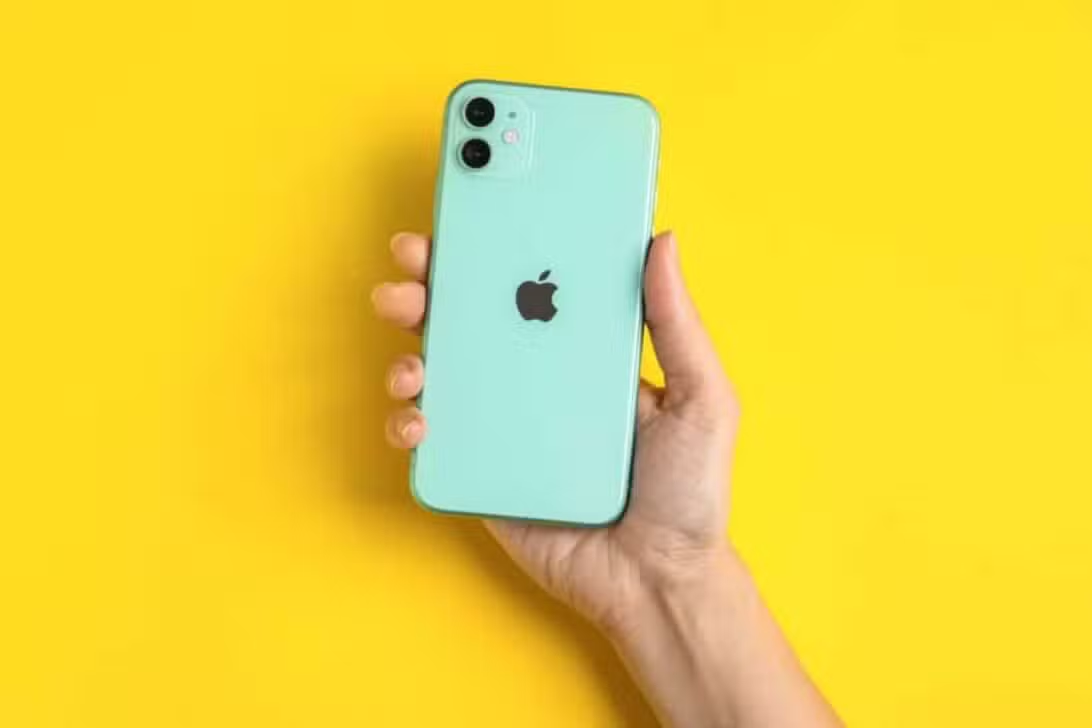
Apple made it official during this week’s WWDC conference that the iPhone 11 will receive the update to the iOS 27 operating system. This strategic decision guarantees the model originally launched in 2019 another annual cycle of software support, which helps maintain its resale value in the heated used cell phone market. However, even with this survival guaranteed by the manufacturer, the physical limitations of the device have already become evident, making its purchase highly inadvisable for anyone looking for a reliable device in the year 2026.
The main proof of this technological wear and tear lies in its entry-level configuration, which combines just 64 GB of storage with the A13 Bionic processor. Faced with the growing weight of modern applications and the operating system itself — which today easily consumes more than 15 GB of native space — these two components show clear signs of exhaustion. This scenario raises serious doubts about the device’s ability to deliver fluid, crash-free navigation in the coming years.
Why 2019 hardware doesn’t support current requirements
One of the most clear indicators of the device’s lag appears in synthetic performance tests. On the AnTuTu evaluation platform, the 2019 cell phone scores 974,047 points, which places it in the lowest positions in the brand’s current smartphone ranking. The difference in performance compared to the current market leader, the iPhone 17 Pro Max, exceeds a margin of 1.3 million points, highlighting the brutal leap in engineering that the mobile phone industry has made in the last half decade.
The hardware divide also manifests itself critically in artificial intelligence processing. Equipped with the A13 Bionic chip, which has an old, low-capacity neural engine, the cell phone is not compatible with Apple Intelligence, the new package of generative tools developed for the company’s recent equipment. In practice, this means that, even running the iOS 27 interface, the consumer will be excluded from the automated and intelligent functions that promise to facilitate the digital routine from now on.
The display panel and connectivity modules represent another significant bottleneck by modern standards. Unlike any current intermediary, the veteran model does not have antennas for 5G networks, being restricted to the 4G infrastructure. Furthermore, its 6.1-inch IPS LCD screen, which delivers a modest resolution of 1792 x 828 pixels and a maximum brightness of 625 nits, is far behind the high-definition, deep-contrast OLED panels that dominate the Cupertino giant’s recent portfolio.
The relentless action of time also takes its toll on energy autonomy and photography. The 3,110 mAh battery needs to power a processor made using 7 nanometer lithography, which consumes much more power than the efficient 4 or 3 nanometer chips used today. In the imaging department, the two 12-megapixel rear cameras can record acceptable photos for social media, but they lose significantly in light capture and sharpness when compared to the advanced sensors adopted in younger generations.
The arrival of the new version of the operating system guarantees a welcome survival in terms of security and basic application compatibility. However, the physical barriers imposed by components designed seven years ago turn the usage experience into a test of patience, making it impossible to recommend purchasing the device as a viable long-term investment in the 2026 market.