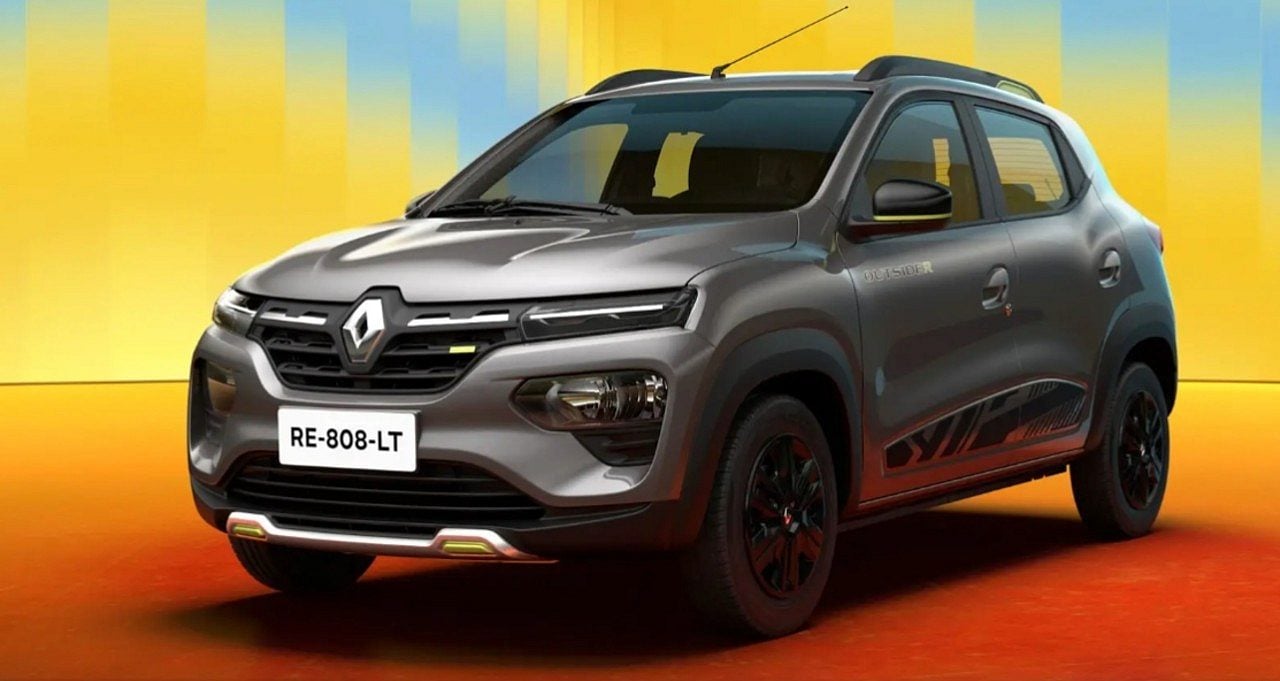
In a scenario of constant increase in vehicle prices, finding an affordable brand new car has become a challenge in Brazil. However, the Renault Kwid Zen 1.0 Flex emerges as a notable exception in June 2026.
According to the Fipe Table, the French automaker’s subcompact has an average value of R$69,396, consolidating itself as the only new option below the R$70,000 mark in the national market. This position makes it a prominent alternative for those looking to save money.
Maintaining accessibility in a challenging market
The Kwid Zen’s persistence in this price range strategically positions it for consumers looking for an economical alternative. It attracts everyone from app drivers, who prioritize low operating costs, to young people and people buying their first car.
This particularity distinguishes it from other entry-level models that, in recent years, have surpassed the R$70,000 barrier. This feature makes choosing the Kwid a strategic financial decision for many Brazilians looking for a new vehicle.
Efficient motorization and focus on urban mobility
The heart of the Kwid Zen is its 1.0 flex three-cylinder, 12-valve engine, designed to offer a balance between performance and economy. This engine guarantees adequate performance for everyday demands.
Coupled to a five-speed manual transmission, the engine generates up to 71 horsepower when fueled with ethanol and 68 hp with gasoline. These numbers are ideal for traveling in urban environments, where agility and reduced consumption are differentiators.

Detailed fuel consumption
Energy efficiency is one of the pillars of the model’s popularity, contributing significantly to reducing daily fuel costs. Check out the average numbers released:
- City (petrol): around 15.3 km/l
- Road (petrol): around 15.7 km/l
- City (ethanol): around 10.8 km/l
- Road (ethanol): around 11 km/l
Main characteristics and dimensions of the vehicle
The Renault Kwid Zen is built on a platform that aims to optimize internal space within a compact format, ideal for traffic and tight spaces in large cities. Its lightweight structure contributes to fuel economy.
Its dimensions were carefully thought out to offer practicality without compromising the capacity to transport small loads or the essential comfort for occupants on short and medium journeys.
Engine technical sheet and dimensions
To better understand the structure and potential of the subcompact, see the main technical data below:
- Engine: 1.0 SCe three-cylinder
- Power: 71 hp (ethanol) / 68 hp (gasoline)
- Torque: up to 10 kgfm
- Transmission: five-speed manual
- Trunk: 290 liters
- Wheels: 14 rim
- Length: 3.68 m
- Width: 1.57 m
- Height: 1.47 m
- Wheelbase: 2.42 m
Standard equipment for a complete experience
Despite being an entry-level vehicle, the Kwid Zen does not skimp on essential safety and convenience items, ensuring a smoother and more connected drive for its users. The automaker sought to balance cost and functionality.
Renault has included a series of equipment that elevates the model’s value proposition, seeking to meet the modern consumer’s minimum expectations in terms of active and passive safety, as well as convenience in daily use.
Standard items for the driver
Among the main features offered in the Zen version, the following stand out:
- Security:
– Four airbags
– Electronic stability control (ESP)
– Ramp start assistant
– Tire pressure monitoring
– Isofix system for car seats
- Comfort and technology:
– Air conditioning
– Electric steering
– Front electric windows
– Electric locks
– Bluetooth connectivity
– USB inputs
Analyzing the cost-benefit of the Renault Kwid Zen
The decision to purchase the Renault Kwid Zen directly depends on the buyer’s priorities. If the search is for a new car with the lowest possible acquisition cost, affordable maintenance and excellent fuel economy, the model remains one of the most competitive choices in the Brazilian market.
However, it is important to consider the limitations inherent in an entry-level subcompact. The internal space, for example, is more limited, and the simple finish, together with modest acoustic insulation, may be factors to be considered by those who require more comfort for long trips or intense family use. Even so, its value proposition remains strong in the compact and economical vehicle segment.
