
Rocky planet 12.5 light years away, similar to Earth, remains unclear about its atmosphere


At a distance of just 12.5 light-years, orbiting a star so inconspicuous that it was only identified in 2003, lies one of the most Earth-like rocky worlds ever located within the habitable zone. However, the fundamental question about the presence of an atmosphere on its surface still remains unanswered.
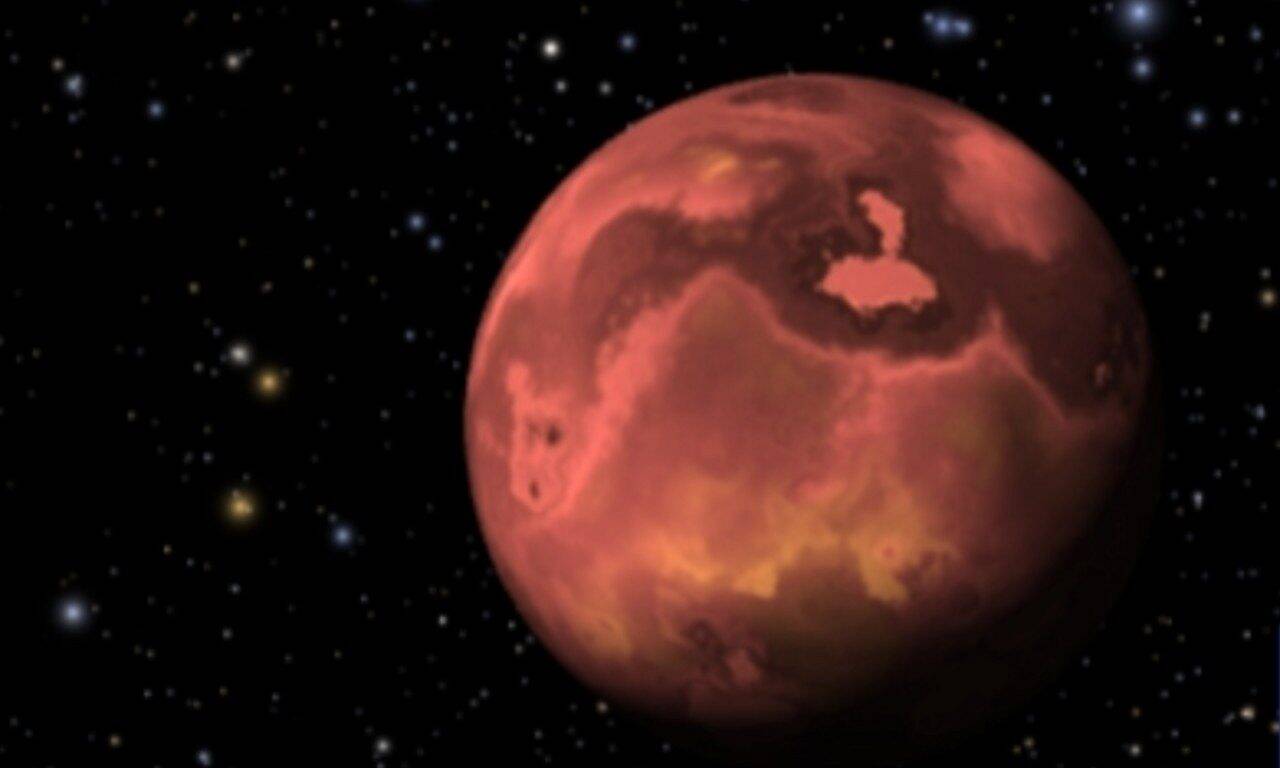
Named Teegarden’s Star b, this celestial sphere has an estimated mass of at least 1.16 times that of Earth and completes its orbit around a red dwarf, located approximately 12.5 light years from our solar system, in the constellation of Aries.
Located within the habitable zone of its star, the planet Teegarden’s Star b, with a minimum mass of 1.16 times that of Earth, is considered one of the worlds most similar to ours ever catalogued, according to usual criteria. Although its existence has been known to astronomers since 2019, it has not yet been possible to determine the presence of an atmosphere, leaving open the distinction between a potentially habitable planet and a simple space rock.
The obstacle to this discovery is not due to a lack of scientific interest, but rather to its geometric configuration. The planet does not make a visible transit in front of its star from a terrestrial point of view, which makes the main method currently available for analyzing the atmospheric composition of distant exoplanets unfeasible.
Unusual Discovery of Teegarden Star Through Tracking
The detection of the Teegarden star did not occur through direct telescope targeting. It was first identified in 2003 by NASA astronomer Bonnard Teegarden and his team, who examined archived images taken years earlier by the Near-Earth Asteroid Tracking program. Although it is one of about two dozen stars closest to our Sun, its extremely low luminosity kept it undetectable for a long period. Classified as an M7 dwarf, it has less than a tenth of the solar mass, a surface temperature of approximately 2,900 Kelvin and an apparent magnitude of 15, requiring large equipment for its observation.
What allowed its identification was its own movement. The star moves across the sky at a speed of about five arc seconds annually, constituting one of the largest proper motions of all known stars, a feature that stands out in comparisons of images captured at different times.
Identification of planets b and c in the star system
Exoplanets associated with the star were later discovered. In June 2019, the CARMENES project, coordinated by Mathias Zechmeister at the University of Göttingen, announced the existence of two probable planets with masses similar to Earth, named b and c, with orbital periods of 4.9 and 11.4 days, respectively, with no evidence of transit. Later, in 2024, a study led by Stefan Dreizler revealed a third, more distant and colder planet, beyond the habitable zone, and improved data from the two innermost planets.
It is crucial to be accurate in interpreting these measurements. Detections are carried out using the radial velocity method, which quantifies the small gravitational force exerted by a planet on its star. This method only gives the planet’s minimum mass, not its actual mass, as the inclination of its orbit remains unknown. Therefore, Teegarden’s Star b has a mass of at least 1.16 Earth masses, and could be slightly larger. The classification as a rocky planet derives from this reduced minimum mass, and not from a directly measured size, since the planet has never been observed in transit and, consequently, its radius has not been determined.
For a period, planet b recorded the highest Earth Similarity Index (ESI) among known exoplanets, close to 0.95. However, a revaluation in 2024 adjusted this value to around 0.90. The ESI is a score that evaluates similarity based on estimates of size and temperature, and is not a direct measure of habitability.
The reason behind Teegarden’s Star b’s atmospheric uncertainty
The absence of orbital transits is the determining factor for the stagnation of the atmospheric issue. When a planet passes in front of its star, a tiny fraction of the starlight passes through any atmosphere present, allowing the gases to leave spectral signatures that can be read by equipment such as the James Webb Space Telescope to probe atmospheres of rocky worlds. This method is ineffective for planets that, like those in the Teegarden system, do not make visible transits from our perspective.
Fundamental estimates about the planet still lack precision. Even small variations in the assessment of light and heat received by Teegarden’s Star b are significant, as the planet appears to be close to the inner edge of the habitable zone. A 2025 climate modeling study indicated that a given estimate of its irradiance would keep it below the threshold for a runaway greenhouse effect, while a slightly higher estimate would put it above that threshold. The question of whether an atmosphere would have survived the star’s early phase is a separate and crucial point for red dwarfs, which often exhibit intense eruptions during their first billion years, with the potential to strip away planetary atmospheres. Webb detected little evidence of dense atmospheres on the inner planets of TRAPPIST-1, b and c, but this is a distinct system, and the remaining information is based on models with assumed data. None of this constitutes a direct measurement of Teegarden’s Star b.
One aspect, however, is favorable to the planet: the star Teegarden is exceptionally quiet for its type, showing less magnetic activity than most late M dwarfs. This feature increases the likelihood that any atmosphere has persisted throughout the system’s eight billion year history.
What future instruments could reveal the exoplanet’s atmosphere?
With transmission spectroscopy unfeasible, solving the atmospheric enigma depends on instruments capable of investigating the planet directly, analyzing reflected light or thermal emission, rather than relying on transit. The scientific literature points to two promising examples: the Planetary Camera and Spectrograph planned for the Extremely Large Telescope (ELT), currently under construction in Chile, and LIFE, a space interferometer proposed to identify the infrared glow of nearby temperate exoplanets. The same modeling study categorically highlights that detailed characterization has not yet been performed and will require the next generation of observatories.
In this way, Teegarden’s Star b occupies a unique position in the field of astronomy. It is close enough and has similarities to Earth in mass and radiation to be one of the main targets in the search for habitable worlds. However, it remains inaccessible to the technique that has driven most of the recent advances in the field. The next relevant information about this exoplanet will not come from the celestial body itself, but rather from the new telescopes that are being developed to observe it.





