
Open TV equipment eliminates delays in sports broadcasts and guarantees goals in real time

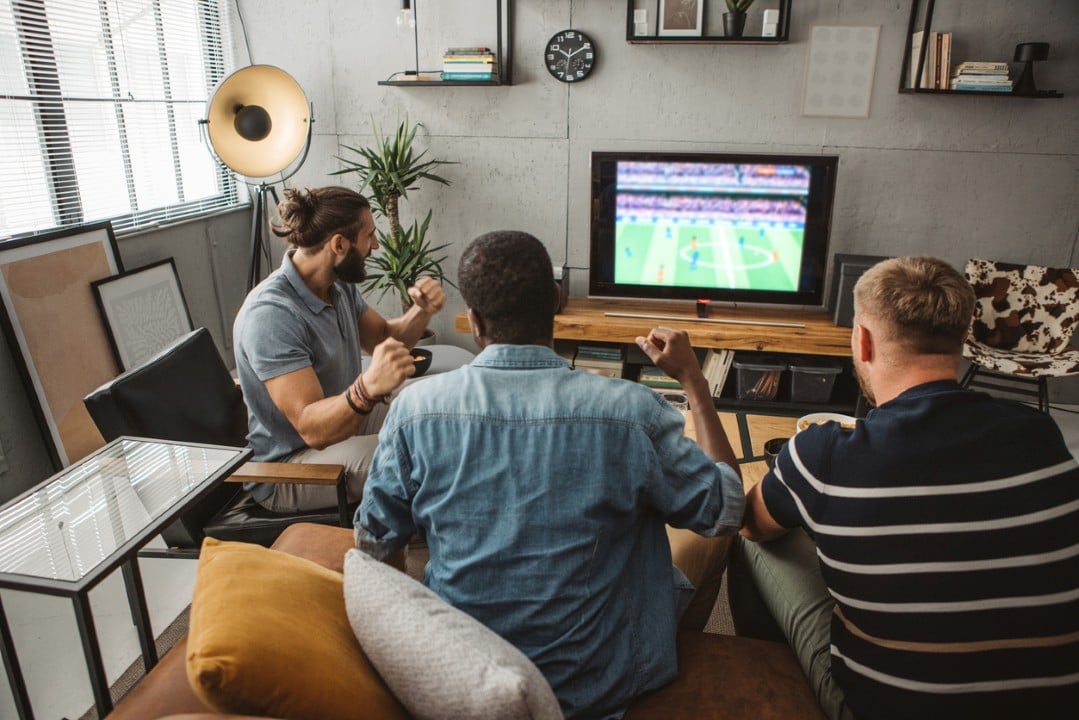
Those who follow live football matches often face a frustrating situation when they hear the shout of celebration coming from the house next door while the ball is still rolling in the middle of the field on their screen. This annoying discrepancy occurs because of technical latency, which represents exactly the seconds lost between the moment the camera records the play in the stadium and the moment the video finally loads on the user’s device.
The problem becomes much clearer when fans opt for video on demand services or applications connected to the world wide web. The technical explanation for this involves the multiple stages of encoding, data packaging and distribution on servers that the media needs to go through, which can generate an average delay of 15 to 40 seconds in relation to the original capture, leaving fluidity completely dependent on the stability of the home’s broadband.
On the other hand, traditional broadcasting operates with a much more agile and direct delivery architecture. As soon as the broadcaster captures the images, the content goes up to space equipment and instantly goes down to the relay antennas spread across the Brazilian states, causing the radio signal to reach home devices in a synchronized manner and with practically no time lag.
This simplified route drastically shortens the virtual distance between the play taking place on the field and the pixel glow in the living room. For this reason, regardless of recent advances in fiber optic networks, tuning to free channels continues to offer the fastest response on the market for those who do not want to miss any detail of factual coverage.
Broadcasters’ initiatives to combat image lag during major championships
Observing the negative impact of this slowness on the public’s experience during high-audience tournaments, TV Globo recently launched the educational project called Fica Antenado. The communication company’s main goal is to guide the population about the advantages of using physical receivers, seeking to expand the consumption of free programming in all regions of Brazil.
The main advantage of adopting this physical equipment lies precisely in the elimination of that agonizing wait that affects users of virtual applications. As the capture of electromagnetic waves occurs autonomously, without depending on data packages from telecommunications operators, the reproduction of the match flows in synchronization with the referee’s watch, ensuring that the cry for a goal leaves the throat at the exact moment the ball hits the net.
In addition to benefiting sports fanatics, this technological agility improves the consumption of any factual media format, including television news coverage, music festival screenings and the broadcast of award ceremonies that require immediacy.
Simplified step-by-step guide to configuring modern receivers on home televisions
The channel’s promotional material strongly highlights that technical knowledge is not necessary to enable the system at home. In most cases, the consumer only needs to plug the coaxial cable into the rear input of the monitor and activate the frequency sweep using the remote control for the programming grid to appear.
The retail market offers a wide range of devices for internal use that cost little and deliver high efficiency. These compact accessories can be quickly purchased in supermarkets, computer kiosks or through large e-commerce sites with fast delivery.
For those who live close to large urban centers and broadcasting antennas, passive versions solve the problem with ease and discretion. Residents of remote neighborhoods or regions with geographical barriers should invest in active models, which have a built-in electrical circuit capable of enhancing wave reception and clearing image interference.
Video infrastructure experts advise that the user test different positions of the equipment within the room before definitively fixing it, giving preference to high shelves or spaces glued to the window panes, which facilitate the clean entry of the television frequency.





