
Mid-air collision between two helicopters leaves six dead in the Recreio dos Bandeirantes region


A catastrophic collision in the airspace of the West Zone of the capital of Rio de Janeiro resulted in the loss of six lives this Sunday morning (14). The disaster involving two rotary-wing aircraft occurred in the Recreio dos Bandeirantes neighborhood, an area with a high population density and intense traffic. Until the first steps were taken, the competent bodies were still working on the official identification of the victims, which depends on expert examinations due to the severity of the impact and the subsequent fire.
The destruction scene was quickly isolated by public security authorities. The spokesperson for the Military Fire Department of the State of Rio de Janeiro, Major Fábio Contreras, went public to confirm the absence of survivors in the tragedy. Residents of neighboring condominiums and passersby who were enjoying the early morning in the region were surprised by the boom in the sky, capturing impressive images that quickly dominated digital platforms and helped emergency teams assess the scale of the event even before arriving at the scene.
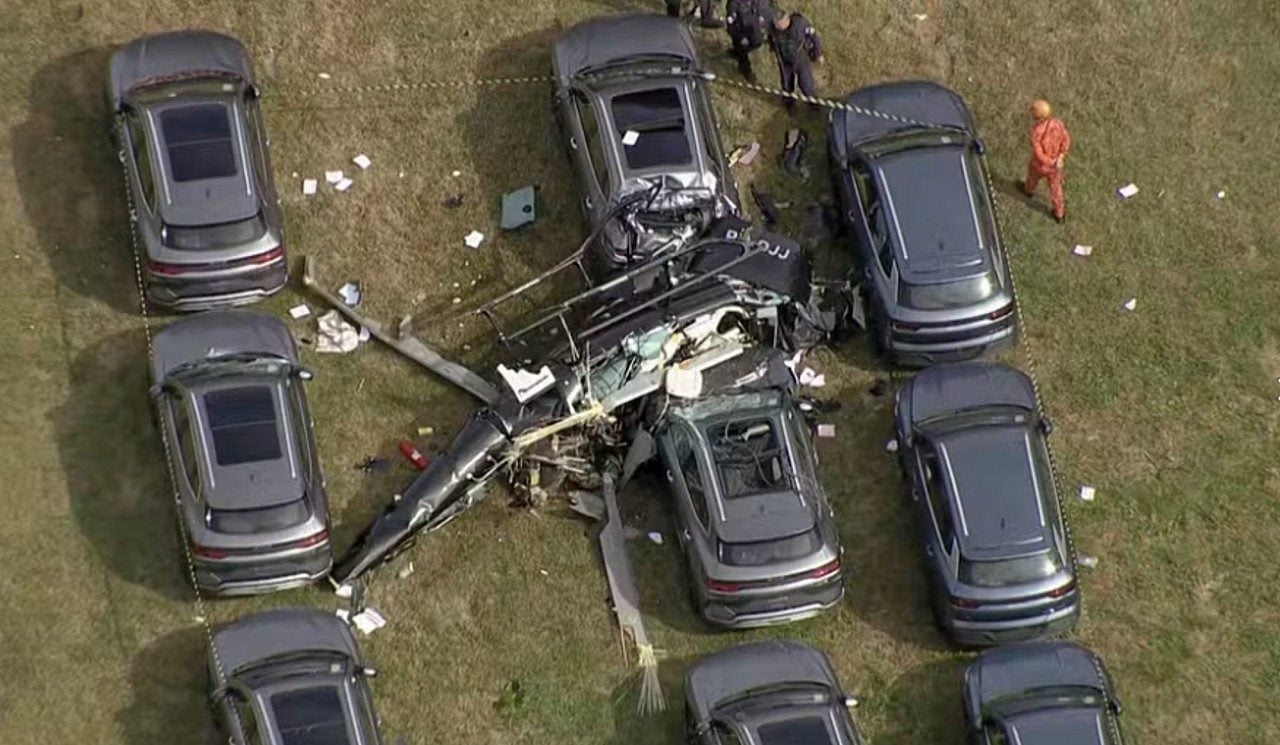
The coastal route that flies over Rio’s West Zone is historically known for receiving a considerable flow of executive flights, especially on weekends. This constant air traffic requires strict visual and radio communication protocols, factors that will certainly be part of the official investigation to determine what led the two aircraft to occupy the same space in the air simultaneously.
Crash dynamics and the challenge of fire in electric car batteries
The emergency center was activated at exactly 8:59 am, mobilizing the barracks in the region to a plot of land that housed the ruins of an ancient religious temple. Currently, the space was under lease by electric vehicle manufacturer BYD, functioning as a storage yard for dozens of the brand’s cars. The affected quadrangle is in a strategic and busy point, delimited by Avenida das Américas, Rua Beth Lago and Rua Rivadávia Campos.

The presence of a fleet of electric cars at the exact point of the crash added an extreme layer of complexity to the rescuers’ work. When one of the aircraft hit the ground, the immediate explosion of the aviation fuel tank spread flames that quickly engulfed the parked vehicles. Fires involving lithium-ion batteries, standard in the electrified car industry, are notoriously difficult to extinguish, requiring massive volumes of water and specific cooling techniques to prevent thermal reignition.
While the first helicopter was completely consumed by the inferno of flames and secondary explosions generated by the cars, the second aircraft involved in the collision fell at a slightly distant point within the same terrain, without being charred. The column of toxic, dark smoke generated by the combined burning of aviation kerosene, plastics, metals and chemical components from batteries could be seen from kilometers away, drawing the attention of residents from Barra da Tijuca to the furthest beaches along the coast.
Profile of the aircraft and the dispersion of wreckage throughout the neighborhood
Preliminary flight records indicate different profiles for the two pieces of equipment involved in the collision. One of the helicopters was identified as a Eurocopter AS 350 B2, a model widely known in the civil aviation market by the nickname “Squirrel”. It is a high-performance machine, widely used in Brazil for air taxis and corporate transport, designed to comfortably accommodate the pilot and up to four passengers. This specific aircraft had taken off from the municipality of Angra dos Reis, on the Costa Verde of Rio de Janeiro, bringing four occupants in addition to the commander.
The second aircraft, according to data collected by rescue teams in the first hours of the incident, was occupied only by its pilot. The total number of occupants on both flights resulted in the tragic death toll of six. The trip between Costa Verde and Rio de Janeiro is a classic executive aviation route, lasting on average thirty to forty minutes, flying over coastal landscapes before entering the capital’s urban airspace.
The violence of the impact in mid-flight was evident due to the vast area of dispersion of the mechanical components. Fuselage parts, rotor parts and metal fragments rained down on the neighborhood, spreading over a radius of at least a hundred meters from the epicenter of the collision. One of the most frightening details for the neighborhood was the discovery of the tail structure of one of the helicopters, which was thrown with enough force to land on the terrace of a residential building near the BYD courtyard.
Tactical mobilization and impacts on traffic on Avenida das Américas
To deal with a multi-pronged scenario — which included fighting a complex chemical fire, searching for victims, isolating debris and ensuring road safety — the Fire Department mounted a large-scale operation. The quick response was essential to prevent the flames from spreading to neighboring buildings or onlookers from being injured by the sharp materials spread across the streets.
The contingency structure set up by state and municipal authorities involved the following resources and immediate actions:
- Deployment of approximately 45 military personnel specialized in fighting urban fires and rescuing collapsed structures.
- Use of 15 support vehicles, including self-pumping trucks, medical rescue units and tactical command vehicles.
- Total blockage of the side lane of Avenida das Américas, one of the most important arteries in the West Zone, in the section corresponding to the accident.
- Establishment of a security perimeter to preserve the scene until the arrival of aeronautical investigators.
Around 10 am, the tireless work of the crews had an effect, and the main fire was declared officially under control. From that moment on, the nature of the operation changed from active combat to the aftermath and prevention of new risks. Teams began to thoroughly inspect the waterlogged ground and twisted wreckage for residual leaks of highly flammable fuel.
The next step towards elucidating this tragedy will be the responsibility of the Center for Research and Prevention of Aeronautical Accidents (CENIPA). The experts will have the difficult mission of collecting the aircraft’s vital components, analyzing flight plans, cross-referencing radar data and listening to witnesses to put together the puzzle that will explain how two aircraft collided on a Sunday morning in the sky over Rio de Janeiro.





