Jaylen Brown’s contract with the Celtics becomes an unexpected obstacle in possible trade negotiations

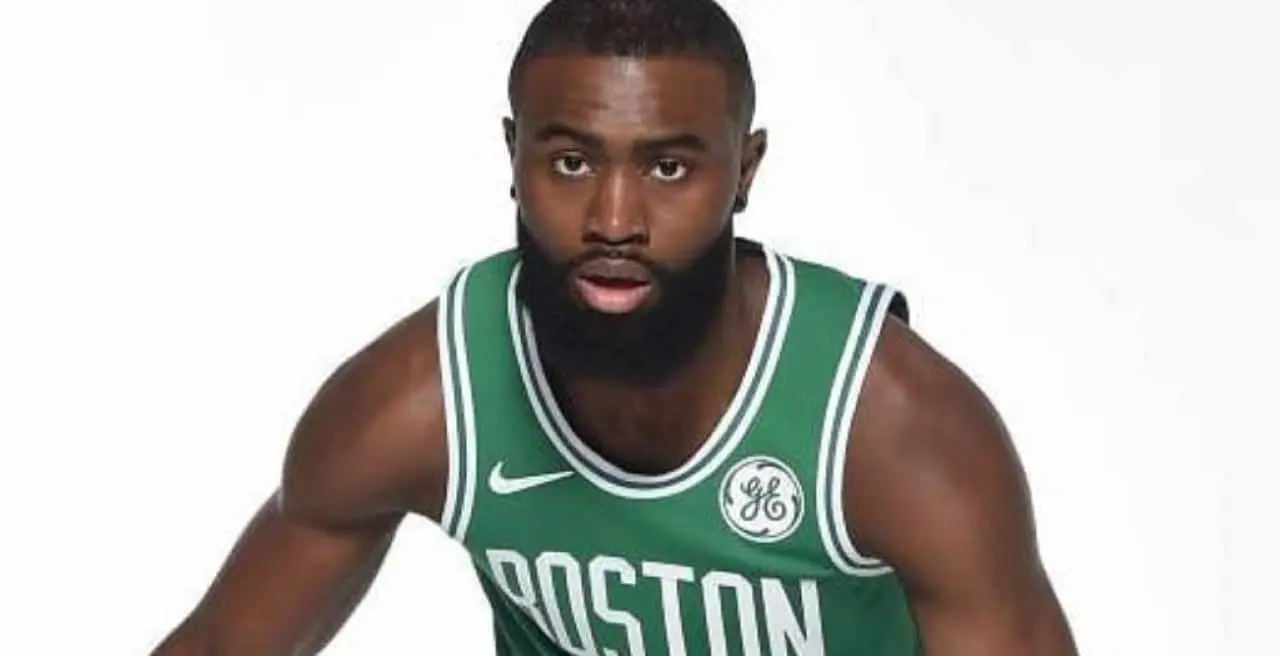
Boston Celtics star Jaylen Brown completed the best performance of his career, but this remarkable rise could be, paradoxically, the main obstacle to an eventual negotiation of his departure.
In 2025-26, the talented Celtics athlete recorded impressive averages of 28.7 points, 6.9 rebounds and 5.1 assists per game, shooting 47.7% from the field. That season culminated with Brown placing sixth in MVP voting and being elected to the NBA’s All-NBA Second Team, achievements that would normally seal a player’s future on his team. However, even with such achievements, trade rumors involving his name gain strength as the interseason progresses.
There is growing speculation about a major market trade that would include Milwaukee Bucks star Giannis Antetokounmpo. The theory circulating behind the scenes at the NBA suggests that Brad Stevens, president of the Boston Celtics, would be considering using Brown as a key piece in a complex trade involving several franchises to bring the two-time MVP champion to Boston, which would reconfigure the balance of forces in the Eastern Conference. Journalist Marc Stein reported that clubs such as the Atlanta Hawks, Portland Trail Blazers and Houston Rockets have expressed interest in the Celtics player, should he become available in this transfer window.
The financial obstacle that accompanies Jaylen Brown’s contract
However, one crucial issue is often overlooked in trade conversations: Brown’s contractual commitment represents a substantial financial burden that only very few organizations in the league can actually handle.
The player is entering the third year of a supermax deal, a fully guaranteed five-year extension valued at approximately $285 million. For the 2026-27 season, this implies an impact of US$57.1 million on the payroll, with two more years fully assured after that period, totaling around US$126 million. The contract also includes a trade bonus clause, which means that any team that signs him will assume an economic burden that exceeds the value of his base salary.
Within a league that is increasingly wary of the second salary cap limit – known as the “second apron”, a rigid barrier that severely restricts flexibility in roster construction and severe punishments for those who exceed it – incorporating a contract of such magnitude requires extreme inventiveness in managing salary space or the firm willingness to operate for consecutive years above the luxury tax limit. This rigidity of the “second apron” means that most teams with title ambitions do not have the financial conditions for such a move, and even fewer would be inclined to take on this strategic risk.
The Bucks’ situation adds yet another layer of complexity
The Milwaukee Bucks’ current stance, in itself, contributes a new layer of complexity to any eventual negotiation involving Brown. The Milwaukee team is in a restructuring process and, according to league sources, shows little inclination to acquire Brown – an athlete at the peak of his performance – as its main objective is to trade Antetokounmpo in exchange for future draft picks and young prospects. Such a player profile therefore does not align with the Bucks’ strategic plans.
Leia Também

Messi reaches 19 goals in FIFA World Cups with great free kick for Argentina in clash with Jordan

Cristiano Ronaldo shines beyond the pitch at the 2026 World Cup with business empire and family luxury

At 41, Cristiano Ronaldo reaffirms his historic legacy and prepares to shine in the 2026 World Cup
For an agreement to be financially sustainable, it would require the involvement of at least three, and perhaps up to four, franchises. With each team that joins the equation, the complexity of the transaction increases, as does the likelihood of conflicts of interest and the chance that conversations will fall apart even before reaching a consensus. Renowned NBA journalist Jake Fischer stated that the Boston Celtics have not begun concrete discussions about a possible Brown trade since the end of last season, although the option has not been completely ruled out.
The Clippers’ entry into the complex trade equation
The latest news adds a new participant to this intricate scenario. The Los Angeles Clippers appear as a possible third team in a negotiation that would involve Brown and Giannis Antetokounmpo, with a proposal that, as the information suggests, would allocate the fifth overall pick in the next draft to Milwaukee. This would be the kind of move that would make the acquisition of Brown an attractive element and that the Bucks would have to consider to give up their main player. However, this also implies that Boston, Los Angeles and Milwaukee would have to reach consensus simultaneously, an admittedly difficult feat in current NBA negotiations.
Despite all the buzz, the player himself seems oblivious to the speculation. He made a point of praising the New York Knicks’ journey to winning the championship and reiterated that they have not yet reached the peak of their performance.
The reality of Brown’s value and salary impact
The ironic truth lies in the fact that your contract does not represent a disproportionate payment; in fact, it precisely mirrors the athlete’s level of contribution. A player who accumulates 28.7 points per game, in addition to being an excellent rebounder, passer and elite defender, would justify a huge salary in any franchise in the league. The crux of the issue is not the recognition of Brown’s talent, but rather the practical difficulty of accommodating his salaries without this entailing a prohibitive organizational cost for the team that acquires him.
The Boston Celtics, in turn, did not show any rush to trade Jaylen Brown, and journalist Sam Amick, from The Athletic, reported that there is no indication that the Celtics are actively offering the player on the market. This situation could change if the pursuit of Giannis Antetokounmpo intensifies, but, for now, trade speculation operates at a much faster pace than concrete negotiations.
Until there is a solution to the salary complexity of his contract, Brown’s stay in Boston appears to be considerably more solid than the news headlines would lead you to believe.