Earthquake in Japan: Tokyo metropolitan area suffers 5.5 tremor; no tsunami warning
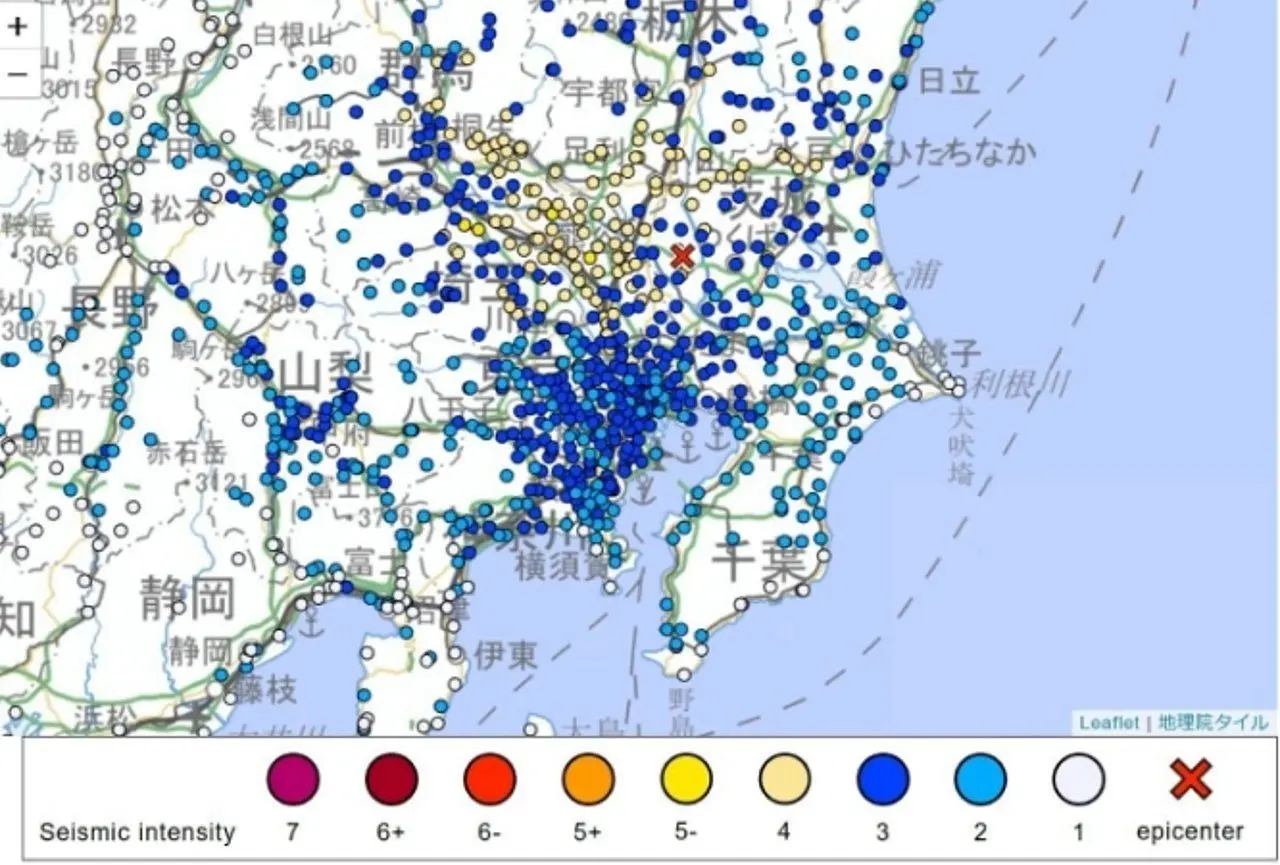
A magnitude 5.5 earthquake shook the Tokyo metropolitan area late Tuesday night (local time), generating concern among residents. The earthquake, felt in several provinces in the Kanto region, led the Japan Meteorological Agency (JMA) to issue a quick statement. The authorities, however, promptly ruled out any risk of a tsunami, calming the population.
Details of the earthquake in Ibaraki Prefecture
The epicenter of the earthquake was located in the south of Ibaraki Prefecture, according to information released by the Japan Meteorological Agency. At around 7:45 pm on Tuesday, the seismic event was felt intensely, reaching grade 5 in some locations on the Japanese seismic scale of 7.
- The cities that recorded seismic intensity level 5 were:
- Ota, Gunma Prefecture
- Kazo, Saitama Prefecture
- Other nearby municipalities
Understand the Japanese seismic intensity scale
Japan uses its own seismic intensity scale, known as Shindo, which ranges from 0 to 7. This measure refers to the perception and effects of the earthquake on the surface and structures, unlike magnitude (such as the Richter scale), which quantifies the energy released at the source of the tremor. A magnitude of 5.5 can generate different Shindo intensities depending on the distance from the epicenter and the type of soil.
Leia Também

Messi reaches 19 goals in FIFA World Cups with great free kick for Argentina in clash with Jordan

Cristiano Ronaldo shines beyond the pitch at the 2026 World Cup with business empire and family luxury

At 41, Cristiano Ronaldo reaffirms his historic legacy and prepares to shine in the 2026 World Cup
Japan’s advanced earthquake preparedness systems
Despite the frequency of earthquakes, Japan is a world reference in seismic preparedness and safety. The country invests heavily in strict building codes, which require buildings and infrastructure to withstand large tremors. Furthermore, it has one of the most sophisticated early warning systems in the world, capable of warning the population seconds before the arrival of the strongest seismic waves, which allows for crucial preventive measures.
Confirmation that there was no risk of tsunami after the quake
After the earthquake, the Japan Meteorological Agency was quick to analyze the data and confirm that there was no threat of a tsunami for the Japanese coast. Generally, earthquakes with an epicenter on land or deeper under the ocean are less likely to generate giant waves. Rapid assessment helps to avoid panic and guide the population efficiently.