

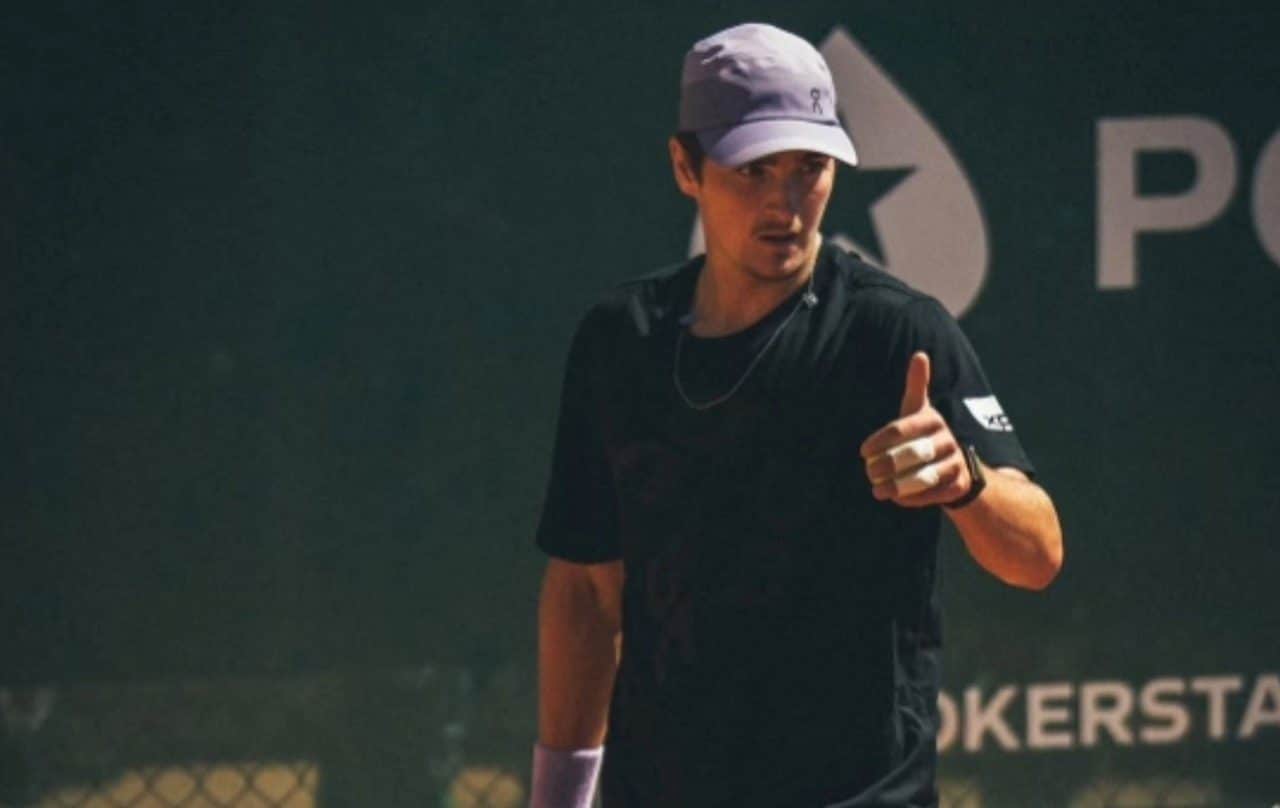
The start of the competition calendar on grass did not bring a good result for João Fonseca. The tennis player from Brazil, who occupies 25th position in the international rankings, ended up being beaten in the first round of the ATP in Halle, in German territory, by the home athlete Yannick Hanfmann, current number 59 in the world, by the score of 2 sets to 0, with a double 6/2. The match lasted slightly longer than 60 minutes and marked the return of the young man from Rio to the courts after his outstanding performance recently on clay at Roland Garros.
The European athlete established a wide advantage over his Brazilian competitor in the early stages, obtaining breaks that determined the score of 4-0 in the first series, all that was left was to manage the following services to guarantee the partial victory by 6/2. At the beginning of the following period, the South American tennis player indicated a recovery in the match by confirming two games in which he had the serve, however the intensity was not sustained in subsequent disputes. Hanfmann obtained another break in his opponent’s serve, established a 3-2 lead and paved the way to confirm the round’s triumph.
The Brazilian representative will continue the professional circuit on grass surfaces next week, when he will participate in the Eastbourne ATP, hosted on English soil. Next, scheduled to start on June 29th, the athlete will compete in the main draw of Wimbledon, which represents the third Grand Slam tournament of the current year. In the previous season, the tennis player from Rio de Janeiro had also suffered elimination in the opening match in the same German competition in Halle.
The match marked João Fonseca’s first official commitment on this type of fast court in 2026. The athlete’s career this season began in fast court tournaments located in Australia and surrounding areas, a period in which he faced physical problems resulting from injuries and played only once, being defeated in the opening of the Australian Open. Subsequently, the player did not obtain positive sequences of results in events played on clay surfaces in Argentina and in the capital of Rio de Janeiro, a scenario that began to present structural changes soon after.
In clashes on hard courts in the United States, specifically at the Miami and Indian Wells Masters, the tennis player ended up being surpassed by athletes who lead the international circuit, playing balanced games against Jannik Sinner and Carlos Alcaraz. The subsequent period on the clay courts fluctuated between ups and downs for the competitor, however it reached its highest point with the trajectory achieved at Roland Garros, a tournament in which he reached the quarter-final stage and recorded an impressive triumph against Novak Djokovic.




