Official list highlights the top scorers in World Cup history ahead of the 2026 tournament
With little time left until the start of the next edition of the International Football Federation’s main tournament, which will feature an unprecedented 48-team format, sports lovers are already starting to prepare for the event. As a new crop of players prepares to take to the pitch in North America, the ideal time has come to remember the legendary strikers who defined the era. These professionals turned precision in finishing into their main characteristic, dominating offensive statistics throughout almost a century of international competitions and serving as a reference for thousands of athletes at the beginning of their careers.
The incessant quest to break records during global competitions
The fascination caused by football is directly linked to the emotion of seeing the ball hit the net, a moment considered the pinnacle of any high-level official match. Overcoming statistical marks represents one of the biggest attractions when the planet’s main teams meet every four years to measure strength. During this period of intense rivalry and elimination games, the public follows closely the current stars who try to engrave their names in history, fighting an indirect dispute to surpass the numbers left by giants of previous generations who seemed unreachable.
Discover the ten greatest scorers who dominated the FIFA tournament
A detailed survey reveals the athletes who most often celebrated goals in the main competition organized by football’s highest governing body. The official data consolidates the accumulated performance of these idols up until the moment before the dispute scheduled for the North American continent, functioning as a definitive guide for researchers and enthusiasts of sports statistics:
Leia Também
Messi reaches 19 goals in FIFA World Cups with great free kick for Argentina in clash with Jordan

Cristiano Ronaldo shines beyond the pitch at the 2026 World Cup with business empire and family luxury

At 41, Cristiano Ronaldo reaffirms his historic legacy and prepares to shine in the 2026 World Cup
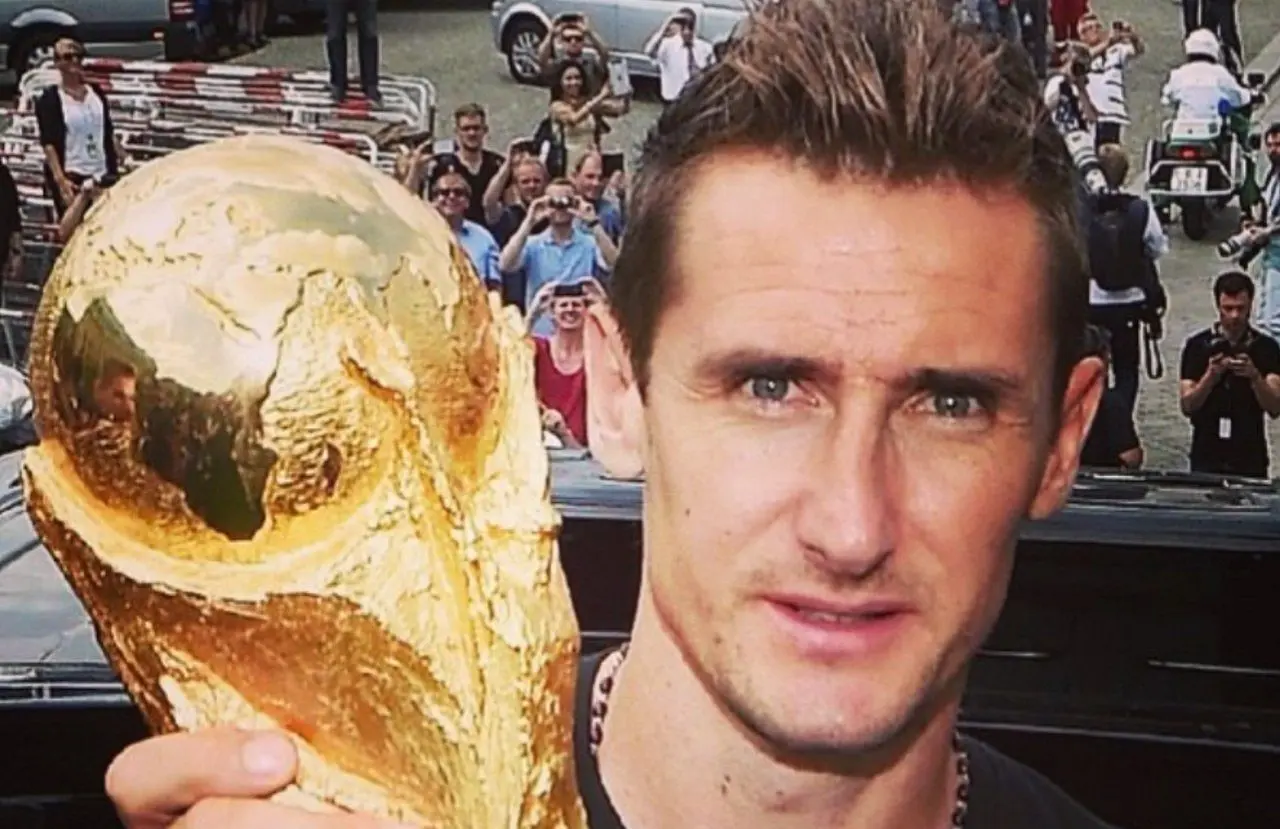
- 1. Miroslav Klose (Germany): The European center forward occupies the absolute top of the ranking with 16 balls in the net spread over the 2002, 2006, 2010 and 2014 editions, being recognized worldwide for his impeccable positioning within the penalty area.
- 2. Ronaldo Nazário (Brazil): The Brazilian national team’s eternal number nine scored 15 goals during the 1998, 2002 and 2006 campaigns, playing a role of absolute dominance in winning the fifth national star on the Asian continent.
- 3. Gerd Müller (West Germany): The relentless German finisher needed just two appearances, in 1970 and 1974, to record 14 hits, maintaining an average conversion per game that impresses sports analysts to this day.
- 4. Just Fontaine (France): The European athlete established a solitary and impressive mark by scoring 13 goals in a single championship held in 1958, creating a level of excellence that has remained intact for decades.
- 5. Lionel Messi (Argentina): The current captain of the South American team scored 13 goals over five consecutive calls between 2006 and 2022, a trajectory of persistence that culminated in lifting the cup in Qatar.
- 6. Pelé (Brazil): The greatest icon in the history of world sport scored 12 goals in the 1958, 1962, 1966 and 1970 competitions, a period in which he was instrumental in securing three definitive titles for the country.
- 7. Kylian Mbappé (France): With the same 12 goals scored only in the 2018 and 2022 editions, the speedy European striker emerges as the main active candidate to pulverize all offensive statistics in the coming years.
- 8. Sándor Kocsis (Hungary): The Eastern European talent saved 11 balls in the net in the 1954 isolated edition, demonstrating frightening firepower by the tactical standards of that time.
- 9. Jürgen Klinsmann (Germany): The versatile German player also reached the mark of 11 successful shots in the 1990, 1994 and 1998 tournaments, consolidating himself as an extremely regular figure in the offensive sector.
- 10. Gabriel Batistuta (Argentina): The South American idol closes the list with 10 goals recorded in the 1994, 1998 and 2002 campaigns, being forever remembered for his powerful shots that broke the opponent’s blocks.
The impact of the new format of the competition in North America on current records
The next global cycle, with matches scheduled to take place simultaneously in dozens of stadiums across the United States, Mexico and Canada, offers an expanded stage for new goalscorers to prove their true worth. Due to the new regulations that expand the tournament to 104 games in total, the finalist teams will enter the field eight times, one more than in the previous format, which mathematically makes it easier to break the old marks. Fans from all continents are eagerly awaiting to find out whether any currently active player will be able to join this restricted group of elite scorers, or whether the seemingly unattainable records of Miroslav Klose and Ronaldo Nazário will be threatened on North American football pitches.