US media highlights the end of the zebra era after Japan’s electrifying draw with the Netherlands
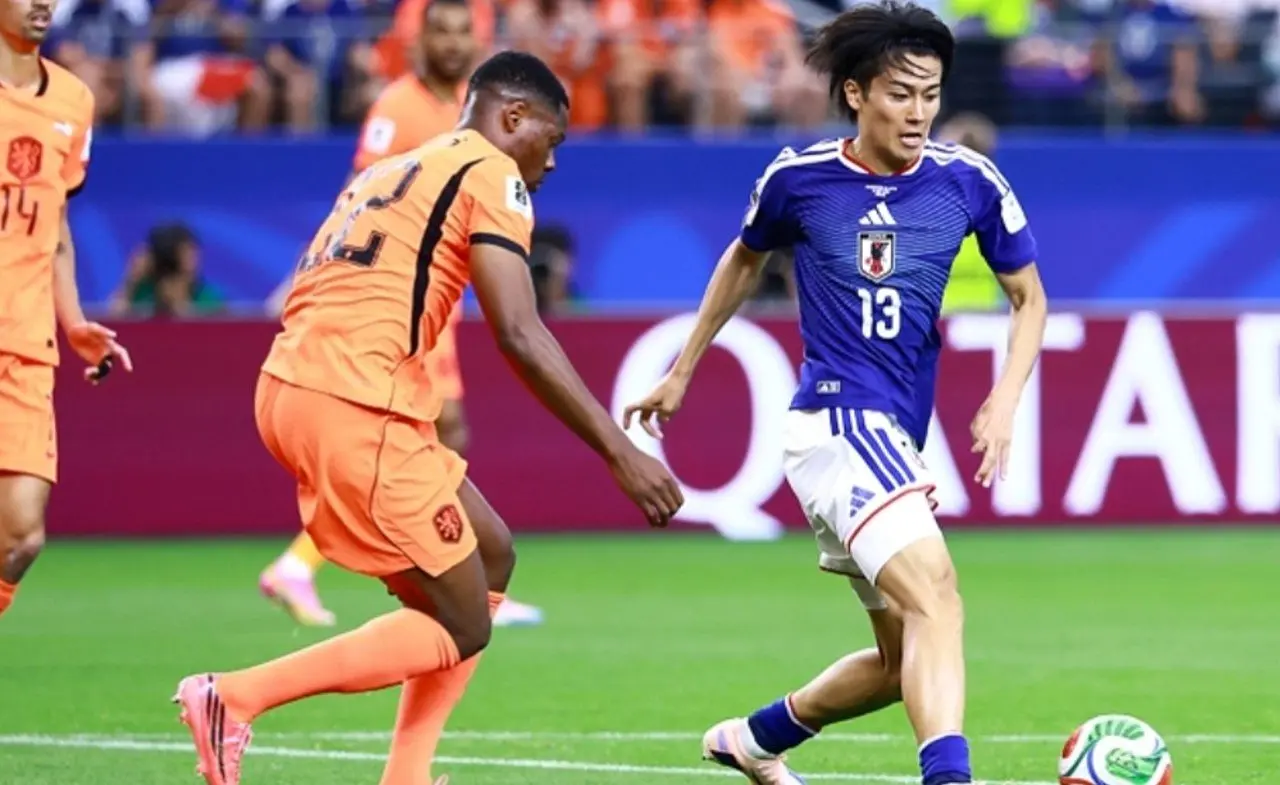
The Japanese national football team secured a 2-2 draw against a strong Netherlands team in their first match at the CONCACAF World Cup. The clash, held in Arlington, Texas, showed the Asian team’s ability to react, leveling the score twice with goals from Keito Nakamura and Daichi Kamada, despite being at a disadvantage against an opponent ranked well above in the FIFA rankings.
Japan’s World Cup performance resets global expectations
The one-point result on debut might have seemed modest, but the international media’s reaction to the Japanese performance was notably different from previous narratives that focused solely on the “brave fight against a superior opponent”. The perception that Japan is capable of more than “surprising” has been consolidated on the global sporting scene, reflecting an evolution in the team’s status. This change did not occur suddenly after the game, but was already being built before the tournament even started.
Betting market already anticipated the strength of the Japanese team
Media outlets and betting houses in the United States showed unusual confidence in the Japanese team’s potential. The American newspaper *New York Post*, for example, bet on Japan’s victory in its pre-match analyses. Although the Netherlands were favorites with odds of +105 at FanDuel, one of the main American bookmakers, Japan had odds of +250, indicating a “zebra” scenario that, however, was seen as fully possible. The newspaper’s analysis highlighted that intense Japanese pressure could destabilize the Dutch defense.
Leia Também

Messi reaches 19 goals in FIFA World Cups with great free kick for Argentina in clash with Jordan

Cristiano Ronaldo shines beyond the pitch at the 2026 World Cup with business empire and family luxury

At 41, Cristiano Ronaldo reaffirms his historic legacy and prepares to shine in the 2026 World Cup
Odds for the world title show the rise of the Asian team
The belief in Japanese potential was also reflected in the projections for the world title, even before kickoff. Articles indicated that the odds of Japan winning the World Cup, which were 101 to 1 at the end of 2025, have dropped significantly to 51 to 1 at some bookmakers. This market movement signaled a change in the way the team was perceived: not just as an underdog, but as a team whose advancement in the competition should be taken seriously by experts.
Japan surpasses giants in “underdog” ranking before tournament
A video distributed by *Sporting News*, an influential American media outlet, classified Japan as the second main “underdog” of the tournament. The Japanese team was ahead of teams like Norway, which has Erling Haaland, and behind only Ecuador. The reasons for this optimistic projection were clear and were based on a series of factors that demonstrate the team’s maturity:
- Victory over England in an international friendly in March 2026.
- Ability to apply high pressure in attack, Premier League style.
- Depth of the squad, allowing for competitiveness even without stars like Kaoru Mitoma, sidelined by injury.
- Organizational strength that allows the team to act as a cohesive collective, regardless of individual talents.
Consolidation of a new image for Asian football
The recent trajectory of the Japanese team, with consistent performances and important victories, demonstrates a transformation that goes beyond mere specific results. The draw against the Netherlands in the World Cup was not just a good performance, but confirmation that Japanese football had reached a new level of respect and expectation on the global stage. The image of the team as a “surprising underdog” gives way to a perception of a strategically strong and well-organized team, capable of competing on equal terms with the main world powers. This recognition reflects an evolution of Asian football, which is establishing itself as a serious competitor in major tournaments.