
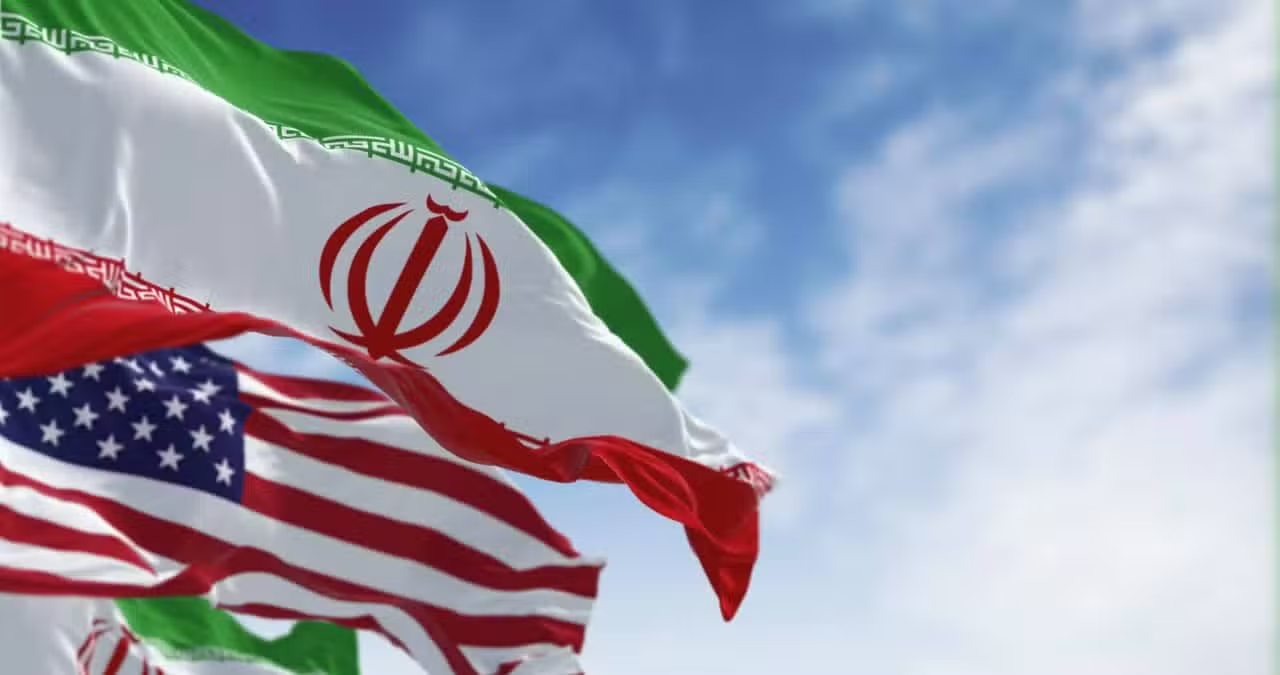
Iran’s government leadership is keen to portray the memorandum of understanding, currently being negotiated with the United States, as a notable feat of its resistance, and not as a political concession. However, sustaining this version within national borders proves to be a considerable challenge.
Recently, Iran has faced a devastating conflict, while its economy is under intense pressure and a significant portion of the Islamic Republic’s own support base has condemned, for months, any attempt at rapprochement with Washington. Additionally, both inside and outside Iranian territory, citizens observe the ongoing crisis not as a path to diplomatic solutions, but as a possibility of changing the current regime. It is in this context of political polarization that Iran is making efforts to internally publicize the supposed benefits of the agreement.
High-ranking members of the Iranian government publicly describe the understanding as a major victory. Mohammad Bagher Qalibaf, president of Parliament and the main Iranian figure in negotiations with the United States, declared that the country had taken “a long step towards final victory”. Iranian President Masoud Pezeshkian classified the deal reached with the US as potentially capable of transforming the nation, saying that its full execution could resolve many of Iran’s impasses and shape “a different world” both in the country and across the Middle East.
Crucial details of the Iran-US deal that remain under discussion
Qalibaf’s endorsement of the pact with the Americans gains relevance, since he is not part of Pezeshkian’s moderate wing. His public demonstration in favor of the agreement signals an endorsement by the most influential segments of the regime, including even members of the Islamic Revolutionary Guard Corps. The Iranian leadership is also at pains to characterize the deal as a triumph, building on Tehran’s perception that the United States and Israel have failed to achieve their main objectives.
Western powers were unable to force Iran’s surrender, nor did they overthrow the Islamic Republic, nor halt its nuclear program through military means, nor did they break the country’s ties with Hezbollah, a group active in Lebanon. Instead, Iran maintains its position at the negotiating table, with Lebanon included in the framework of the agreement and the easing of economic sanctions under consideration.
However, this official narrative encounters strong opposition within Iran itself. According to reports, a deputy from the conservative wing, vice-president of the Parliament’s National Security Committee, described the proposed agreement as a document that would submit Iran to the status of an American colony. He further criticized negotiators for ignoring a directive from the Iranian supreme leader not to open the Strait of Hormuz to commercial maritime traffic.
This critical expression carries great weight, as it does not come from the political opposition or groups external to the regime, but rather from one of the institutions in charge of overseeing the country’s national security issues. For several months, hard-line parliamentarians, media outlets linked to the government and participants in events supporting the regime have reiterated the argument that the United States does not represent a reliable partner.
These sectors highlight that diplomatic initiatives were underway shortly before the start of the conflict and argue that the administration of American President Donald Trump used the negotiations as a façade, while Israel and the US planned a military operation. For these critics, any pact with the United States runs the risk of being interpreted as a strategy of appeasement, that is, of giving in to avoid confrontations.

Still, some of these Iranian voices appear to have fallen silent recently, which may suggest that the decision to progress was endorsed at the highest levels of the state. However, this does not imply the existence of a widespread consensus. This may mean that, at least for now, the core of power has concluded that the costs of refusing an agreement would be greater than those of confronting the discontent of the more radical wing.
Economic pressure plays a central role in this reasoning. Although the Iranian leadership may present the agreement as the result of its military pressure, citing both threats related to the Strait of Hormuz and attacks on energy interests of the US and its allies in the region, the reality is that the economic situation also played a crucial role in forcing Iran to negotiate.
The conflict, international sanctions, limitations on maritime navigation, reduced access to oil markets and hard currency reserves, combined with high inflation, have put strong pressure on both the country and its population. For countless families, the primary question is not whether the agreement sounds like a triumph, but rather its ability to curb the rising cost of living and ward off the threat of a new armed conflict.
United States Vice President J.D. Vance clarified that Iran will not receive direct resources from American taxpayers, but could gain access to billions of dollars if it fulfills its commitments and sanctions are eased. Such a scenario allows Tehran to present the agreement as a route for investment and reconstruction, and not as a dependency on the US.
Even so, the risks remain evident. The full terms of the memorandum signed between the nations have not yet been fully disclosed, and a new stage of negotiations is scheduled for this Friday (19) in Switzerland. The most complex issues, such as the future of Iranian enriched uranium, the permitted enrichment level, verification mechanisms, easing of sanctions, control of the Strait of Hormuz and the situation in Lebanon, remain open and should be debated in the next rounds of negotiations.
Uncertainties also hover over Israel. Israeli Prime Minister Benjamin Netanyahu refuted reports that Israel would withdraw from southern Lebanon, a region where Hezbollah operates, and stated that Israeli forces would remain in Lebanese territory for as long as necessary. In turn, Donald Trump publicly criticized Israel’s operations in Lebanon, considering the death toll excessive. He also expressed dissatisfaction with an Israeli attack on Beirut, the Lebanese capital, which occurred shortly before the finalization of the agreement between Iran and the United States, although he reaffirmed the excellence of his relationship with Netanyahu.
For the Iranian government, the differences exposed between the United States and Israel are strategically advantageous. Tehran can use them as proof that its pressure tactics have restricted Israeli maneuverability. However, this same division also weakens the agreement. If Israel continues its operations in Lebanon, Iran will be compelled to react. And if the United States fails to contain Israel, Iran’s claim that Lebanon is included in the deal could be quickly and decisively tested.
Reactions from BBC News Persian listeners indicate that the official narrative of victory has been unevenly assimilated by the population. One of the Iranian citizens expressed remaining “suspicious” and apprehensive about the government’s competence to manage the country under the terms of the new understanding. Another Iranian, an opponent of the regime and who had initially supported a US military intervention, questioned the practical results of the American offensive, as it did not promote political changes in Iran. “Our expectation was that the system in power would change. But, besides misery, inflation and more damage to the economy, what benefit did this bring to the people?”, he asked.
On the other hand, there were those who were more receptive to the official Iranian discourse. One person claimed that Iran emerged victorious and that the conflict proved that sanctions are not lifted by “pleading” but rather by a show of force. Another individual received the agreement with greater caution, arguing that it will allow people to resume their activities and routine with more serenity. “I think it’s temporary,” he commented. “But we needed a few months of breathing space and calm.”
Perhaps this represents the most pragmatic interpretation. The Islamic Republic of Iran promotes the agreement as a victory, as it finds it difficult to present it simply as an imperative necessity. However, for many Iranian citizens, the success of this understanding will not be measured through slogans. Its success will be measured by the end of the war, the reduction in the cost of living, the concrete easing of sanctions and the leadership’s ability to lead the next phase without a new escalation of the conflict.