

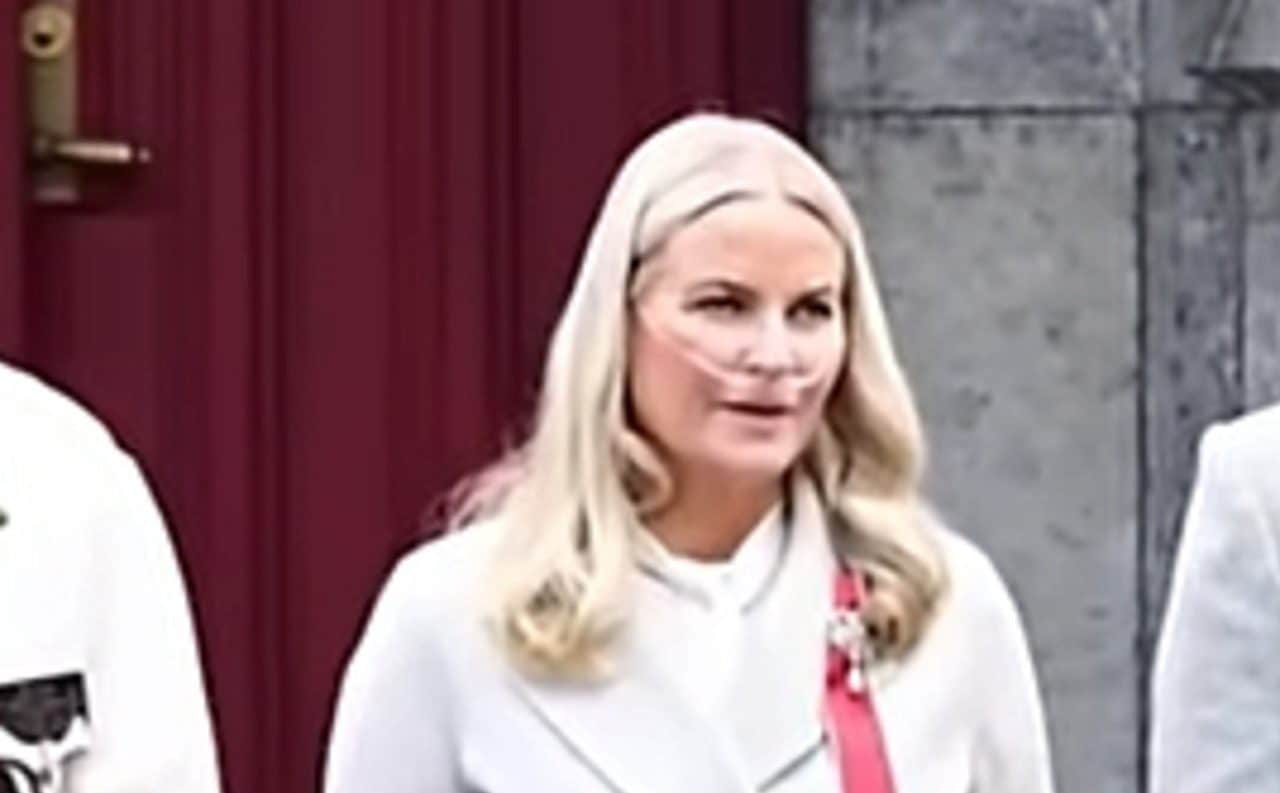
The Royal House of Norway announced that Crown Princess Mette-Marit, 52, underwent a lung transplant in Oslo and the surgery was successful. The procedure represents a significant relief for the monarch’s health.
Diagnosed with a form of pulmonary fibrosis in 2018, Mette-Marit’s health condition worsened in recent months, which led to the need for a transplant.
Are Holm, a lung specialist at the hospital responsible for the treatment, expressed the medical team’s satisfaction. “We are very pleased with the good progress that everything has made so far,” said the doctor in a statement released by the palace.
He detailed that the crown princess’s recovery will require her to remain hospitalized for “several weeks” under observation. This prolonged period, according to Holm, is a standard protocol for all patients who have recently undergone a transplant, aiming to ensure the stability of the condition.
As a result of the situation, Prince Haakon, Mette-Marit’s husband, will reorganize his official schedule to offer the necessary support to his wife during her convalescence, according to information from the palace.
The transplant surgery comes just two days after Mette-Marit’s son, Marius Borg Høiby, was sentenced to four years in prison for two counts of rape. Despite having admitted to some minor charges, he denied the more serious ones, and his legal defenders have already indicated that he will appeal the sentence.
Marius Borg Høiby, who is now 29 years old, was just four years old when his mother married Crown Prince Haakon, and he does not have royal status. Before Monday’s court decision, Høiby’s defense unsuccessfully tried to have him released from prison, arguing that he needed to be by his mother’s side due to her fragile health.
Royal historian and commentator Ole-Jørgen Schulsrud-Hansen highlighted the importance of the operation’s success. “This transplant is very happy news for the Norwegian royal family and the Kingdom of Norway,” he said.
Schulsrud-Hansen added that “this was one of the most serious obstacles in the path to better health for the Crown Princess, and I think many people are relieved that the transplant was successful.”
Mette-Marit, who married Haakon in 2001, was diagnosed with an unusual form of pulmonary fibrosis, characterized by breathing difficulties, in 2018.
As the illness progressed and worsened, the princess began to gradually reduce her official engagements. Earlier this year, pulmonologist Holm had already warned that the deterioration in his health had become “significant and dangerous”.
Mette-Marit’s last public appearance was recorded on May 17. At that time, she already needed a nasal tube connected to oxygen equipment to aid her breathing.
The palace said the princess had been added to the transplant waiting list 12 days before the surgery. The monarch’s doctors emphasized that the general rule of thumb for patients on this list is that they are expected to have a life expectancy of just one year.
“We always give priority to the sickest,” said Holm, explaining the selection criteria for transplants.
The doctor also highlighted that the post-transplant recovery period is extremely delicate. Recipients of donated lungs, according to him, need to continue treatment with immunosuppressant medications for the rest of their lives.
According to statistics presented by Holm, approximately one in eight people who receive a donated lung fail to survive the first year after surgery, while about half of patients remain alive after a decade.
The recent lung transplant surgery is the latest challenge facing the Norwegian royal family in a particularly busy year. In January, documents were revealed detailing Mette-Marit’s frequent contact with late sex offender Jeffrey Epstein.
The Crown Princess later issued a formal apology to the King and Queen of Norway for her three-year friendship with Epstein. In a national television interview, she admitted to “poor judgment” and expressed a wish she had never met him.




