
Observers may see alignment of planets and moon on the western horizon in the coming days

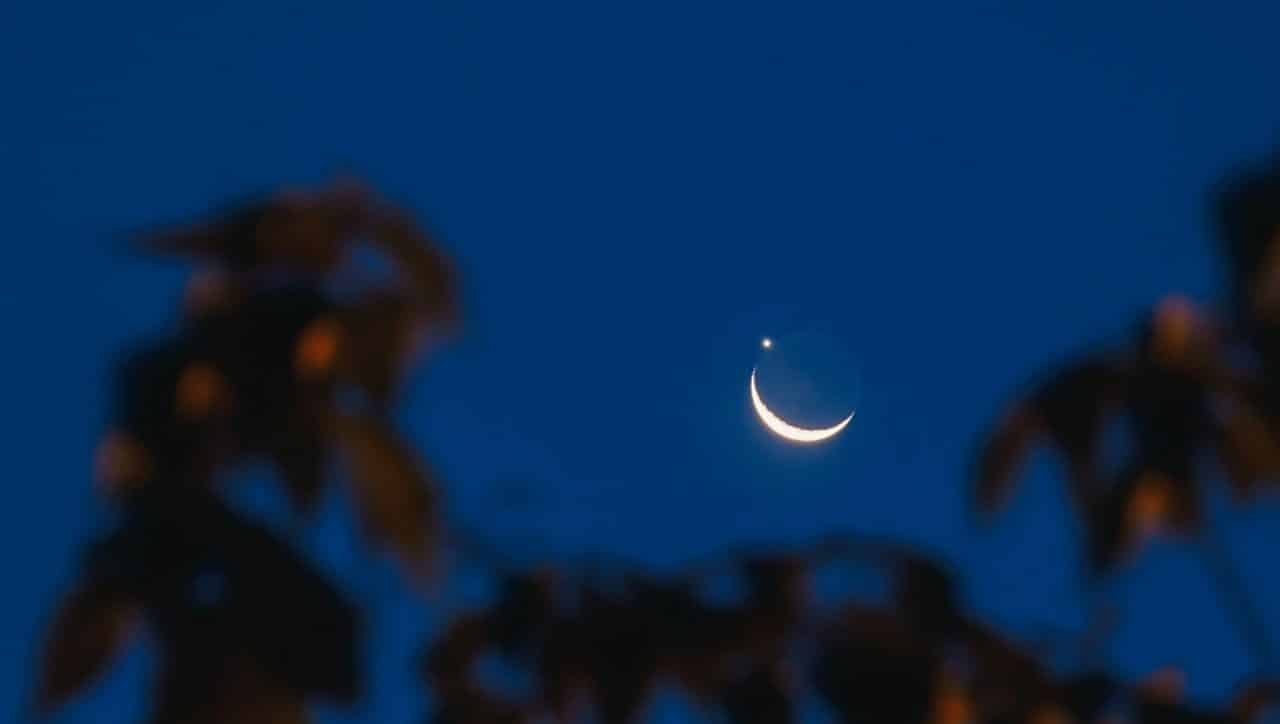
A unique opportunity to gaze at the night sky presented itself to many on Wednesday night, with Mercury, Jupiter, Venus and the Moon visible in a remarkably close formation on the western horizon. Those who didn’t have the chance to observe the event will have a new opportunity this Thursday (18). The celestial spectacle can be admired with the naked eye, shortly after sunset, in several regions of Brazil.
Yesterday’s nighttime configuration gained special attention due to the impressive proximity between the crescent Moon and Venus, the most luminous star in the group. According to experts, the occurrence of three planets aligned with the Moon so close to one of them is less common than isolated planetary alignments, which occur every 12 or 15 months. This detail makes the event even more unique for astronomy enthusiasts.
Understanding the formation of the stars lined up in the firmament
The explanation for the alignment of these celestial bodies lies in the architecture of our solar system itself. All the planets that can be seen without the aid of equipment — Mercury, Venus, Mars, Jupiter and Saturn — revolve around the Sun in orbits that lie in planes very similar to Earth’s orbit.
This same characteristic applies to the Moon. Due to the almost parallelity of their orbits, observed from Earth, Sun, Moon and planets follow a practically identical trajectory in the sky, known as ecliptic. This strip is where the constellations of the Zodiac meet, and is what generates the illusion of a “corridor” between them.
The formation of this visible alignment is influenced by the speed at which each of the stars moves in its orbit. The Moon exhibits the fastest movement, moving about 15 degrees of arc from one day to the next, the equivalent of an open hand with an outstretched arm.
The planets, on the other hand, have slower rhythms, but different from each other, which causes their proximity positions to form and unravel over time. Rarity manifests itself when these different speeds culminate in a visual alignment in the sky.
“What we were able to observe last night is a very unusual event, as they appear aligned, as usual, but with an apparent very close proximity, and the moon, in its thin phase, appears to be extremely close to Venus”, explains Josina Nascimento, researcher at the National Observatory.
How to observe the stars in the sky in the coming nights
This Thursday (18), immediately after sunset, the four stars will be visible again on the western horizon.
The visual sequence, from the lowest point in relation to the horizon upwards, will be Mercury, followed by Jupiter, then Venus and, higher up, the crescent Moon. Observation of all these celestial bodies is possible without special equipment.
For a clear view, it is essential to have a clear horizon. Mercury and Jupiter appear very close to the horizon line and quickly disappear, which can make observation difficult for those who have obstacles such as trees, buildings or elevations in the way. Venus, as it is taller and considerably brighter, is the easiest to identify and can serve as a guide to locate the others.
This trio of planets will remain accessible to view until the end of June and beginning of July, however, Mercury and Jupiter will gradually descend towards the horizon, eventually disappearing for those who do not have a completely clear view.





