Scientists unveil the body of a 1-meter giant scorpion that lived in the United Kingdom 415 million years ago
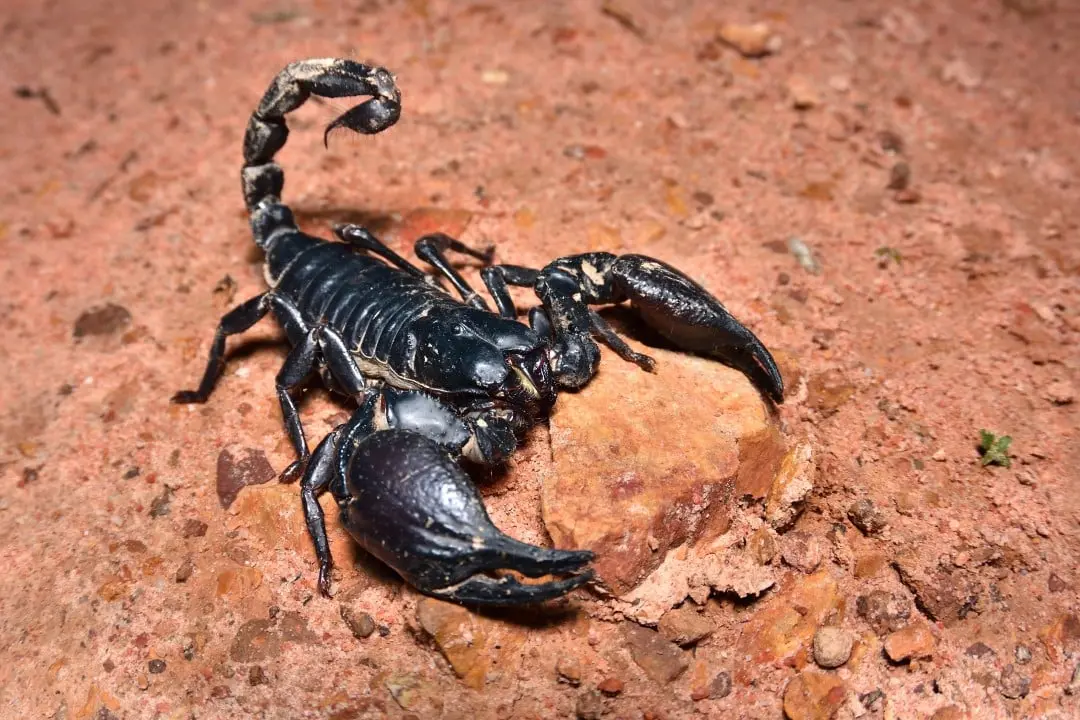
Never-before-seen images now provide a more vivid representation of a colossal creature that inhabited ancient lands. Visualize a scorpion about the size of a baseball bat, slithering across mossy rocks and large trees until it moves into a nearby stream.
A team of scientists recently revealed that an animal with these characteristics inhabited the region that today corresponds to the United Kingdom, around 415 million years ago. This prehistoric being is considered the largest scorpion ever identified to date, marking a significant advance in paleontology.
To reach this remarkable conclusion, experts revisited fossils that had been in the custody of the Natural History Museum in London for more than a century. By integrating these specimens with other more recent discoveries, the group of researchers was able to create a more complete representation of the creature, which is surprising due to its size.
With an estimated length of 1 meter, this scorpion was named Praearcturus gigas, or P. gigas. The detailed results of this investigation were released on June 2, in a renowned scientific publication dedicated to paleontology.
Initially identified in the 1870s, previous studies on this organism indicated its possible classification as a type of crustacean, isopods. However, from the 1980s onwards, advances in the understanding of P. gigas and related species led scientists to consider that it, in fact, belonged to the arthropod group. Arthropods are invertebrates characterized by having an exoskeleton and articulated limbs, a category in which scorpions are included.
Leia Também

Messi reaches 19 goals in FIFA World Cups with great free kick for Argentina in clash with Jordan

Cristiano Ronaldo shines beyond the pitch at the 2026 World Cup with business empire and family luxury

At 41, Cristiano Ronaldo reaffirms his historic legacy and prepares to shine in the 2026 World Cup
Researchers detail the identification of the giant scorpion
The study group closely examined eight fossils, collected from three distinct archaeological sites over several decades. Detailed analyzes were carried out using techniques such as computed tomography, among other advanced methodologies. In addition, there was a collaboration with specialized artists to develop illustrations that portrayed the likely appearance of this animal in its natural habitat at that time.