
Analysis of comet 3I/ATLAS confirms that the object predates the formation of our solar system

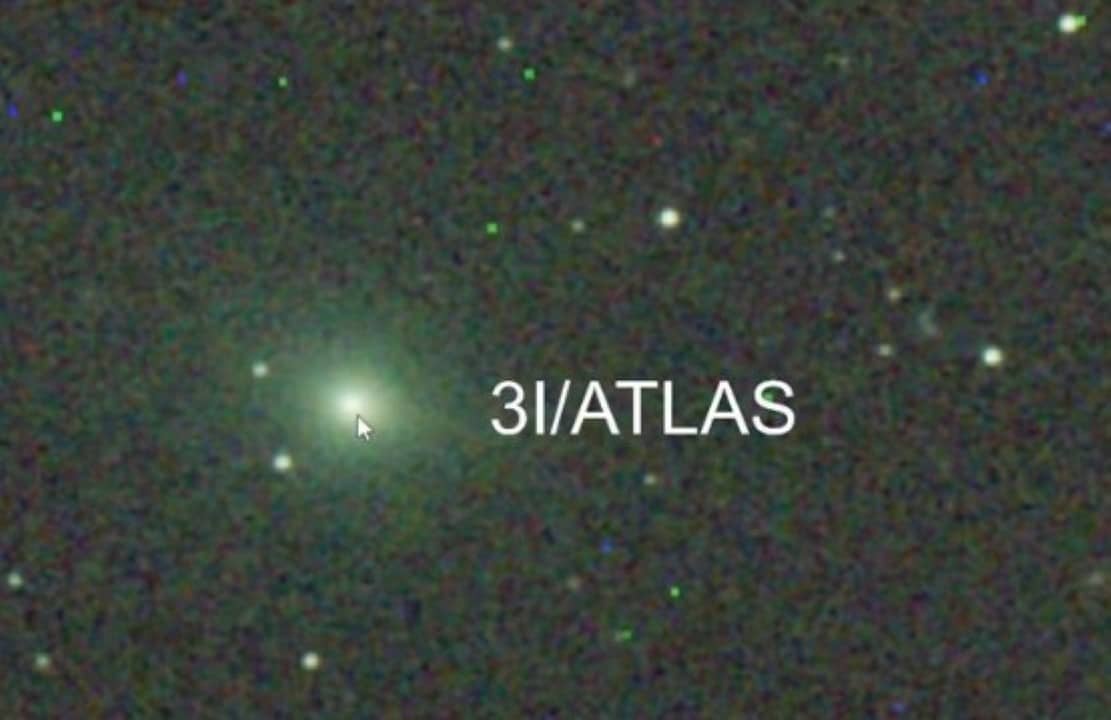
Scientists investigating comet 3I/ATLAS have concluded that this deep-space traveler is remarkably old, having formed between 10 and 12 billion years ago in a primordial planetary system, presenting a composition unlike any material found in our solar system.
This assessment of the chemical structure of 3I/ATLAS, which is only the third interstellar object ever recorded in our cosmic neighborhood, offered valuable information about the physical and chemical conditions of the planetary system where it emerged.
The comet, approximately 2.6 kilometers in diameter, is probably the oldest known object to cross the solar system, according to Martin Cordiner, a planetary scientist and astrochemist at NASA’s Goddard Space Flight Center and lead author of a study published in the journal Nature.
Training environment was significantly cooler
The researchers pointed out that 3I/ATLAS appears to have been born in a much colder environment – around -243 degrees Celsius – than the one that gave rise to Earth and other celestial bodies in our system, approximately 4.5 billion years ago. The object would have traveled an immense distance since it was ejected from its home planetary system by unknown means.
“We have never observed an object like 3I/ATLAS before,” said Cordiner.
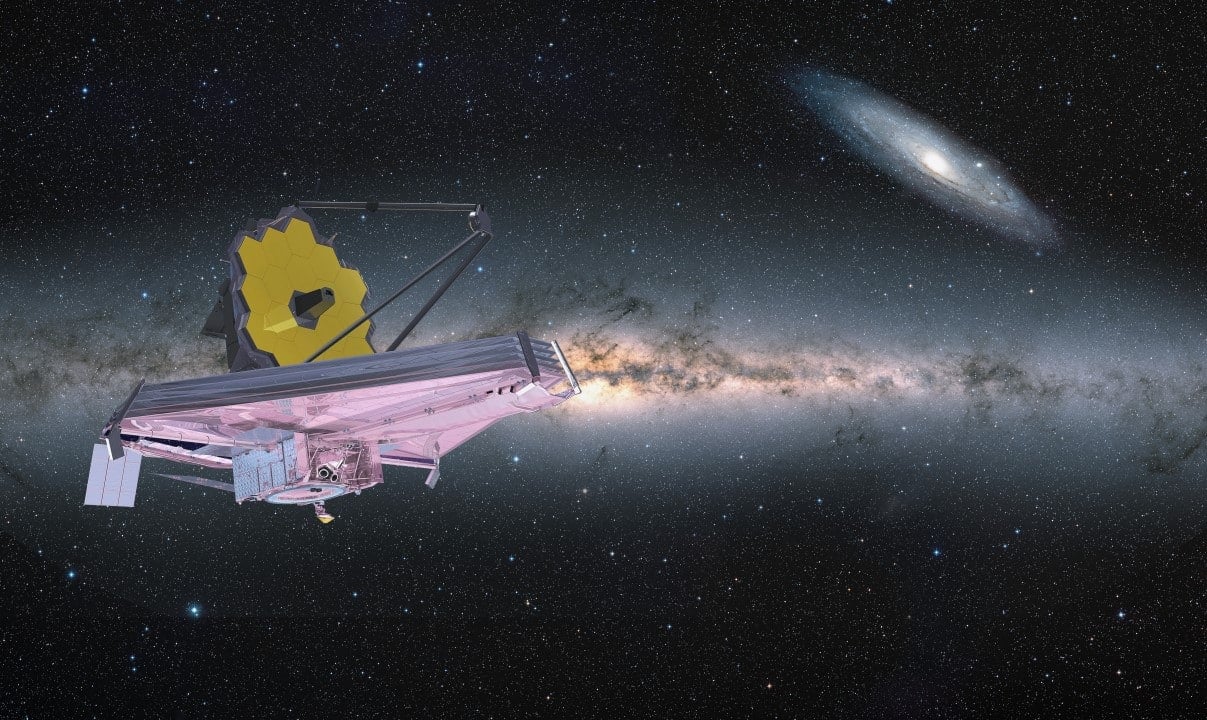
Experts determined the proportions of isotopes, which are variations of chemical elements such as hydrogen and carbon, present in 3I/ATLAS, using the advanced James Webb Space Telescope.
The characteristics of its hydrogen isotopes indicated the temperature and radiation of the 3I/ATLAS formation environment. The proportions of carbon isotopes provided details about the composition of the interstellar gas cloud that gave rise to both the comet and its planetary system.
The comet’s water revealed a concentration of deuterium, an isotope of hydrogen, about 30 times higher than that found in other comets in our solar system. Their carbon isotope ratios also diverged from those observed in solar system objects and in interstellar clouds and planet-forming disks around nearby newborn stars.
Cordiner suggested that 3I/ATLAS is possibly a remnant of the planetary formation process around a star other than our own.
“Our investigations with the James Webb Space Telescope reveal that the planet-forming environment of the 3I/ATLAS home system was notably different from ours. It was likely colder and less metal-rich, as well as being more intensely exposed to ultraviolet and cosmic radiation,” Cordiner explained.
Discovery of organic molecules raises questions
Despite the extreme conditions of its origin, 3I/ATLAS is rich in organic molecules, including those containing carbon, hydrogen, nitrogen, oxygen and sulfur. According to Cordiner, this “demonstrates that, even with a cold and distant origin, the volatile elements necessary for life as we know it were abundant in this distant planet-forming disk.”
Analysis of the carbon composition showed that 3I/ATLAS was formed approximately 12 billion years ago, during an era of intense stellar creation in its region. Considering that the universe began with the Big Bang about 13.8 billion years ago, the comet dates back to a period when the cosmos was only approximately 13% of its current age, offering a rare glimpse into primordial conditions.
Scientists are inclined to believe that 3I/ATLAS originated in the Milky Way, but given its advanced age, the possibility of its formation in another galaxy cannot be completely ruled out.
“I predicted that intergalactic distances were too vast, but in reality, a fast-moving interstellar object might only take a billion years to get here from our closest galactic neighbors, the Magellanic Clouds,” Cordiner commented.
The ejection of 3I/ATLAS from its original planetary system may have occurred due to gravitational interactions with other planets, although a collision of some kind is also considered a hypothesis.
Before 3I/ATLAS, only two other interstellar objects had been observed crossing the solar system: comet 1I/’Oumuamua, detected in 2017, and 2I/Borisov, discovered in 2019.
Currently, 3I/ATLAS is approaching the orbit of Saturn and is predicted to surpass the orbit of the dwarf planet Pluto in 2029, leaving the outer boundary of the solar system around 2035.
Researchers remain convinced that 3I/ATLAS is a natural object, despite some speculation raised last year by third parties, which suggested that it was an alien spacecraft.
“While good scientists are always open to updating their knowledge, we are very cautious in evaluating the evidence for each hypothesis,” Cordiner said. “In this case, the evidence was clear from the beginning that we were observing a comet-like object, and this interpretation was confirmed by subsequent observations over time.”





