Birthday at the 2026 World Cup crowns Luis de la Fuente’s paternal role model in the Spain national team
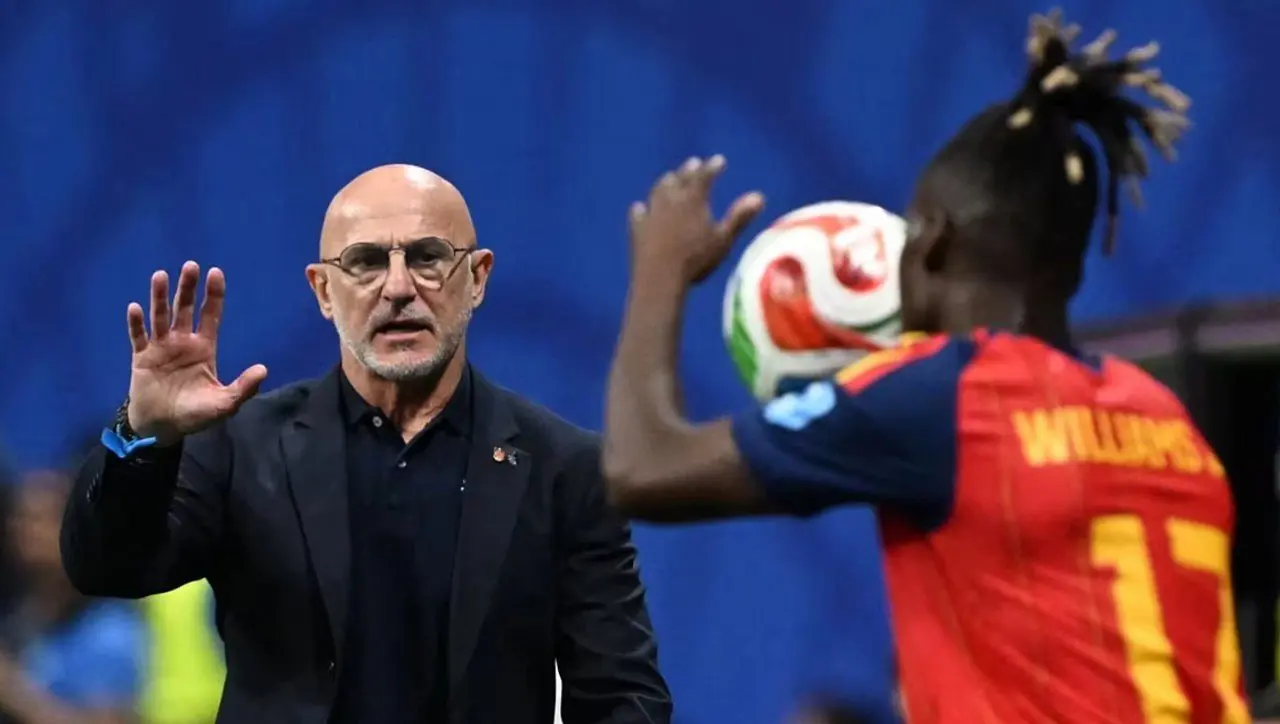
The commander of the Spanish national team experienced a doubly special moment during the 2026 FIFA World Cup™. Exactly on the day he turned 65 years old, Luis de la Fuente saw his team deliver a gala performance by achieving a resounding 4-0 victory over Saudi Arabia. The significant triumph in the global tournament served as the ideal gift for the professional, consolidating the European team’s good moment in the competition based in North America.
The long trajectory behind the scenes of the Spanish federation
Even celebrating more than six decades of life in the midst of the most important tournament on the planet, the coach exudes contagious energy and often jokes with journalists that he has the vigor of a man ten years younger. The rise to the main position, effective at the end of 2022, did not occur by chance. The veteran had already dedicated almost ten years of his career to the Royal Spanish Football Federation (RFEF), a period in which he shaped a work philosophy focused on the maturation of young promises, preferring to polish new talents instead of just managing the egos of stars already established in the European market.
Currently, the group of 26 players representing the Iberian country sees the coach as much more of a family advisor than just a tactical strategist. This relationship of extreme trust, however, is the result of a long process of coexistence. Luis de la Fuente’s journey through the ranks of Spain’s youth categories began in the 2013 season, a time when he took on the responsibility of guiding boys who dreamed of wearing the senior team’s shirt.
The reunion with talents honed in youth
His first major assignment was at the head of the under-19 squad, the initial step on a climb that would lead him to also command the under-21 category and the Olympic team, winning medals and European titles along the way. During this decade of immersion in the lower divisions, the professional followed each stage of the physical and mental growth of several boys who, today, form the backbone of the squad seeking a second world championship.
The intimacy with the current squad is evident when we analyze the names that passed through their hands when they were still teenagers. To illustrate the impact of this continuity, we can highlight some pillars of the current team that grew under his direct supervision:
- Rodri, current midfield maestro and global reference in the position.
- Fabián Ruiz, a key player in the Spanish tactical system.
- Mikel Merino, midfielder of extreme versatility and confidence of the boss.
- Unai Simón, absolute starting goalkeeper who gained security with the coach.
Defender Jesús Vallejo, who had the honor of wearing the captain’s armband in past achievements under the veteran’s command, often emphasizes that the captain’s greatest difference is knowing the psychological profile of each athlete since they were 15 years old. This accumulated baggage allows the coaching staff to get the most out of the team on extremely pressured stages, such as a FIFA World Cup.
Leia Também
Messi reaches 19 goals in FIFA World Cups with great free kick for Argentina in clash with Jordan
Cristiano Ronaldo shines beyond the pitch at the 2026 World Cup with business empire and family luxury
At 41, Cristiano Ronaldo reaffirms his historic legacy and prepares to shine in the 2026 World Cup
People management beyond the four lines
This history of daily coexistence gave the coach a rare sensitivity in modern football, allowing him to decipher the particularities and desires of each member of the dressing room. Luis de la Fuente’s concern has always been to establish a genuine human connection, going beyond the barriers of tactical instructions, physical training and video analysis that make up the routine of a high-performance team.
Caring for the new generation in the face of global pressure
The attitude of an educator was not left aside even under the intense spotlight of the World Cup. Moments before the opening whistle for the duel against Saudi Arabia, valid for the second round of the group stage, the commander had to deal with questions from the press about Lamine Yamal. The young striker, who has emerged as a global phenomenon, is often the target of early comparisons with historical icons such as Lionel Messi and Diego Armando Maradona. True to his protective style, the coach adopted a paternal tone to shield his young star.
In his view, creating parallels between a developing boy and the greatest legends in the history of the sport is a dangerous mistake. The commander made a point of emphasizing that the attacker still has a long journey of personal and professional maturity. For the coaching staff and the squad itself, the young man is treated with the same naturalness as his other teammates, which takes a huge weight off his shoulders. The coach explained that the best way to enhance the boy’s talent is by offering continuous support, acting in a similar way to a father’s guidance: guiding the steps and offering advice, but respecting the space necessary for him to grow on his own.
The consecration on the lawn of the Mercedes-Benz Stadium
The prodigy’s career in this World Cup began discreetly, participating in the goalless draw against the surprising Cape Verde team, in the opening round. In the following match, against the Arabs, the striker received the opportunity to start among the starters, carrying on his shoulders the hope of an entire nation for more offensive football. Despite the gigantic responsibility, the internal environment of the Spanish concentration offered the tranquility and emotional shielding that only an experienced manager could provide.
Backed by his coach’s unwavering confidence, the young talent did not disappoint. It was from his feet that the goal that opened the scoring against the Saudi team came from, transforming the stands of the stadium in Atlanta into a true cauldron and justifying the coaching staff’s bet on its decisive potential for the tournament.
The legacy of an educator in charge of the national team
Shortly after the final whistle that confirmed the victory, the commander expressed a mixture of relief and pride when rebutting external criticism. He classified any type of distrust regarding the ability of this new crop of Spanish players as a great injustice. Reaffirming his essence, he declared that his primary vocation is to be an educator, placing human training ahead of tactical drawing boards. To illustrate his methodology, he pointed out that communication requires constant adaptation: the language used to guide a teenager in his first World Cup can never be the same used to dialogue with a veteran multi-champion like Jesús Navas.
In the end, the figure of Luis de la Fuente transcends that of a simple national coach, approaching the role of a true patriarch. When blowing out his 65th birthday candles in the epicenter of the biggest sporting event in the world, the Spaniard left his ambitions for trophies in the background when formulating his request. His greatest desire was simply to continue to be healthy to enjoy life, value his daily work and celebrate the good fortune of being surrounded by people he admires. As he himself made a point of summarizing, the current Spain squad is, above all, a big family.