Relationship expert’s warning about ‘traumatic bond’ reignites debate about Messi and Antonela Roccuzzo’s union
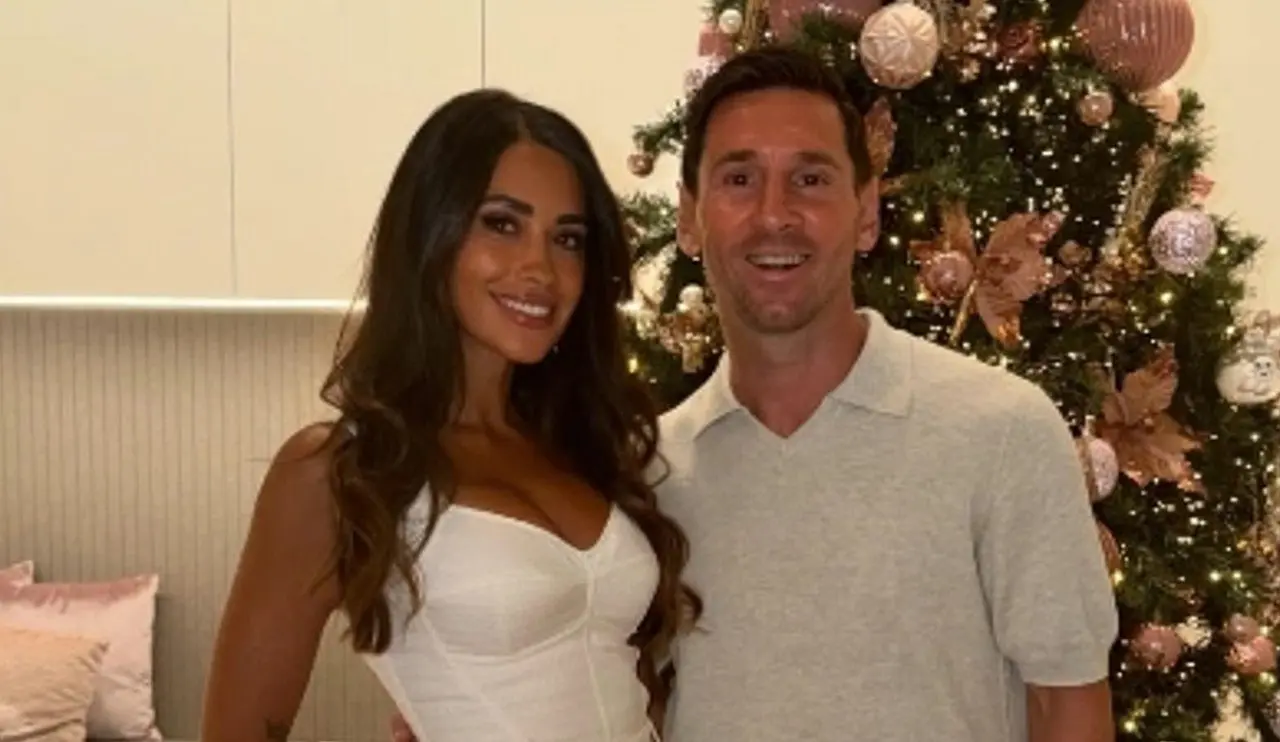
The marriage between Lionel Messi and Antonela Roccuzzo has once again become a topic of discussion following a warning issued by relationship expert Jordan Schieber. He warned that couples who reunite in times of grief may, in some situations, confuse shared pain with lasting compatibility.
In a statement to The Mirror US newspaper, Schieber explained that Messi’s resumption of his relationship with Antonela, following the loss of a childhood friend, represented a significant turning point for the couple. However, the specialist made a reservation, asking for caution not to hastily interpret what he called a “traumatic bond”.
The discussion about the couple comes amid the rediscovery of their trajectory, which remains one of the most unique love stories in the world of football. Messi and Roccuzzo grew up in the same neighborhood in Rosario, Argentina, maintained a close friendship as a child and lost daily contact when the player moved to Barcelona at the age of 13, seeking to develop his career.
Beginning of the relationship and remarkable reunion
Messi and Roccuzzo’s marital story began in their hometown, Rosario. The initial meeting between Messi and Antonela took place when he was just five years old, introduced by Lucas Scaglia, Roccuzzo’s cousin and friend of the player. Even at a young age, Messi already demonstrated an almost surprising conviction. Sources close to him reveal that he once wrote in a letter: “One day we will be engaged.”
This phrase, which carried the innocence and confidence of a child without full awareness of future challenges, today sounds like a strange premonition. After years of distance, Messi and Roccuzzo began discreetly dating in 2008, with their relationship publicly confirmed in January 2009. At that point, they had already overcome a phase of separation that could have ended the story or, as happened, given it a new, more complex life.
Leia Também

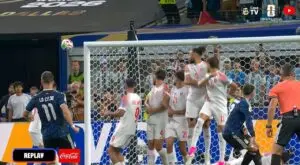
Messi reaches 19 goals in FIFA World Cups with great free kick for Argentina in clash with Jordan

Cristiano Ronaldo shines beyond the pitch at the 2026 World Cup with business empire and family luxury

At 41, Cristiano Ronaldo reaffirms his historic legacy and prepares to shine in the 2026 World Cup
Antonela Roccuzzo moved to Barcelona in 2012, marking a new phase for the couple. They went from being just childhood acquaintances from the same neighborhood to building a life together under Messi’s growing visibility. Antonela was often seen at games, in the stands and behind the scenes in a career that expanded globally. There is an authenticity to this part of the trajectory, perhaps that is why it captivated the public, always seeming genuine and lived-in.
The couple’s marriage was celebrated in June 2017, in their hometown, Rosário, revisiting the place of their origins. Before that, they had already welcomed their first child, Thiago, in 2012. Mateo was born in 2015, and Ciro arrived in 2018. The family sequence appears to be organized, but the path to get there was anything but linear. Messi’s move to Barcelona as a teenager, the years of estrangement, the subsequent reunion and the period of mourning, which Schieber points to as an influential factor, all give the relationship a greater depth than the typical celebrity romance narrative.
Expert analyzes the complexity of the bond
Schieber’s warning adds a layer of complexity to the narrative. He acknowledged the “romanticism” in Messi and Antonela’s story, but stressed that couples need to be cautious not to confuse shared pain with a genuinely healthy bond. This consideration is sensitive, but also instructive. Grief can strengthen trust, but it can also blur the lines between comfort and dependence, bringing people together for reasons that are sincere but difficult to discern.
The expert made a point of underlining that his analysis was not a specific interpretation of Messi and Roccuzzo, but rather a broader warning. In other words, he wasn’t implying that their marriage was built on sadness, but rather that stories like theirs can make pain seem more manageable than it really is. It is a valid warning and, for many, quite pertinent.
Still, the couple’s trajectory suggests that the bond between them persisted because it was built over many years, and not manufactured through public exposure. Messi didn’t meet Antonela after winning trophies, making headlines or facing constant scrutiny. He knew her before all this, before Barcelona, before her global fame, before her life became much bigger than football. This detail is crucial, preventing the story from turning into another superficial celebrity report.
Schieber also expressed regret that tragedy was part of the path to reunion, although he added that grief can reveal who really matters. For Antonela, he suggested that Messi appeared at the most crucial moment. Perhaps this is the central point of the story, or something very close to it: not perfection nor an unlikely fairy tale, but just two people who were children in the same town, separated by life, brought together by loss and time, and who still remain united as family, seen through the lens of an issue that never completely dissipates.