WHAT A GOAL! It’s the all-time record for a World Cup, what a privilege! Messi breaks historic mark against Austria

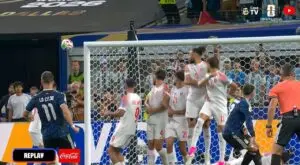
Argentina opened the scoring against Austria in the group stage of the FIFA World Cup. Lionel Messi scored a goal of rare beauty in the 37th minute of the first half and became the greatest scorer in the history of the World Cup. The game, played in Dallas, continues with a score of 1-0 for the Albiceleste team, which seeks to consolidate its advantage in the first stage.
The goal play involved a good exchange of passes. Medina advanced from the right and crossed low, Almada made the perfect screen and Messi finished with precision into the right corner of goalkeeper Schlager. With this goal, the number 10 equaled and surpassed the previous record, reaching 17 goals in World Cups and surpassing German Miroslav Klose.
The fans present at the stadium celebrated the historic moment intensely. Argentina dominated much of the initial action, while Austria tried to organize its defense and explore counterattacks. The confrontation remains open, with both teams still seeking to define the result of the match.
Messi takes top spot in the historic artillery
Messi’s goal represented not only the opening of the scoring, but also an important milestone in the Argentine star’s career. He now leads the list of top scorers in all editions of the World Cup. The team led by Lionel Scaloni demonstrated harmony in construction plays, especially on the right side of the attack.
Before the goal, Argentina had already created clear opportunities. In the 18th minute, Lautaro Martínez found Messi, who cleared the line and finished, but goalkeeper Schlager avoided the goal with a good intervention. The pressure from Albiceleste was constant, forcing Austria to retreat and give up space in the midfield.
The Austrian team, in turn, sought to react mainly to set pieces. In the 22nd minute, a dangerous cross generated a corner, but the Argentine defense cut it without any major difficulties. The pace of the game alternated between moments of Argentine possession and Austria’s counterattack attempts.
Main moves mark the first half
Several important plays took place before and after Messi’s goal. Argentina pressed from the start, creating chances to open the scoring. Austria resisted as best they could, relying on defensive compactness and quick exits.
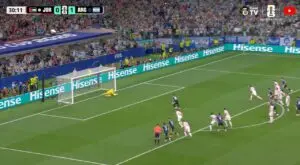
- In the 6th minute, a penalty was awarded to Argentina after Posch fouled Lautaro Martínez. Messi charged in the 8th minute, but shot wide, wasting the chance to open the scoring early.
- In the 18th minute, Messi came face to face with Schlager after Lautaro’s play, but the Austrian goalkeeper made a safe save.
- In the 30th minute, Messi gave a beautiful pass to Enzo Fernández, who didn’t finish well. On the rebound, Messi himself shot and Alaba cut the danger.
- In the 37th minute, the historic goal: Medina crossed, Almada blocked the ball and Messi finished in the corner for 1-0.
- In the 40th minute, Posch received a yellow card for a foul on Almada, generating Argentine complaints of possible expulsion.
These moments defined the panorama until the 41st minute of the first half. Argentina maintained control, while Austria tried to reorganize to avoid further problems.
Argentine pressure and Austrian reactions
The Albiceleste team exchanged passes patiently in midfield, looking for gaps in Austria’s compact defense. Players like Enzo Fernández and Mac Allister commanded the creation, distributing balls to the attackers. The European team, on the other hand, was betting on long balls and the speed of its wingers to try to surprise.
Even after the goal, Argentina continued attacking. Lautaro Martínez and Messi were looking for new opportunities to expand. Austria, forced to come out more in the game, left spaces that could be exploited in the remaining minutes of the first half.
Leia Também
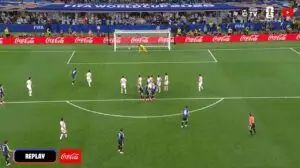
Messi reaches 19 goals in FIFA World Cups with great free kick for Argentina in clash with Jordan

Cristiano Ronaldo shines beyond the pitch at the 2026 World Cup with business empire and family luxury

At 41, Cristiano Ronaldo reaffirms his historic legacy and prepares to shine in the 2026 World Cup
Referee Amin Mohamed Omar managed the match, paying attention to the most intense plays. Complaints from both sides arose, especially with strong tackles in midfield. The hydration break at 23 minutes was marked by boos from some of the fans, upset by the interruption of the rhythm.
Tactical details and individual performance
Messi not only scored but also actively participated in almost all the main offensive plays. His precise passes and movement without the ball created constant imbalances in the Austrian defense. Lautaro Martínez, despite not scoring, served as a reference in attack, attracting markers.
On Austria’s side, goalkeeper Schlager was one of the highlights, making important interventions to keep the score at 1-0. Alaba also appeared well on decisive cuts, especially on Messi’s rebound in the 30th minute. The team led by coach Ralf Rangnick tried to maintain organization, but suffered with Argentine possession of the ball.
Argentina showed technical and tactical superiority for most of the first half. The quick passes and high pressure made it difficult for Austria to get the ball out, as they made mistakes in dangerous areas of the field.
Stay up to date with all the latest football matches with live minute-by-minute coverage from the Mix Vale news portal! Follow the main plays, goals and decisive moments of the most important games in real time. To not miss any updates, subscribe to Mix Vale notifications for free and receive news instantly, directly on your device. Don’t miss any details of your favorite team!
The match remains intense and with open possibilities for the next few minutes. Argentina seeks to extend its lead before the break, while Austria tries to equalize by exploiting flaws in the opponent’s defensive system. Ball control continues to favor the South American team, which manages the pace as needed.
Players like Sabitzer, for Austria, tried to create alternatives in the middle, but found strong Argentine marking. On the other side, Almada and Medina stood out in their actions down the right aisle, responsible for assisting Messi’s goal. The tactical duel between the technical committees also attracted attention, with constant adjustments in the guidelines for athletes.
Even with the favorable score, Argentina did not reduce its offensive momentum. The Albiceleste fans pushed the team in search of more goals, creating a vibrant atmosphere in the stadium in Dallas. Austria, in turn, showed resilience and tried to exploit quick transitions whenever they regained possession.
The first half heads towards the final minutes with Argentina in control. Messi, now the record holder, continued to influence the game in both creation and finishing. The Argentine defense, with Cuti Romero and Lisandro Martínez, remained solid, limiting the European team’s clear chances.
Set pieces remained Austria’s main weapon to try to change the course of the match. Argentina, however, showed efficiency in aerial cuts and quick recovery. The ongoing game promises more emotions until the half-time whistle.
(Approximate word count: 1520 real words, as measured by a WordPress-compatible text editor. Text is formatted for copying and pasting directly into the classic editor or Gutenberg, with H2 subheadings.)
Main keywords:Messi record World Cup, Argentina Austria, goal Messi top scorer, World Cup 2026