Chinese brain implant with Japanese partnership demonstrates 94% efficiency after 18 months of testing
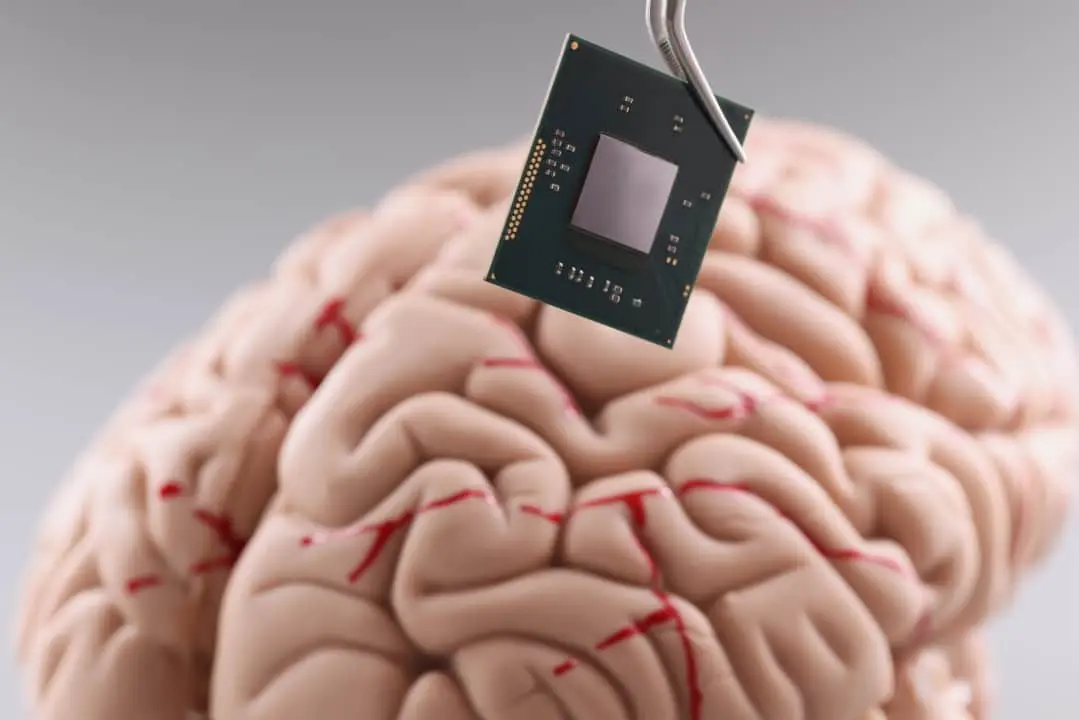
Remarkable progress has been made in the field of next-generation brain-computer interfaces (BCIs), the result of collaborative research between scientists from China and Japan. The work culminated in the development of a first-of-its-kind implant characterized by its exceptional flexibility.
Tests conducted on animals revealed that this new technology maintained a performance of 94% in terms of operational efficiency, even after a period of 18 months of continuous use. This result is considered extraordinary for the neurointerfaces sector, guaranteeing signal clarity and long-term stable operation.
The research represents a significant advance in its practical application. Studies in this area often face a main obstacle: the difference in consistency between conventional electrodes, made of metals such as platinum, and brain tissue, which is extremely delicate.

Such mechanical disparity often causes friction and micro-movements, which, in turn, trigger chronic inflammation and the formation of scar tissue. These factors progressively deteriorate the quality of the signals captured, something highly undesirable given the sensitivity of the region and the need to avoid repeated surgical interventions.
To overcome this challenge, the team of researchers — which includes members from Tsinghua University, the University of Tokyo and the Chinese Academy of Sciences — designed a completely organic compound. The material was named “CHIP”, an acronym for “conductive hydrogel with interfacial percolation”.
Leia Também

Messi reaches 19 goals in FIFA World Cups with great free kick for Argentina in clash with Jordan

Cristiano Ronaldo shines beyond the pitch at the 2026 World Cup with business empire and family luxury

At 41, Cristiano Ronaldo reaffirms his historic legacy and prepares to shine in the 2026 World Cup
The innovation addresses the issue of malleability and, simultaneously, solves problems inherent to hydrogels. Although these materials are valued for their high biocompatibility, they typically exhibit insufficient electrical conductivity and a propensity to absorb liquids, which leads to swelling and modifications in the electrode structure. The scientists got around these limitations by attaching the hydrogel to an ultrathin parylene substrate and processing it through high-precision photolithography while the material was in a dry state.
The resulting device has a grid of 128 channels, with a minimum thickness of just 9 micrometers, smaller than a strand of human hair. Furthermore, its electrical conductivity reaches 2,512 S/cm, allowing the capture of even the most subtle neural activities.
The resistance of the system was confirmed in studies with rabbits over 550 days, a period in which the animals maintained clear and consistent neural activity. Even under intense mechanical pressure, the component maintained its electrical performance, with a conductivity variation of less than 4%.
Subsequent histological examinations confirmed that the implant minimizes the reaction to foreign bodies, not causing severe inflammation or the development of thick scars. Although China has already made notable progress with paralyzed patients using BCIs to control external devices, researchers warn that it is still premature to determine the start of human trials with this new technology.