
Interview with Valve clarifies Steam Machine optimization for 1080p/30fps and flexibility of use

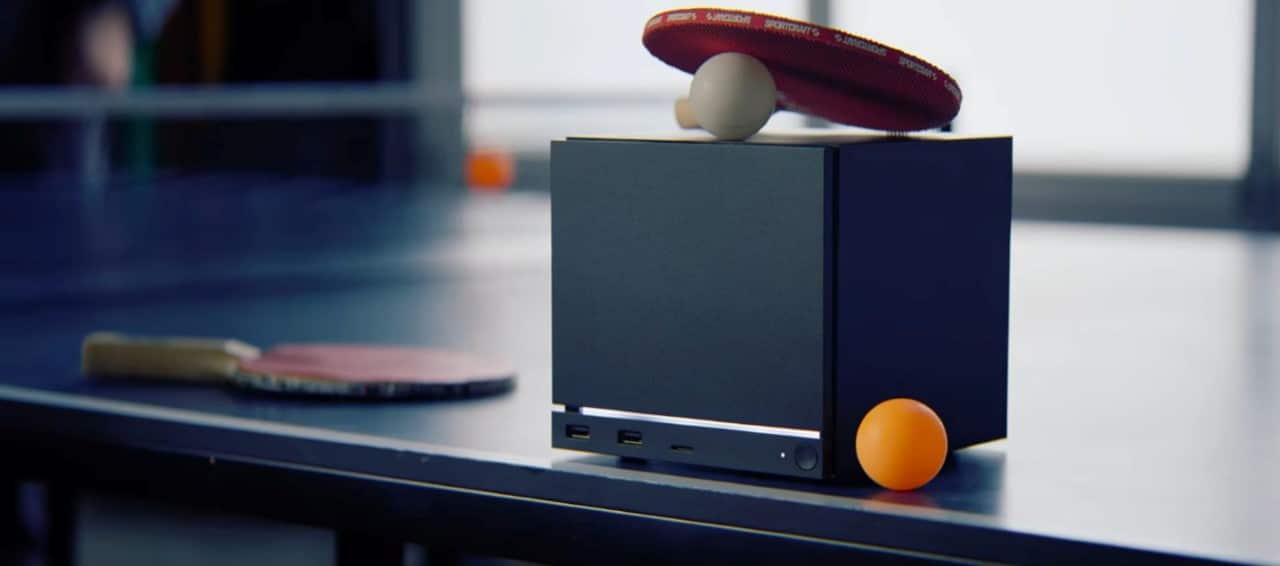
Valve and KOMODO officially launched “Steam Machine” on June 23, introducing a new desktop computer optimized specifically for Steam’s vast library of games. The device promises a simplified gaming experience for users.
This equipment was developed with the purpose of facilitating access to PC games in domestic environments, such as the living room. Its hardware performance is estimated to be six times that of the compact Steam Deck. With a cubic design measuring approximately 160mm per side, the Steam Machine offers silent operation and an effective cooling system. Like the Steam Deck, it will also implement a verification program to ensure title compatibility.
A specialized magazine conducted an email interview with Valve’s Steam Machine development team, covering various aspects, including its specifications and capabilities.
The Steam Machine team members interviewed were Pierre-Loup Griffais (programmer), Yazan Aldehayyat (engineer), and Lawrence Yang (designer).
Performance focused on fluid gameplay
Asked about specific performance goals for the Steam Machine, whose specifications were based on Steam’s hardware research to run “all Steam games,” Valve’s development team provided key details.
The development team explained that the “Steam Machine Verified” program establishes a standard that ensures games run smoothly at 1080p resolution and 30 frames per second (fps), without the need for configuration adjustments by users. The priority is to deliver a pleasant and hassle-free gaming experience right after purchasing the device.
Advantages over consoles and compact PCs
When compared to home consoles and compact PCs, the Steam Machine seeks to stand out for its comfortable and immediate gaming experience. The development team was asked about the strengths the device offers in this competitive scenario.
The developers highlighted that the Steam Machine was designed so that users can enjoy Steam games in more contexts and with greater adaptability. To achieve this, the device was equipped with features that are not common in traditional desktop or compact computers, such as the HDMI-CEC connection for greater stability with living room televisions, a dedicated Bluetooth antenna to improve connection quality and full integration with the Steam Controller.
Flexibility in frame rate and VRR
The team was asked about Steam Machine’s support for Variable Refresh Rate (VRR) and whether there would be a frame rate cap, such as 60 fps.
The development team has clarified that Steam Machine does not impose a 60 fps hardware limit. Basically, the system operates according to the refresh rate supported by the connected monitor or TV. However, users can modify settings to achieve frame rates higher than the screen refresh rate. VRR technology is essential for providing a comfortable gaming experience, even in titles that don’t maintain a lock on 60 fps.
Optimized power consumption
Considering that PCs generally consume significantly more power than video game consoles, the team was asked how the Steam Machine stacks up in terms of power consumption compared to home consoles.
The development team stated that the Steam Machine achieves superior energy efficiency during gaming use, relative to both consoles and desktop PCs. Additionally, power consumption in idle and sleep modes has been optimized to minimize energy consumption when the device is not in use.
Collaborative specification development
Asked about the process of defining Steam Machine specifications, the development team detailed the approach used.
In the development process, Valve collaborated closely with players and game developers, both internal and external to the company, to ensure the final product met users’ expectations and needs.
Support for anti-cheat technologies
With the Steam Machine expected to appeal to more complex games that require robust anti-cheat technology for online titles, the team was asked about the support offered by the device in this regard.
Currently, Valve is working to integrate several anti-cheat services. Solutions such as BattlEye and Easy Anti-Cheat are already compatible with SteamOS, but depend on opt-in by game developers. The team acknowledged that anti-cheat measures operating at the kernel level still represent a technical challenge in SteamOS, but continue to seek solutions to this issue.
The native versus remote gaming experience
Valve has historically promoted the “play PC games remotely” style with products like Steam Link and Steam Deck. The team was asked how the user experience differs between native play on the Steam Machine and remote play.
The development team highlighted the importance of usage scenario and flexibility for the user. Steam Link features and remote play capability allow gamers to access and enjoy their titles on a variety of devices that have Steam installed.
For example, some users may choose to stream games from the Steam Machine to the Steam Deck, while others may prefer to connect to the Steam Machine from their desktop PC, or even play on mobile devices using the Steam Link app. The goal is to support all of these diverse play styles.
Future with AMD’s FSR4
With AMD planning to implement its “FSR4” super-resolution technology on RDNA3 architectures by 2026, the team was asked whether the Steam Machine, which also uses RDNA3, will support this new feature.
The development team has confirmed that it is collaborating with AMD to integrate FSR4 support into the Steam Machine. While a specific date cannot be announced at this time, Valve plans to make an announcement soon and hopes users will be able to experience the technology on the device. FSR4 promises significant improvements in image quality when performing resolution upscaling.
SteamOS desktop mode improvements
Given that the Steam Deck can be used as a Linux operating system and the Steam Machine positions itself more strongly as a desktop Linux PC, the question was whether there are plans to update the PC mode of SteamOS to more closely resemble the Steam Machine experience.
The developers explained that the Steam Machine incorporates a desktop mode that allows the use of a keyboard and mouse, offering a familiar environment for users, similar to what already exists on the Steam Deck. Valve plans to continue improving SteamOS as a whole, and improving the desktop experience is an integral part of that process. The company has expressed interest in receiving user feedback on what features they would like to see implemented in SteamOS in the future.





