Austrian woman suffers leg amputation after shark attack while diving in Galapagos waters
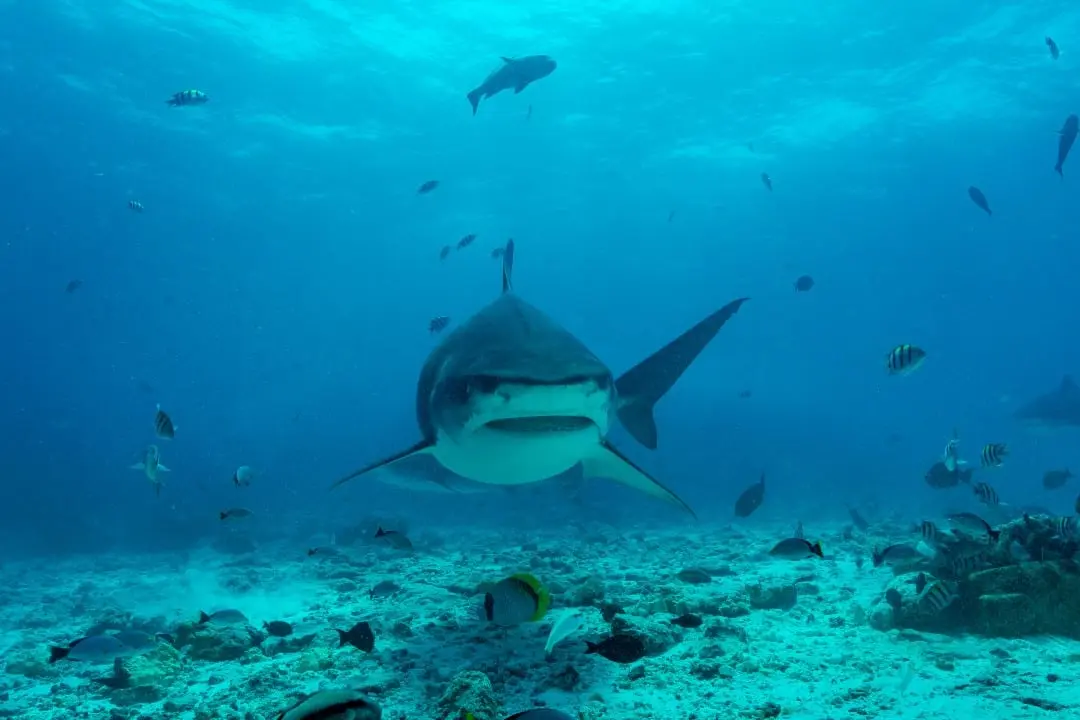
A 30-year-old Austrian tourist had one of her legs amputated after being attacked by a shark while diving off Santa Fe Island, part of the Galapagos archipelago in Ecuador. The incident happened on June 14, when Elisabeth A., the victim, was celebrating her three-decade birthday at the Pacific Nature Sanctuary.
The attack was quick and unexpected, according to the tourist herself. She said the animal “came out of nowhere” and that no one in the diving group – which included her husband, a guide and others – had seen any sharks before the incident. The brutality of the moment made it clear to Elisabeth that recovering her leg would be impossible.
Details of the incident during the celebration
Despite being a destination famous for its rich marine life and diving, Elisabeth A.’s experience was marked by a traumatic event. The group was participating in a water activity typical of the region when the shark quickly approached. The sudden nature of the attack highlights the unpredictability of encounters with wild animals in their natural habitats, even in places with experienced guides.
The immediate reaction and despair of everyone present was intense. The tourist was promptly rescued, but the extent of the leg injuries was severe. Hours after the attack, the harsh reality of the need for amputation was confirmed, beginning a long process of physical and emotional recovery for the young Austrian.
The rare occurrence of serious attacks in the Galapagos
The Galápagos archipelago is world-renowned for its unique biodiversity and rigorous conservation system, which makes shark attacks of such severity extremely rare. The region’s waters are home to several species of sharks, such as the hammerhead shark, the whitetip shark and the whale shark (in certain seasons), which are frequently seen by divers. However, unprovoked aggressive interactions against humans are uncommon.
Marine life experts and local environmental authorities constantly monitor animal behavior and visitor safety. The presence of a tiger shark, mentioned in the source article as an illustrative image, is a detail that, if confirmed as the aggressor, would add an extra layer of concern, as this species is known to be more opportunistic in its eating habits, although it is still not common to record unprovoked attacks on humans in organized diving areas. The priority in the region is to ensure safe coexistence between tourists and local wildlife, which includes strict guidelines for wildlife viewing.
The consequences of the attack and the long recovery process
Leg amputation represents a profound change in Elisabeth A’s life. In addition to the immediate physical trauma, recovery includes an extensive period of rehabilitation, adaptation to a prosthesis and overcoming the psychological challenges arising from such a remarkable event. The phrase “When I saw my leg after the attack, I knew it couldn’t be saved” expresses the victim’s clarity and despair at the severity of his injuries.
Leia Também

Messi reaches 19 goals in FIFA World Cups with great free kick for Argentina in clash with Jordan

Cristiano Ronaldo shines beyond the pitch at the 2026 World Cup with business empire and family luxury

At 41, Cristiano Ronaldo reaffirms his historic legacy and prepares to shine in the 2026 World Cup
Medical and psychological support is essential in these cases. Patients undergoing amputations need a multidisciplinary team to assist with healing, control of phantom pain and learning new forms of mobility. The journey is challenging, but human resilience is a key factor in overcoming it and readapting to everyday activities.
Safety measures and guidelines for visitors to marine areas
Incidents such as the one that occurred in the Galápagos reinforce the importance of strictly following safety protocols in natural environments, especially in water activities. Although rare, wild animal attacks can happen. Authorities in the Galapagos, as in other marine reserves, generally establish clear rules to protect both wildlife and visitors.
- Follow the instructions of accredited guides:Local experience is essential to understand water conditions, animal behavior and the safest places to dive or swim.
- Keep your distance from wildlife:Avoid touching or feeding wild animals. Respecting their space minimizes any chance of a defensive reaction.
- Dive into groups:The presence of other people and, especially, a guide, increases safety and response capacity in case of emergencies.
- Avoid diving in low visibility conditions:Cloudy waters can confuse animals and make it difficult to perceive their presence.
- Be aware of your surroundings:Observing your surroundings and the guide’s signs is crucial to identify any changes or imminent danger.
The impact on a delicate ecosystem and the future of tourism
The Galápagos archipelago is a Natural Heritage Site, attracting thousands of tourists annually who seek contact with its untouched nature. Events like this, despite being isolated, can generate concern among visitors. However, the safety record and strict conservation and sustainable tourism policies generally prevail.
Local authorities and tourism operators must continue to reinforce safety messages and the importance of environmental awareness. The uniqueness of the Galápagos lies in its ability to offer an immersion experience in nature, where respect for wildlife is the basis for preserving its delicate ecosystem. The expectation is that, despite the tragedy, the victim’s resilience and commitment to safety and conservation will continue to be the pillars of the Galápagos experience.