Porsche launches the 911 GT4 R, a new track-only sports car with advanced engineering
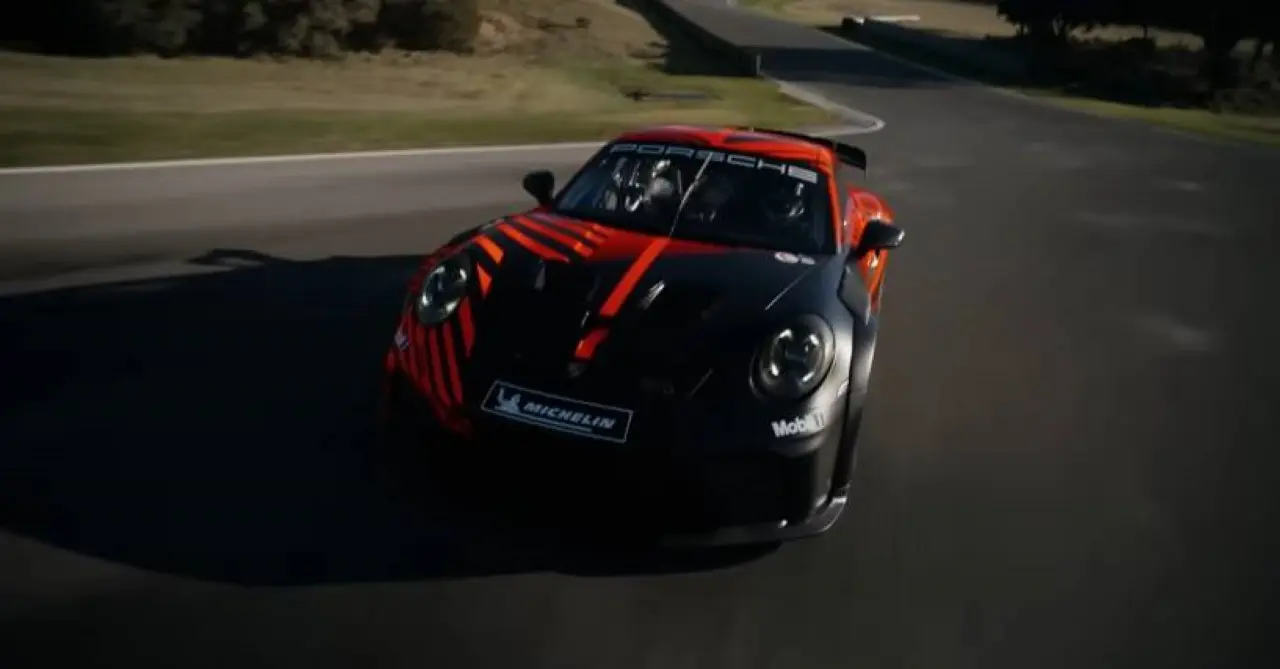
Porsche has officially presented the new 911 GT4 R, a model designed with full focus on the race track. This revelation marks a significant advance in the German automaker’s strategy for its competition cars, highlighting the evolution of the GT4 line to an even more robust and high-performance platform.
The vehicle was designed to meet the rigorous demands of motorsport, promising agility and power optimized for the competition environment. The arrival of the GT4 R reinforces Porsche’s commitment to motorsport and technological innovation in the high-performance segment.
Evolution of the GT4 concept: the leap to the 911 platform
Historically, Porsche’s GT4 family was associated with the Cayman line, models known for their mid-rear engine and exceptional dynamics. These cars have achieved remarkable competitive potential in various racing categories around the world.
Now, the transition from the GT4 concept to the legendary 911 platform, specifically for this track model, demonstrates the brand’s flexibility and engineering capabilities. This move allows Porsche to explore new frontiers of performance, leveraging the 911’s architecture to create an even more extreme and efficient racing car.
Technical details that boost the performance of the 911 GT4 R
The heart of the new Porsche 911 GT4 R is a four-liter naturally aspirated boxer engine, a powerhouse that delivers impressive racing performance. This engine has been optimized to extract maximum power and resistance in track conditions.
Sharing the engine base of the acclaimed 911 Cup, the GT4 R benefits from a specific calibration that waives the restrictions imposed by the FIA for certain categories. This allows the engine to operate at full capacity, offering an unparalleled riding experience on the track.
Essential Porsche 911 GT4 R specs for the track
Designed to be a true high-performance machine, the Porsche 911 GT4 R comes equipped with components that make it ideal for the most demanding racing environment. Its technical sheet reveals a package designed for speed and durability:
Leia Também

Messi reaches 19 goals in FIFA World Cups with great free kick for Argentina in clash with Jordan

Cristiano Ronaldo shines beyond the pitch at the 2026 World Cup with business empire and family luxury

At 41, Cristiano Ronaldo reaffirms his historic legacy and prepares to shine in the 2026 World Cup
- Engine:4.0 liter naturally aspirated boxer
- Power:520 hp at 8,400 rpm
- Torque:47.9 kgfm at 6,150 rpm
- Maximum rotation:8,750rpm
- Transmission:Six-speed sequential transmission (dog-leg type) with four-disc competition clutch
- Suspension:Two-level adjustable shock absorbers and springs with three compression levels
- Wheels:Conventional five-bolt system, eliminating the need for a quick hub
- Inside:Completely race-focused, with full roll cage, exposed carbon fiber and driver bucket seat
The “dog-leg” sequential transmission, for example, is a common feature in racing cars, where the first gear is isolated to protect the gear during quick changes from second to third. The interior reflects this dedication, offering a spartan and functional environment, with maximum safety and ergonomics for the pilot.
The stage of the competitions and the cost for the teams
The Porsche 911 GT4 R was carefully designed to participate in several prestigious motorsport categories around the world. The Porsche factory team has already indicated its presence in championships such as the IMSA Michelin Pilot Challenge and the SRO Pirelli GT4 America.
Furthermore, the model will be able to compete in the Porsche Sprint Trophy, the Porsche Sprint Challenge North America and the Porsche Carrera Cup, all based in the United States. This broad eligibility ensures that the GT4 R will have plenty of opportunities to shine on the track.
For teams and drivers wishing to purchase this racing machine, the estimated cost is US$375,000. In a direct conversion to Brazilian currency, this value exceeds R$1.95 million, highlighting the investment necessary to compete at the highest level of motorsport with cutting-edge Porsche equipment.
Porsche’s sporting legacy and influence on future technologies
The launch of the 911 GT4 R is not just the introduction of yet another racing car; it represents the continuation of Porsche’s legacy in motorsport. Since its first models, the automaker has used the tracks as a laboratory to develop and test new technologies.
Innovations found in competition models like the GT4 R often find their way into the brand’s production vehicles, influencing the design, engineering and performance of the cars that hit the streets. This cycle of development and continuous improvement demonstrates the dynamics and complexity of an automotive sector in constant transformation.