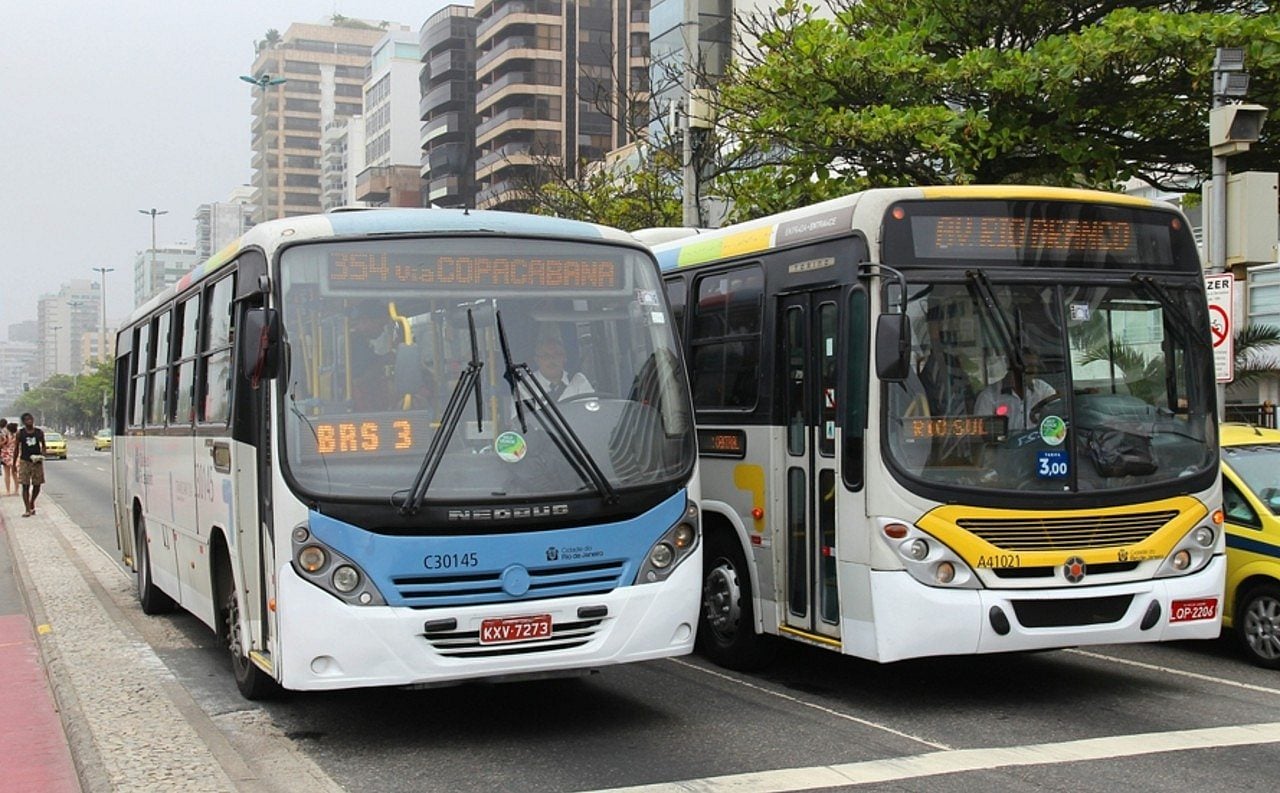
A possible strike by bus drivers in the city of Rio de Janeiro is scheduled to begin next Monday, the 29th, at midnight. The decision to strike was announced by the Road Workers Union after the category did not accept the salary adjustment proposal presented by Rio Ônibus in negotiations. Millions of passengers who depend on public transport in the capital of Rio de Janeiro will be affected if a consensus is not reached in the coming days, causing major disruptions to their routine.
Negotiations between the working class and company representatives have been going on for around three months, without significant progress being achieved, as reported by Sebastião José, president of the union. Although the strike status has already been previously approved, a new decisive meeting is scheduled for this Sunday, the 28th, at 6pm, where employees must confirm their adherence to the movement.
The most recent offer presented by bus companies establishes an adjustment of 4.39%, a value corresponding to inflation measured by the IPCA until April this year. With this correction, the base salary for drivers of conventional vehicles would increase from R$3,420.16 to R$3,570.31. Category E articulated bus drivers would have their salaries changed from R$4,104.18 to R$4,284.35, while their food allowance would be increased from R$660.00 to R$689.00.
The union considers the proposed values insufficient to meet workers’ expectations. Among the category’s main demands are a salary of R$5,000 for drivers of the BRT system and articulated vehicles, and R$4,000 for other professionals. The agenda also includes a R$1,000 food allowance, the inclusion of health and dental plans, and the change of the category’s base date to March.
In addition to financial demands, the bus workers’ agenda includes the end of temporary contracts, the formalization of BRT employees under the CLT regime, the implementation of the 5×2 work schedule, the guarantee of free passes and the payment of compensation for the lunch break period.
An additional concern raised by the category concerns the precarious infrastructure conditions in the city’s bus terminals. The union points out that workers face obstacles in using bathrooms and do not have adequate areas to rest during the workday. The entity claims to have sought, in the last ten days, mediation from the Regional Labor Court of Rio de Janeiro (TRT-RJ), but to date, negotiations have not progressed.