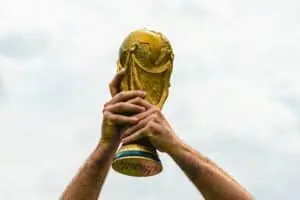
Confirmed lineup Norway x France for the 2026 FIFA World Cup will have Haaland and Mbappé on the field; see the teams
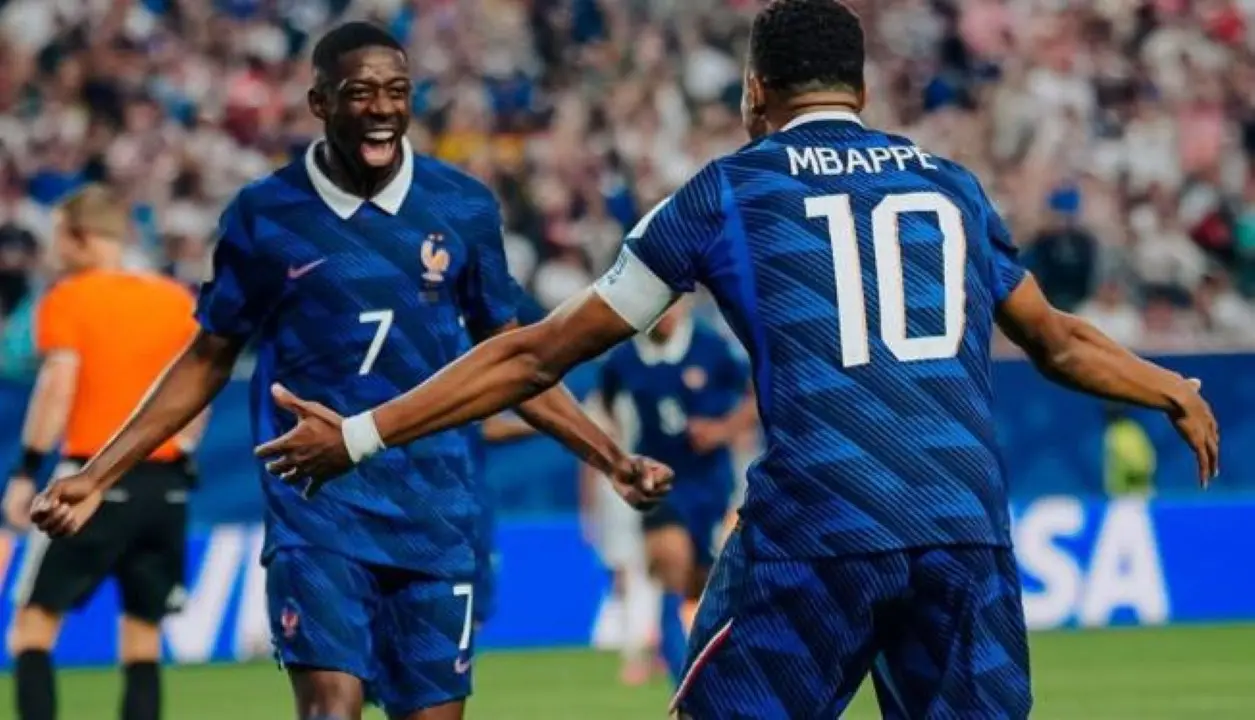
Expectations for the third day of group stage games of the 2026 FIFA World Cup reach their peak this Wednesday, June 26th. In one of the most anticipated duels, Norway faces France at the iconic Gillette Stadium, in Foxborough, Massachusetts, in the United States. The match, scheduled for 3pm local time (4pm in Brasília), promises a high-intensity spectacle, bringing together some of the biggest stars in world football on the field.
This clash is not just another group stage game; it carries significant weight for classification in Group I. With both teams looking to consolidate their positions and advance to the knockout stages, every move on the pitch at Gillette Stadium will be crucial. The coaches, Ståle Solbakken for Norway and Guy Stéphan for France, have already defined their strategies and starting lineups, indicating a clash of different tactical approaches and a lot of determination. Attention will be focused on the possible entry of Erling Haaland and the performance of Kylian Mbappé, which are confirmed, even if one of them starts on the bench.
Breaking down Norway’s starting lineups
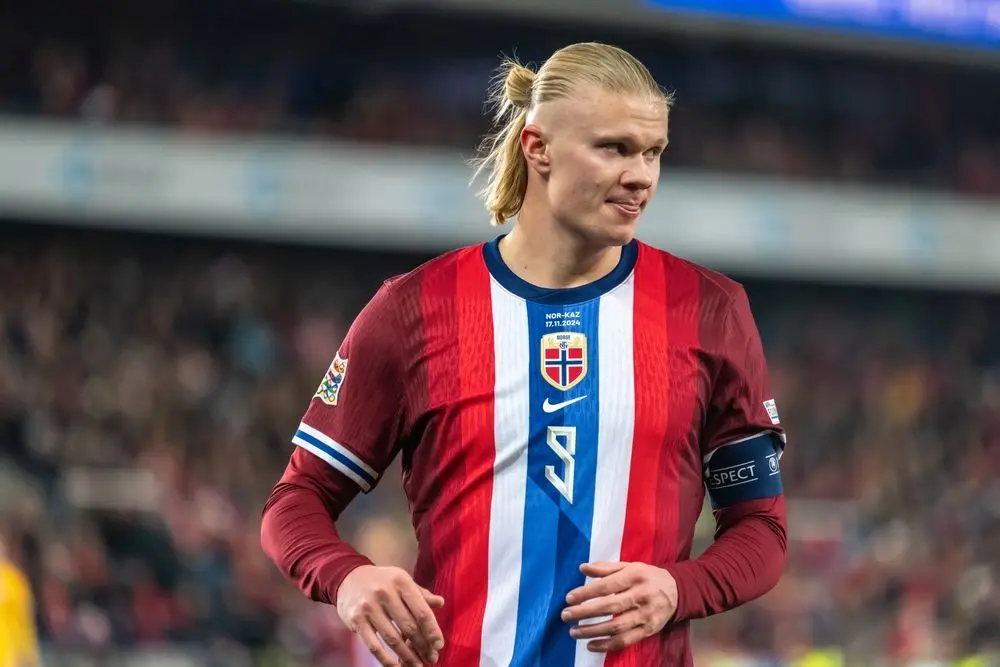
The Norwegian team, led by Ståle Solbakken, will enter the field with a 4-3-3 formation, seeking to exploit the speed and offensive capacity of its players, especially its top scorer. The Nordic team relies on a combative midfield and constant movement to surprise the strong French defense.
Solbakken’s tactical philosophy favors intensity and defensive organization, with quick transitions to attack. He hopes that the team’s compactness in midfield will help to nullify French creativity and that attacks from the flanks will be able to break through the opponent’s blocks. The choice of this formation aims to give solidity to the central sector, allowing the wingers and the center forward the freedom to create scoring opportunities.
The starting eleven confirmed to start the game are:
- Goalkeeper:E. Selvik (13)
- Defenders:F. Aursnes (14), H. S. Falchener (25), L. Østigård (4), F. A. Bjørkan (15)
- Midfield:K. Thorstvedt (18), P. Berg (c) (6), T. Aasgaard (19)
- Attackers:O. Bobb (22), J. Larsen (11), A. Schjelderup (21)
The absence of Erling Haaland in the starting lineup, who is listed among the substitutes, is a point of discussion. It could be a strategy by the coach to use him in the second half, taking advantage of the tiredness of the French defenders, or physical load management. Regardless of the reason, this decision adds an element of mystery to the Norwegian plan and could change the course of the match.
The offensive formation and talents of the French team
On the other side, France, led by Guy Stéphan, arrives with a 4-2-3-1 formation, which favors defensive solidity and explosiveness in attack, especially on the wings. Les Bleus are considered one of the favorites for the World Cup title, and their lineup reflects the depth and quality of the squad, with high-quality players in all positions.
The French strategy is based on a robust defense, capable of disarming opponent attacks and quickly starting offensive plays. The midfield, with two defensive midfielders and good ball release, is crucial for the transition between defense and attack. The line of three attacking midfielders behind the center forward aims to create numerical superiority and exploit speed and individual technique to unbalance.
The players who will start the match are:
- Goalkeeper:M. Maignan (16)
- Defenders:J. Koundé (5), D. Upamecano (4), M. Lacroix (26), T. Hernández (19)
- Midfield:A. Tchouaméni (8), M. Koné (6)
- Attacking midfielders:O. Dembélé (7), M. Olise (11), D. Doué (20)
- Attacker:K. Mbappé (c) (10)
This lineup demonstrates the French offensive power, with Kylian Mbappé centralized and surrounded by quick and creative attacking midfielders, capable of unbalancing at any moment. The midfield duo, Aurélien Tchouaméni and Manu Koné, offer protection to the defense and quality in the construction of plays, crucial elements to control the pace of the match and neutralize Norwegian attacks.
Clash of the titans: Haaland against Mbappé promises excitement
Even though Erling Haaland has been listed as a substitute, the hypothetical clash between him and Kylian Mbappé is one of the most anticipated points in any global competition. Both are often cited as the greatest talents of the new generation of world football, with impressive statistics that place them among the best on the planet. Haaland’s possible entry during the match will keep the flame of this expected direct clash between stars alive.
Analyzing the data from the last game, Mbappé stands out with an attack rating (ATT) of 97, technique (TEC) of 89, creativity (CRE) of 75 and tactics (TAC) of 75. His breakneck speed, finishing ability and dribbling ability are incomparable, making him a constant threat to any defense. Mbappé has the ability to create plays out of nowhere, starting from the left or centrally, and finishing with lethal precision.
Haaland, in turn, has an ATT of 86, TEC of 66, TAC of 78 and CRE of 53, highlighting his overwhelming physical strength, impeccable positioning in the area and unparalleled goalscoring instinct. The Norwegian striker is a goal-scoring machine, using his power and intelligence to clear himself and convert chances. His presence on the field intimidates opponents and offers a clear reference for his team’s attack.
Even with different approaches – Mbappé with his explosive run and dribbling that disorganizes defenses, and Haaland with his lethality in the area and finishing power – both have the ability to decide a match alone. The expectation of seeing them in action on the same pitch, even if for a limited period, increases the level of adrenaline and the importance of the game. The presence of these two superstars is a global draw for the World Cup, solidifying the match as a must-see event and an ultimate test of both teams’ aspirations.
Tactical strategies in analysis: how coaches plan victory
Norway’s 4-3-3 and France’s 4-2-3-1 formations indicate a clash of distinct and intriguing tactical approaches, with coaches Ståle Solbakken and Guy Stéphan looking to exploit the strengths of their squads. Solbakken, ahead of Norway, seems to prioritize midfield control and high pressure, seeking to destabilize the French construction. The formation with three central midfielders allows for greater density in the creation zone and protection for the defense, as well as facilitating quick transitions to attacking from the wings.
Leia Também
Messi reaches 19 goals in FIFA World Cups with great free kick for Argentina in clash with Jordan

Cristiano Ronaldo shines beyond the pitch at the 2026 World Cup with business empire and family luxury
At 41, Cristiano Ronaldo reaffirms his historic legacy and prepares to shine in the 2026 World Cup
Solbakken’s decision to start without Haaland suggests that he may be thinking about a more rhythmic game in the first half, focused on nullifying France, and then betting on the entry of the top scorer to exploit the opponent’s fatigue or seek the winning goal at a crucial moment. The Norwegian team will depend heavily on tactical discipline and the ability of its midfield players to control ball possession and dictate the pace of the game, seeking to exploit any gaps in the French defense with quick passes and infiltrations.
On the other hand, Guy Stéphan, commanding France, opts for a structure that combines defensive solidity with offensive flexibility. The line of four defenders, protected by the two midfielders, Aurélien Tchouaméni and Manu Koné, guarantees the necessary security against Norwegian attacks, especially in the center of the field. In attack, the presence of three fast and skilled attacking midfielders behind Kylian Mbappé creates a range of options for creating plays.
France will seek to explore the flanks with their midfielders and full-backs, such as Ousmane Dembélé and Theo Hernández, in addition to Mbappé’s constant movement to open spaces in the Norwegian defense. Stéphan’s ability to adapt tactics throughout the game, using the valuable options on the bench, will be fundamental to keeping the team competitive and seeking a favorable result, whether by controlling the game or responding to a disadvantage.
The importance of Group I in the World Cup journey
This clash is vital for both teams’ success in the 2026 FIFA World Cup. France currently occupies first place in Group I, with Norway right behind, in second place. A French victory would solidify their lead and practically guarantee a place in the round of 16 in advance, allowing the team to better manage their resources in the following games. For Norway, a triumph would be crucial to their aspirations, placing them in a prominent position and significantly increasing their chances of advancing in the competition, which this year promises to be one of the most competitive in history.
The group stage is a true test of consistency, where every point gained or lost can make the difference between glory and early elimination. The balance between attack and defense, the ability to overcome adversity and tactical intelligence will be determining factors. For Norway, this game is a golden opportunity to prove their worth against one of the powerhouses of world football, while France seeks to reaffirm its hegemony and title contender status. The result of Norway x France will have a direct impact on the strategies of the other teams in the group and could redefine projections for the next phase.
The performance of referee Michael Oliver and the expected fair play
The responsibility of conducting this European classic lies in the hands of English referee Michael Oliver. Known for his experience in major international games, Oliver will be a key player in ensuring the fairness and fair play of the match. His average number of cards per game (0.14 red and 3.50 yellow, correcting an apparent inversion in the original source) indicates moderate rigor, but he does not hesitate to apply punishments when necessary, especially in harsher moves or tactical fouls.
Refereeing at a World Cup is always a topic of intense debate, and Oliver’s performance will be closely watched by fans and analysts. It is hoped that his experience and clarity in decisions will contribute to a fluid and fair game, without controversies that could overshadow the shine of the stars on the field. The importance of consistent refereeing in such a decisive competition is undeniable, and Michael Oliver’s track record, having officiated major Premier League and UEFA tournament fixtures, suggests he is up to the challenge of maintaining order and discipline on such a grand stage.
Gillette Stadium: the stage for a great show
The setting for this clash is the imposing Gillette Stadium, located in Foxborough, Massachusetts, in the United States. Known for being the home of the New England Patriots, of the NFL (American football), and the New England Revolution, of the MLS (soccer), the stadium is a world-class multi-purpose arena. With capacity for more than 65 thousand spectators, Gillette Stadium offers a modern infrastructure and all the conditions to host an event the size of the FIFA World Cup.
The choice of North American cities to host the tournament highlights the growing relevance of football in the region and the United States’ ability to organize major sporting competitions. The atmosphere in the stadium will be electric, with fans of both teams and many neutral fans eager to watch a high-level game. The opportunity to host World Cup matches is prestigious for Foxborough and for sport in the country, which has been investing more and more in the sport, promising a vibrant and unforgettable environment for the athletes and the public present.
Retrospect between Norway and France and the expectation of the classic
Although the source only provides a generic mention of “H2H” (Head-to-Head), it is widely known that clashes between European teams of such relevance bring with them a history of rivalry and memorable clashes. France, with its rich World Cup tradition, including world titles, usually enters as favorites in games against teams like Norway, who have a less successful history at the tournament. However, Norwegian football has grown significantly in recent years, driven by talents like Erling Haaland and a promising generation.
This disparity in the FIFA Ranking, with France occupying 3rd position and Norway 31st, adds a layer of “David versus Goliath” to the confrontation, increasing the excitement and the possibility of a big surprise. While France will seek to consolidate its technical and tactical superiority, Norway will enter the field with the determination to defy the odds and show that it has the ability to compete on equal terms with the great powers. The expectation is for a game where French technique and tactical organization will be tested by Norwegian determination, discipline and individual inspiration, promising an electrifying spectacle for football fans.
Streaming and access to the match for fans
Fans who want to follow every minute of this exciting clash between Norway and France will have several broadcast options in Brazil. The match will be available on channels such as Disney+, Sportv 4K, TV Globo, Prime Video, Sportv, Globoplay and YouTube – CazéTV. This broad coverage guarantees that the Brazilian public will not miss any part of the game that promises to rock the 2026 FIFA World Cup. The variety of platforms, including streaming and open TV, facilitates access for millions of sports fans, allowing everyone to choose the most convenient way to follow this great sporting event.
Future scenarios for the teams after the clash
Regardless of the result at Gillette Stadium, Norway and France’s journey to the 2026 World Cup continues and will be full of challenges. For the winning team, the path towards the round of 16 will become clearer and with greater confidence, strengthening the team’s morale and allowing strategic management of players in the upcoming clashes. The defeated team will have to react quickly in subsequent group stage games to keep their hopes of qualifying alive, facing even greater pressure. The competition is long and requires resilience, and each match is a fundamental step in the search for the much-coveted world title.
The 2026 World Cup continues with a schedule full of other important clashes in the coming days, promising even more emotions. This Wednesday, other games such as Senegal against Iraq, Uruguay facing Spain, and Cape Verde dueling with Saudi Arabia shake up the groups. On Thursday, Egypt x Iran and New Zealand x Belgium promise more fierce disputes. The group stage is intense, with games scheduled until July 1st, with Brazil x Japan on June 29th, consolidating the 2026 World Cup as a global spectacle that will keep fans in suspense until the last minute.