Consumption of the Omoda 5 Prestige in a real test surpasses Toyota Yaris Cross, with 224 hp and a value of up to R$5,000 less
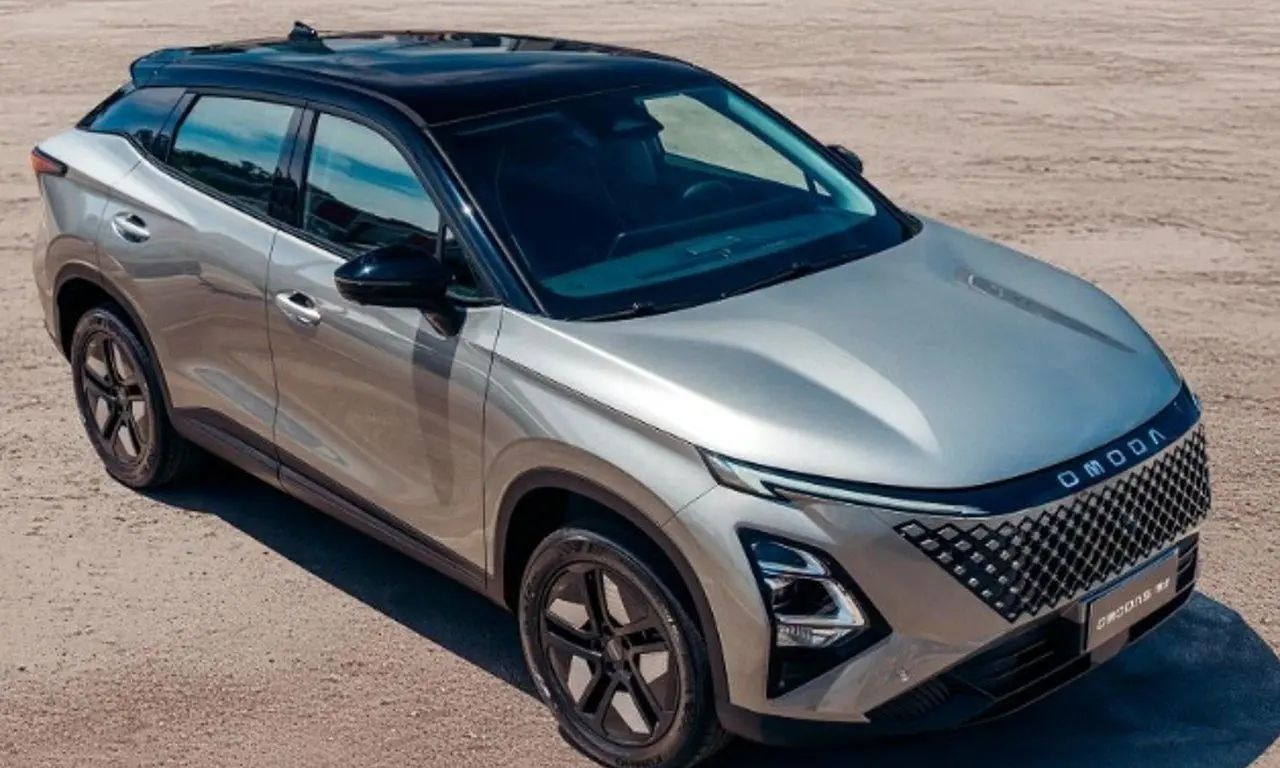
The Omoda 5 Prestige stood out in a practical evaluation, surpassing the Toyota Yaris Cross in performance, fuel economy and price, as revealed in a recent comparison.
Competition in the hybrid SUV segment revealed a surprising scenario, where factors such as consumption, autonomy and performance showed a favorable turnaround for the Omoda 5 Prestige, which achieved unexpected performance against the Toyota Yaris Cross XRX Hybrid.
In a practical test carried out with gasoline, the Omoda 5 Prestige model demonstrated greater consumption efficiency than the Toyota Yaris Cross XRX Hybrid, defying the official energy efficiency figures that previously pointed to the Japanese model.
The evaluation results indicated that, on highways, the Chinese SUV reached 24.4 kilometers per liter, while its Toyota competitor achieved 14.4 km/l. On urban routes, the marks were 17.2 km/l for the Omoda and 12.7 km/l for the Yaris Cross.
According to official data presented in the comparative study, the Toyota seemed to have the lead, recording 17.9 km/l on urban roads and 15.3 km/l on highways, in contrast to the 15.1 km/l and 13.2 km/l of the Omoda 5 HEV.
However, during practical experimentation, the situation changed drastically, and fuel economy became one of the Chinese SUV’s biggest differentiators in direct competition with Toyota’s hybrid vehicle.
How the real consumption of the Omoda 5 changed the competition between hybrid SUVs
The observed disparity offers an understanding of the balance in the dispute between these two hybrid compact SUVs. Despite targeting the same market segment, they employ different technical approaches to optimize fuel consumption and performance.
The Omoda 5 Prestige’s HEV hybrid system integrates a 1.5 four-cylinder turbo engine with an electric drive, generating a combined power of 224 horsepower, significantly higher than that of the competing Japanese model.
In contrast, the Toyota Yaris Cross XRX Hybrid adopts a different configuration, combining a 1.5 naturally aspirated engine with a flex hybrid package. Its total power is 111 hp, and the CVT transmission is designed for more efficient driving.
In everyday use, the difference in power is notable when restarting and accelerating. The Omoda exhibited more vigorous responses and quieter operation, while the Yaris demanded higher revs in similar circumstances.
According to the study, Toyota’s SUV tends to demand more from the combustion engine on roads or under load, while the Omoda maintains more responsive handling and a reduced noise level.
The 51-liter fuel tank extends the autonomy of the Chinese SUV
In addition to the efficient consumption found in the test, the Omoda 5 Prestige benefits from a larger capacity fuel tank. This is a crucial difference for drivers who travel long distances and want to reduce stops for refueling.
The Chinese sports utility vehicle has a 51-liter tank, while the Toyota Yaris Cross Hybrid uses a 36-liter tank. This disparity contributes to Omoda’s superior autonomy, especially when its actual consumption proves to be more advantageous.
Based on the official indicators mentioned in the comparison, the Yaris Cross could travel up to 644 kilometers on a single fill, while the Omoda would reach 770 km under the same references.
However, with the results verified in the evaluation, the SUV manufactured in China would surpass the thousand kilometer mark with a single tank, if the consumption efficiency measured in the gasoline test was maintained.
Despite this, this average cannot be considered a universal guarantee for all drivers. Fuel consumption is influenced by several factors, such as speed, traffic conditions, topography, ambient temperature, tire pressure, use of air conditioning and driving style.
Leia Também

Messi reaches 19 goals in FIFA World Cups with great free kick for Argentina in clash with Jordan

Cristiano Ronaldo shines beyond the pitch at the 2026 World Cup with business empire and family luxury

At 41, Cristiano Ronaldo reaffirms his historic legacy and prepares to shine in the 2026 World Cup
Therefore, this information highlights a considerable benefit in the specific context of the comparison, but does not exclude the fluctuations inherent to daily use that can impact the performance of any hybrid car.
How the hybrid system influences the difference in fuel consumption
The reason for part of the disparity lies in the unique operation of each hybrid system during driving, especially when the electric motor starts to propel the vehicle or collaborates with the combustion engine.
The Omoda 5 HEV approach favors the use of the electric motor, using the 1.5 turbo engine as support in various circumstances. This results in the combination of a lower consumption rate with more robust power.
On the other hand, in the Yaris Cross, the combustion engine is activated earlier, although the SUV also receives electrical assistance when starting and in moments of less demand on the mechanical system.
In this way, Omoda managed to combine reduced consumption with higher performance in comparison, not relying solely on fuel efficiency to stand out compared to its Japanese competitor.
Even with less impressive results in the consumer test, the Toyota Yaris Cross still has significant advantages for everyday life. This includes the precise calibration of your driving assistants and the more fluid operation of support systems.
Additionally, the Yaris Cross has superior legroom for passengers in the rear seat. This is an important detail for families and drivers who frequently use the SUV with companions.
Differences in finish and trunk capacity between SUVs
Internally, the Omoda 5 Prestige was evaluated as more sophisticated, featuring a robust central console, materials that are pleasant to the touch and a finish that appears to be superior compared to its direct competitor.
Despite an extensive list of equipment, the Yaris Cross combines leather upholstery with hard plastics, and its finish proved to be less meticulous in certain areas during the comparative analysis.
On the other hand, the Toyota model offers a larger trunk, with 391 liters in the XRX Hybrid version, while the Omoda 5 Prestige offers 372 liters of luggage space.
Although the distinction is marginal in numerical terms, the additional space can be a decisive factor for families who value travel, require larger luggage or make constant use of the cargo compartment.
As for equipment, the dispute is more balanced, as the Omoda 5 Prestige comes with a panoramic sunroof, 360-degree camera system and front seats with electrical adjustments, heating and ventilation functions.
In contrast, the Yaris Cross XRX Hybrid offers a spare tire, an extended 10-year warranty and app-controlled features, adding to the Toyota brand’s reputation for reliability in the Brazilian market.
The price of the Omoda 5 Prestige strengthens its position in the comparison
The variation in values corroborates the advantageous position of the Chinese model in direct comparison. This is mainly because the Omoda 5 Prestige adds greater power, a superior fuel tank and lower real consumption in the aforementioned test.
Omoda’s sports utility vehicle is listed on the manufacturer’s portal for R$184,990, while the comparative study indicates a value of R$189,990 for the Toyota Yaris Cross XRX Hybrid.
Thus, the difference between the versions analyzed reaches R$5,000, which amplifies the appeal of the Omoda for consumers looking for a compact hybrid with more robust performance.
In short, these characteristics position the Omoda 5 Prestige competitively in the Brazilian compact hybrid SUV market, although they do not eliminate the attributes in which the Toyota still maintains significant advantages. The dispute reveals a market in constant evolution, where factors such as brand reputation, flex technology, real consumption, finishing, power and autonomy are weighed in a more balanced way in the consumer’s purchasing decision.