
Does the fan cool or heat? The warning that few know about in summer

As temperatures rise and heat remains indoors, many people seek relief from fans. However, under certain conditions, these devices may fail to cool the body, actually heating it. Such a reverse effect represents a particular danger for newborns and elderly people.
Normally, the human body temperature is higher than that of the environment, which causes the air around the body to be heated. In these situations, the fan helps by dissipating this layer of hot air, allowing cooler air to come into contact with the skin and promote cooling.
To avoid conditions such as cramps or heat exhaustion, it is essential to consume several liters of water daily. Exposure to increasingly intense summers pushes the human body to its limits.
However, when the air temperature reaches or exceeds 35 degrees Celsius as observed in some regions of Germany currently, the fan functionality may be reversed. Instead of providing relief, the device continuously directs hot air to the body, raising its temperature.
For this reason, in certain locations and on these days of intense heat, the use of fans can cause more harm than good. Although most people intuitively perceive this change, it is crucial to trust this perception. The risk becomes greater for individuals who cannot turn off the device on their own or have difficulty expressing discomfort. This mainly includes the youngest and oldest people, who are already the most susceptible to the effects of heat. It is recommended that, when exposing babies or elderly people to ventilators under these conditions, the effectiveness of the equipment is constantly checked.
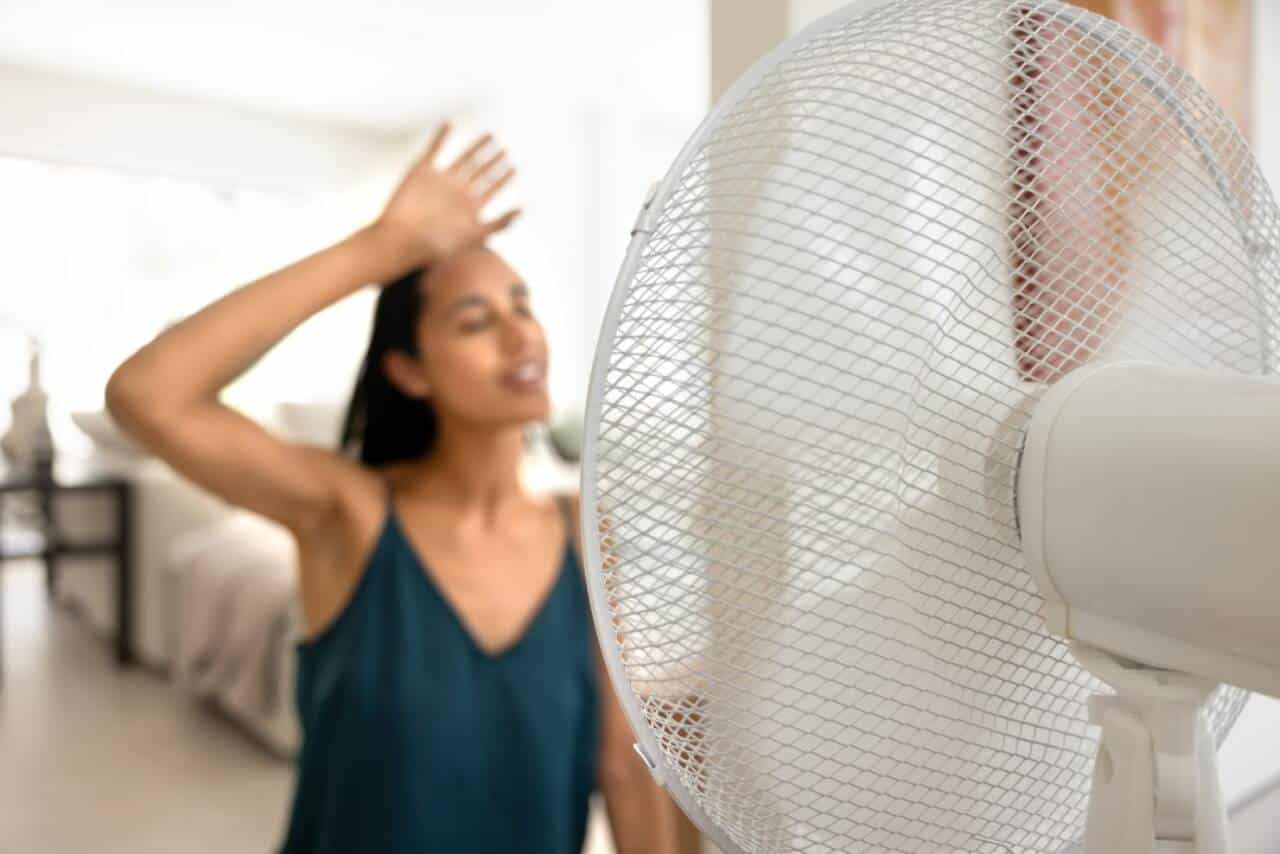
How air humidity influences body cooling
However, individual perception of heat is not always a reliable indicator. Thermal sensitivity varies between people, and the average body temperature of the elderly, for example, is lower. This means that, for them, the fan can contribute to warming more quickly than for younger individuals.
Amid record heat waves, the risks of health problems like heatstroke and heat exhaustion are high. Recognizing the warning signs of heat-related conditions and knowing how to act is crucial.
There is, unfortunately, no universally defined temperature for turning off the fan. Although the human body temperature is around 37 degrees Celsius, the device can still provide cooling even when the ambient temperature exceeds this value. This is because a second, crucial cooling factor comes into play: perspiration.
Sweat absorbs body heat, evaporating it and leaving a feeling of coolness on the skin. The effectiveness of this process, however, is directly influenced by air humidity. In environments with low humidity, sweat evaporates quickly. In these cases, cooling occurs primarily through evaporation, and the fan has little use or can even be harmful, by constantly directing more hot air.
Heat accumulation is more intense in urban areas, where temperatures can be six to seven degrees higher than in the surrounding area. Experts warn about the common recklessness of the population in the face of extreme heat.
On the other hand, when air humidity is high, sweat evaporates more slowly, metaphorically because the air is already saturated and has little capacity to absorb more water vapor. This results in rapid saturation of the air surrounding the body by our sweat. In these scenarios, the fan proves useful by moving moist, saturated air away, bringing less saturated air closer to the skin. Thus, we experience a sensation of cooling, even if the air driven is hotter, as it helps eliminate sweat.
This discussion highlights the vital importance of our natural cooling system, sweating. For this reason, it is essential to drink plenty of fluids on hot days. Attention to fluid control in the elderly deserves special care, as they often have a decreased perception of thirst. If the body cannot withstand the extreme heat, additional measures such as spraying water on the skin or applying damp towels can artificially simulate the benefits of sweating.





