King Charles III discloses taxes and financing of the British monarchy, between public funds and personal fortunes
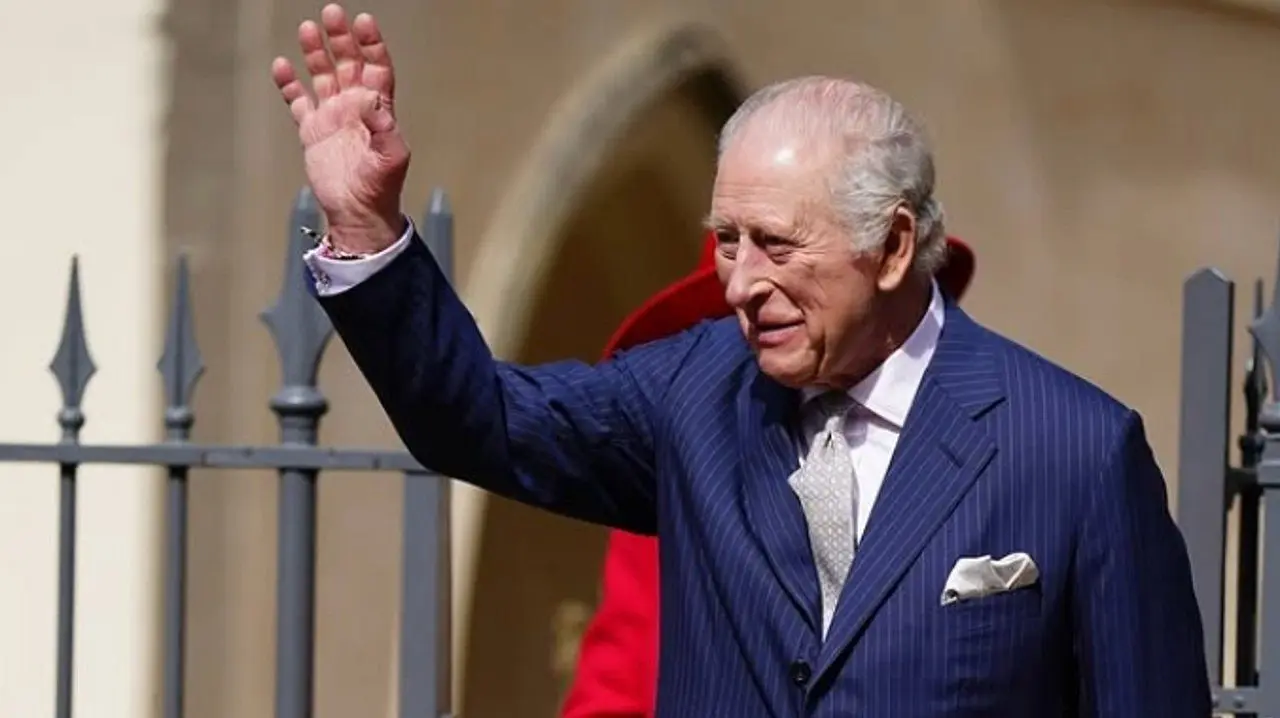
King Charles III became the first British monarch to publicly expose his tax payments. Since assuming the throne in September 2022, the king has disbursed around 30 million pounds, equivalent to approximately R$207.5 million, from his private sources of income.
This newly released information forms part of a broader overview of the financial support of the British royal family, which combines state resources, income from historical assets and individual fortunes of members.
Public funds for Crown activities
The main public allocation allocated to the monarch, known as the Sovereign Grant, aims to cover costs related to his official duties.
This amount is responsible for financing various aspects of the actual operations, such as:
- Maintenance of Crown residences
- The salaries of officials serving the monarchy
- Official travel expenses of the monarch and other members representing the Crown
Between the years 2025 and 2026, the Sovereign Grant reached approximately US$174.5 million, which represents approximately R$905.4 million. For the period 2026-2027, the estimated value should rise to US$182 million, approximately R$944.3 million, mainly due to the renovation work at Buckingham Palace. However, the projection for 2027-2028 indicates a reduction to US$132 million, approximately R$685 million.
In the same period of time, personnel expenses recorded an increase of approximately US$44.5 million, or approximately R$230.9 million.
Among the official trips with the highest recent costs, the following stand out:
- Prince William’s three-day visit to Saudi Arabia
- King Charles III and Queen Camilla’s four-day trip to Italy
It is important to note that the royal family’s security costs are not included in the Sovereign Grant, and are paid independently by the government.
Annual budget calculation mechanism
The calculation of the Sovereign Grant is directly linked to the financial performance of the Crown Estate, the extensive real estate holdings of the British Crown.
Currently, the amount corresponds to 12% of the profits generated by the Crown Estate two years previously, a percentage that can be adjusted in future periods.
In more recent years, the increase in allocation has been influenced by additional revenues, particularly those from the leasing of maritime areas for the construction of wind farms.
The administration of the Crown Estate’s vast assets
The Crown Estate operates as an independent public company, responsible for managing a broad property portfolio belonging to the monarchy.
This heritage encompasses a diversity of assets, including:
- Properties located in valued areas of London
- Extensive rural lands
- Coastal areas
- The iconic Windsor Castle
- Seabed rights in England, Wales and Northern Ireland
It is estimated that the total value of this heritage is around US$22 billion, approximately R$114.1 billion.
Leia Também

Messi reaches 19 goals in FIFA World Cups with great free kick for Argentina in clash with Jordan

Cristiano Ronaldo shines beyond the pitch at the 2026 World Cup with business empire and family luxury

At 41, Cristiano Ronaldo reaffirms his historic legacy and prepares to shine in the 2026 World Cup
Despite being associated with the Crown, the Crown Estate is not considered the monarch’s private property. Furthermore, the assets cannot be sold or managed directly by the royal family, which distinguishes this heritage from other personal assets.
In the fiscal year ending in March 2026, the fund recorded a net profit of US$643 million, approximately R$3.3 billion, which represented a decrease compared to the previous year.
In Scotland, similar assets are managed separately by Crown Estate Scotland, and the revenue generated goes to the Scottish Government.
The sources of income of the duchies of Lancaster and Cornwall
In addition to public funds, royalty derives private income from so-called dukedoms, which are historical income-generating properties.
The Duchy of Lancaster earned King Charles III around US$33.3 million, approximately R$172.7 million. The Duchy of Cornwall provided Prince William with approximately US$28.5 million, or R$147.8 million.
These centuries-old heritage sites generate their income mainly through the rental of agricultural land and commercial and residential properties.
Even if they do not act in the daily management of assets, the king and heir establish general guidelines and approve strategic decisions. These dukedoms, like the Crown Estate, are inalienable.
The British royalty’s voluntary tax policy
Since 1993, the British monarchy has adopted the practice of voluntarily paying taxes on private income, an initiative that began during the reign of Queen Elizabeth II.
Although there is no legal requirement for this, this gesture is widely interpreted as a demonstration of transparency. The recent disclosure, especially against a backdrop of increasing public scrutiny, reinforces the Crown’s commitment to accountability.
Since the death of Queen Elizabeth II, King Charles III and Prince William reported having jointly paid around US$66 million, equivalent to approximately R$342.5 million, in taxes.
The revelation of these values comes during a period of greater attention from society to the monarchy’s finances, intensified by discussions about the costs of palace renovations.
The royal family’s private assets
Members of the royal family also have personal assets, which are independent of public funds and duchies.
King Charles III, for example, owns the historic residences of Balmoral and Sandringham, assets that were inherited from his mother, Queen Elizabeth II.
When assets are passed directly from a monarch to his successor, they benefit from exemption from inheritance tax.