Solar eclipse of 2027 promises one of the longest daytime darkness in inhabited areas on the planet
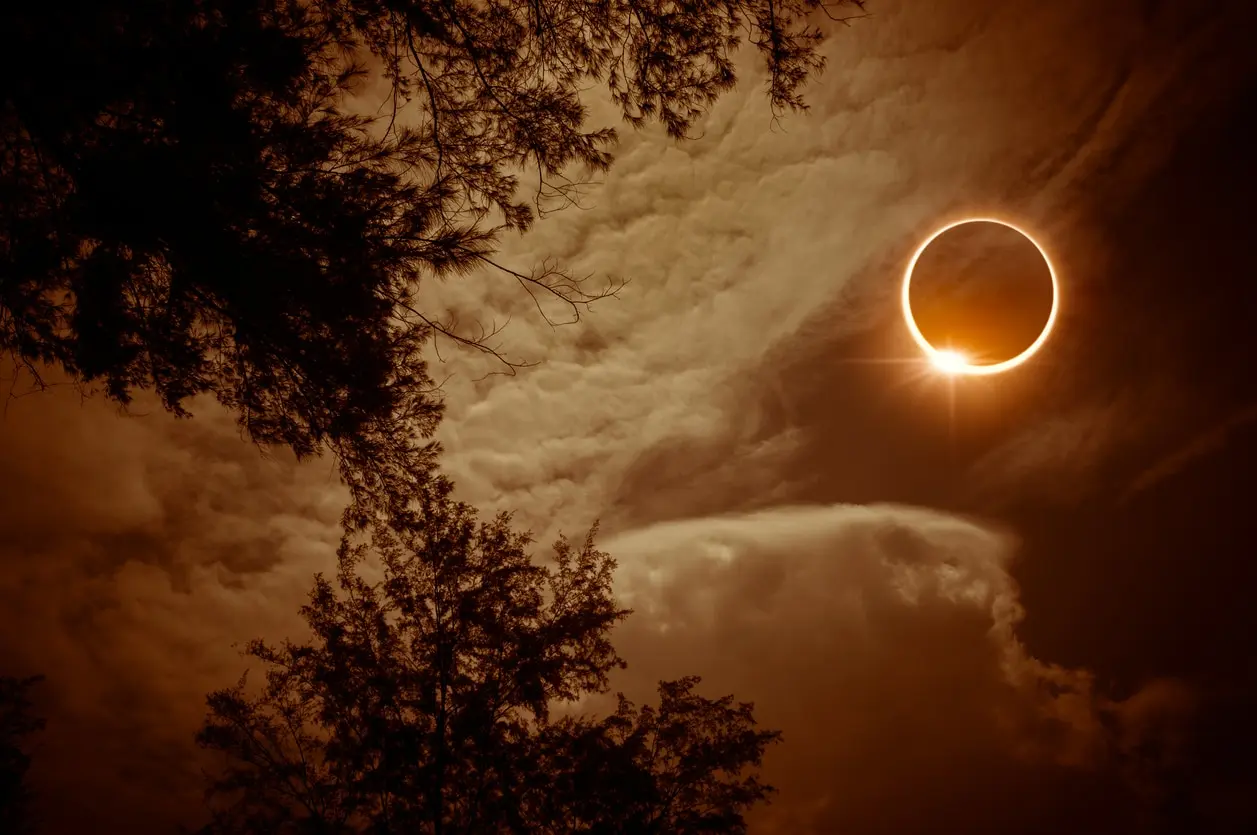
The total solar eclipse scheduled for August 2, 2027 stands out as one of the most anticipated astronomical events in the coming years. During this occurrence, the Moon’s shadow will pass across parts of Europe, North Africa and the Middle East, plunging these regions into a few minutes of twilight in broad daylight within the band of totality.
The long duration is one of the aspects that make this event particularly anticipated. At certain points along the path, the phase of totality can reach 6 minutes and 23.2 seconds, a notable length for eclipses visible in regions with human presence. Additionally, the route covers historic and easily accessible locations, which should attract both researchers and tourists and astronomy admirers.
Understanding the occurrence of a total solar eclipse
The manifestation of a total solar eclipse occurs when the Moon is positioned between the Earth and the Sun, completely blocking the view of the solar disk for those located in a narrow strip of the Earth’s surface. For observers outside this specific area, the phenomenon reveals itself only partially.
For this reason, relatively close cities can experience very different views. While some will witness the characteristic total darkness and the visibility of the solar corona, others will only see part of the Sun obscured by the Moon.
Among the main information about this event, the following stand out:
- The total eclipse will be observed on August 2, 2027;
- The maximum expected duration is 6 minutes and 23.2 seconds;
- Totality will only be perceived within the central band where the Moon’s shadow will fall;
- The main path of the eclipse covers areas of Spain, North Africa and the Middle East;
- Brazilian territory is not included among the regions that will witness the total eclipse.
Nations graced by solar eclipse totality
The path where day turns to darkness will pass through southern Spain and continue through North Africa and areas of the Middle East. Some of the countries located on this route include Morocco, Algeria, Tunisia, Libya, Egypt, Saudi Arabia, Yemen and Somalia.
Individuals outside this line of totality will only be able to observe a partial eclipse, weather conditions permitting. The distinction is notable: only during totality is it possible to see the solar corona and notice a more pronounced change in the sky’s luminosity.
Leia Também

Messi reaches 19 goals in FIFA World Cups with great free kick for Argentina in clash with Jordan

Cristiano Ronaldo shines beyond the pitch at the 2026 World Cup with business empire and family luxury

At 41, Cristiano Ronaldo reaffirms his historic legacy and prepares to shine in the 2026 World Cup
Visualization of the phenomenon is conditioned by some crucial elements:
- Be positioned within the totality range;
- Choose a location with a clear view of the horizon;
- Check the local start, peak and end times of the eclipse;
- Monitor cloud, dust and temperature forecasts;
- Wear appropriate eye protection during all partial phases.

Relevant information released by NASA about the phenomenon
According to NASA maps for the August 2, 2027 eclipse, the total phase will last a maximum of 6 minutes and 23.2 seconds. However, experts emphasize that this event is not the most extensive of the 21st century; the 2009 eclipse recorded a longer duration, although most of its path was over the ocean.
Essential recommendations for safe eclipse observation
Observing the Sun directly without adequate protection is extremely dangerous. Ordinary sunglasses do not provide the necessary safety, and the use of cameras, binoculars or telescopes without specific filters can cause irreversible damage to vision.
Removal of protection is only permitted during the short minutes of totality and only for those who are exactly in the range where the Sun will be completely covered. Before and after this brief interval, the use of appropriate filters remains essential for eye safety.
Optical equipment also requires the installation of specific solar filters before the lenses. Experts strongly warn against using improvised solutions for visual protection.