Strawberry Moon takes place on Monday (29/6) and will be visible throughout Brazil; check the best time
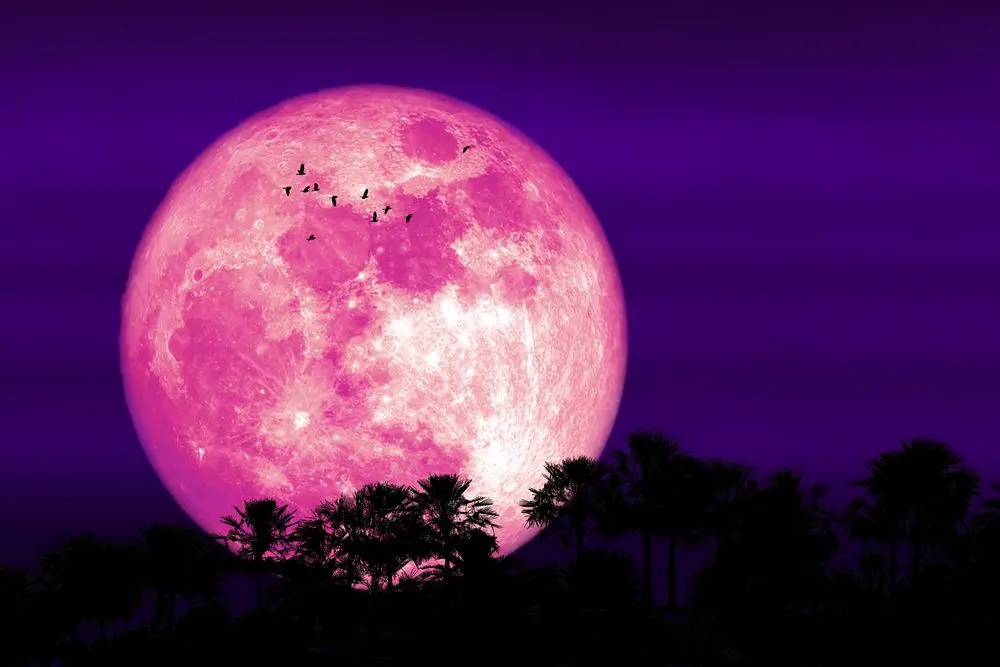
Residents from different regions of Brazil will have the opportunity to follow a unique celestial spectacle on June 29th. The long-awaited Strawberry Moon, the characteristic full moon of the month, will reach its brightest point at exactly 8:57 pm Brasília time. This phenomenon promises to light up the night sky, offering a privileged view for observers across the country.
The occurrence of the Strawberry Moon is an annual event that marks the June lunar cycle. Its visibility is expected to be wide, especially in the Southern Hemisphere, where the position of the natural satellite favors appreciation without the need for special equipment. Astronomy enthusiasts and the general public are invited to contemplate this lunar phase in its entirety.
Details for observing the June full moon
To appreciate the Strawberry Moon, there is no need for specialized instruments such as telescopes or binoculars, as its magnitude allows viewing with the naked eye. Astronomy experts point out that the satellite’s privileged position in the Southern Hemisphere, where Brazil is located, guarantees a higher altitude in the sky, facilitating observation compared to other parts of the globe. The clarity of the night, however, will be a determining factor in the quality of the visual experience.
Although it is an accessible event, the recommendation is to look for places with little or no light pollution. Rural areas, remote beaches or urban parks with low artificial lighting are ideal for contemplating the intense glow of the full moon. Choosing a strategic point can enhance the beauty of the satellite, allowing its surface details to be perceived with greater clarity.
The Rich History Behind the Name “Strawberry Moon”
The name “Strawberry Moon” evokes more than a simple description of color; it carries deep cultural and historical significance. Its origin dates back to the native Algonquian peoples of North America. For these communities, each full moon of the year was given a name that reflected seasonal changes and the agricultural or hunting activities prevalent during the period.
June’s full moon was therefore named the “Strawberry Moon” because it marked the height of the wild strawberry picking season. This was a time of plenty and celebration for the tribes, highlighting the intrinsic connection between celestial cycles and the rhythm of life on Earth. Other cultures also had their own designations for this same moon, such as “Pink Moon” in Europe, but the version linked to the fruit became popular globally.
Ancestral traditions and other names for full moons around the world
The practice of naming full moons is not exclusive to the Algonquins, but rather a tradition spread among different cultures and civilizations throughout history. These names functioned as a natural calendar, guiding communities in their daily activities, from agriculture and fishing to rituals and celebrations. Observation of the skies and connection with nature were fundamental pillars for social and cultural organization.
Each full moon name tells a story about the human relationship with the environment and time. In addition to the Strawberry Moon, some of the best-known names for the year’s other full moons, mainly spread through Native American and European traditions, include:
Leia Também

Messi reaches 19 goals in FIFA World Cups with great free kick for Argentina in clash with Jordan

Cristiano Ronaldo shines beyond the pitch at the 2026 World Cup with business empire and family luxury

At 41, Cristiano Ronaldo reaffirms his historic legacy and prepares to shine in the 2026 World Cup
- Wolf Moon (January):Associated with the howls of hungry wolves in winter.
- Snow Moon (February):Named for the intensity of snowfall that month.
- Worm Moon (March):Period in which earthworms reappear in the thawed earth, signaling spring.
- Pink Moon (April):Reference to the flower *Phlox subulata*, which blooms at this time.
- Flower Moon (May):Time of abundant flowering in spring.
- Deer Moon (July):When male deer antlers begin to grow.
- Sturgeon Moon (August):Time of greatest abundance of sturgeon in the Great Lakes.
- Harvest Moon (September):The full moon closest to the autumnal equinox, crucial for nighttime harvests.
- Hunter’s Moon (October):Ideal period for hunting and stocking up on meat for the winter.
- Beaver Moon (November):Beavers build their dams or prepare for winter.
- Cold Moon (December):Indicates the height of cold and long winter nights.
This nomenclature, although popularized and often associated with spiritual interpretations, serves as a fascinating reminder of how our ancestors interpreted the world around them through celestial movements.
Demystifying color: what science explains about lunar hue
Despite the evocative name, it is essential to clarify that the Strawberry Moon does not acquire a reddish or pinkish color. The appearance of the moon in the night sky is predominantly influenced by the Earth’s atmosphere and the position of the observer, and not by its popular name. Therefore, anyone expecting to see a celestial body with the tone of the fruit may be surprised to find the moon in its usual yellowish-white hue.
Phenomena such as the “Blood Moon”, for example, which actually has a reddish hue, occur during total lunar eclipses. In these events, sunlight is filtered through Earth’s atmosphere, scattering the blue and allowing only the red to reach the lunar surface, reflecting that color back to our eyes. The Strawberry Moon, however, is a common full moon in terms of its visual coloring, differing only by its cultural nomenclature.
Essential tips for an unforgettable lunar observation
To ensure that the experience of observing the Strawberry Moon is as rewarding as possible, some precautions can be taken. Checking the weather forecast is crucial, as a clear, cloudless sky is essential for clear viewing. Additionally, preparing in advance to arrive at the observation site a few minutes before the apex can help adapt your vision to the darkness and capture the exact moment of lunar fullness.
Although not mandatory, using a good pair of binoculars can enrich the experience, revealing craters and details of the lunar surface that are not visible to the naked eye. Cell phone astronomy apps can also be useful for locating the moon and identifying other celestial bodies, turning observation into an interactive lesson about the universe. Patience and attention to detail are your greatest allies in fully enjoying this natural spectacle.