Understand the complex system of succession to the British throne under King Charles III and his heirs
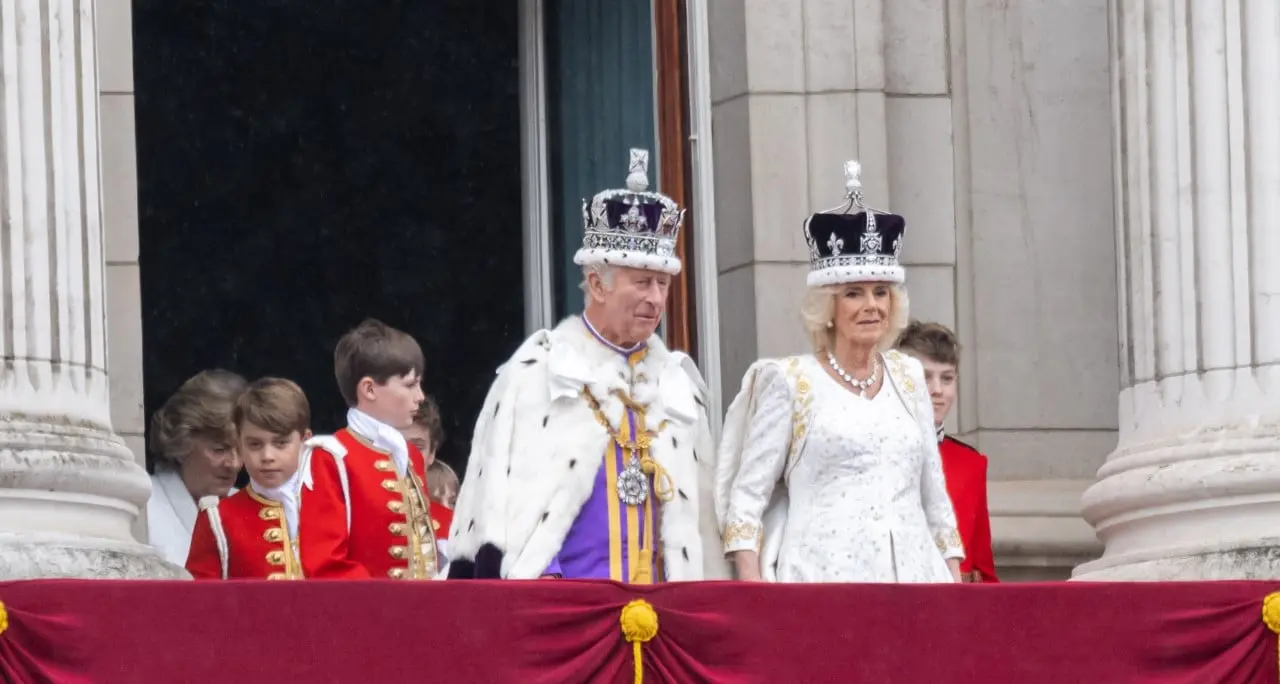
The line of succession to the British throne is a fundamental pillar of the United Kingdom monarchy, defining who will assume the Crown after the death or abdication of the current sovereign. With King Charles III currently in charge, the order of his direct and indirect heirs follows ancient rules and traditions, but which have also undergone important adaptations throughout history to reflect social changes and ensure institutional stability. Understanding this complex mechanism is essential to understanding the continuity of the Crown and its role.
How the British Crown inheritance order works
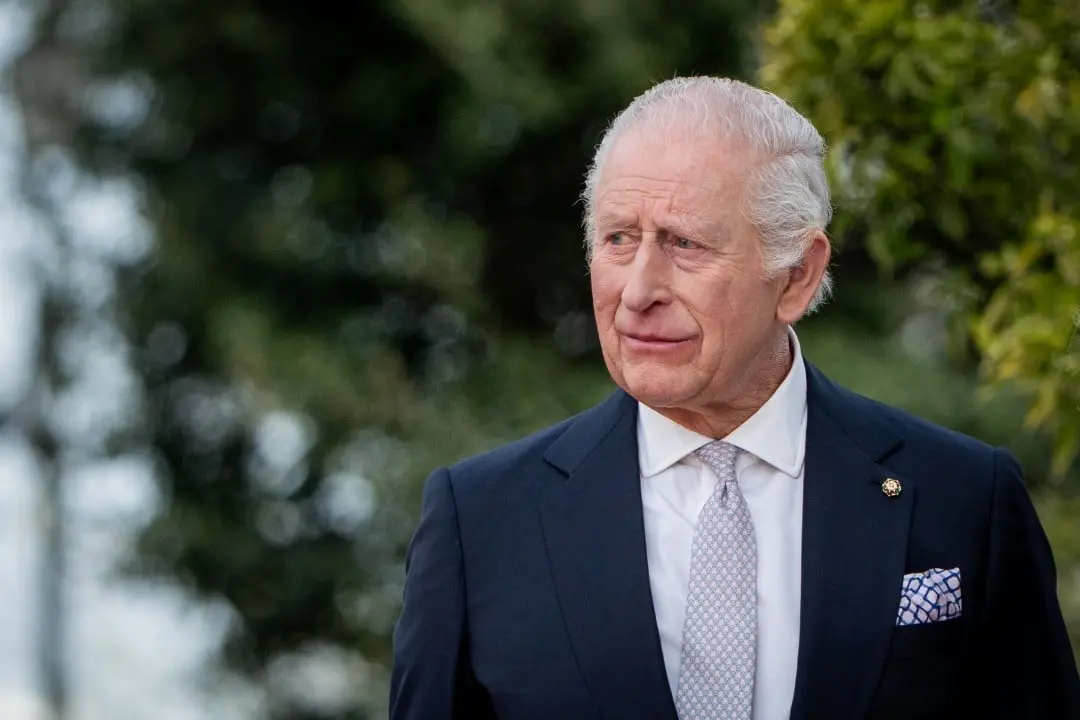
Succession to the British throne is determined by a combination of parliamentary statutes, historical laws and custom, and is governed primarily by the Act of Settlement 1701 and, more recently, the Perth Settlement 2011. This system establishes the order of individuals eligible to become monarchs, based on lineage and, until recently, gender and religion. The general rule is that of primogeniture, where the monarch’s eldest son has priority.
In practical terms, the succession list is long, covering hundreds of members of the royal family, all descendants of Princess Sofia of Hanover. However, the main focus is on those first in line, who are directly linked to the reigning monarch and his children. The stability of the monarchy depends on the clarity and incontestability of this sequence.
Who are first in direct line to the throne after Charles III
Prince William, the eldest son of King Charles III and the late Princess Diana, is first in the line of succession. He is the heir apparent, a formal designation for the next in line. From him, the line follows his own children, establishing a clear and indisputable sequence for the future of the monarchy.
Prince George of Wales, firstborn of William and Catherine, Princess of Wales, is second in line. His sister, Princess Charlotte of Wales, is third, and Prince Louis of Wales, the youngest, is fourth. This direct sequence shows how the immediate family of the monarch and heir apparent forms the core of royal continuity.
The profound changes brought about by the 2011 Perth Agreement
The Perth Agreement, implemented in 2013, represents one of the most significant reforms to British succession law in centuries. Before this agreement, male primogeniture prevailed, which meant that a younger son could surpass an older daughter in the line of succession. The Perth Agreement abolished this male preference, establishing absolute primogeniture.
This historic change ensures that birth order determines succession, regardless of sex. So, if Prince George had an older sister, she would still be next in line before him. Furthermore, the agreement also removed the prohibition on an heir marrying a Roman Catholic. Although the law still requires the monarch to be Protestant, this change eliminated a religious restriction that dated back to the 17th century, modernizing the rules for the 21st century.
The importance and impact of the 1701 Act of Settlement on succession
The Act of Settlement 1701 is one of the most crucial documents in the history of British succession, laying the foundations for the constitutional monarchy we know today. It was enacted to resolve a succession crisis and guarantee a Protestant line to the throne, following the Glorious Revolution and the absence of direct Protestant heirs to Queen Anne.
This act stipulated that only Protestant descendants of Princess Sophia of Hanover (granddaughter of James I) could inherit the Crown. He also explicitly excluded anyone who married a Roman Catholic from the line of succession. Although the part about marrying Catholics was changed by the Perth Agreement, the requirement that the monarch be a Protestant in communion with the Church of England remains unchanged, reinforcing the sovereign’s role as head of the Anglican Church.
The symbolic and constitutional role of the British monarch
The British monarch, although he is the head of state, has a predominantly ceremonial and constitutional role, not exercising direct political power in the governance of the United Kingdom. Their duties include opening and dissolving Parliament, passing legislation (royal assent), appointing prime ministers and bestowing honors.
Furthermore, the sovereign is the Commander-in-Chief of the Armed Forces and the Head of the Commonwealth of Nations, a voluntary association of 56 independent countries. This symbolic role is vital to the UK’s national identity and international representation, providing a figure of continuity and stability above party politics. The “why it matters” lies in the cohesion that the monarch provides both internally and externally, acting as an ambassador of British tradition and values.
Alternative scenarios: regency and abdication in the monarchy
The succession system also provides for situations in which the monarch cannot govern, either because he is a minor or due to incapacity. In these cases, the Regency Law is activated. If the sovereign is under 18 years of age, a regent, who is usually the next in line of succession of age, assumes royal duties on his or her behalf until he or she reaches the age of majority.
Abdication, although rare in British history (the most notorious case being that of Edward VIII in 1936), is also a possibility. When a monarch abdicates, he voluntarily renounces the throne, and the succession immediately passes to the next in line, as if the monarch had died. Both scenarios are managed by specific legislation to ensure a smooth transition and continuity of the Crown.
The most distant line of succession: beyond the direct heirs
The line of succession extends far beyond the children and grandchildren of the reigning monarch, encompassing hundreds of individuals. After Prince Louis, the line continues with Prince Harry, Duke of Sussex, and his children, Prince Archie and Princess Lilibet. Next come King Charles III’s brothers and their descendants.
This vast list ensures that, even in extreme circumstances, there will always be an eligible heir to assume the throne. The depth of the line illustrates the importance of the continuity and robustness of the monarchical system, which has prepared for almost all eventualities over the centuries. Every descendant of Princess Sophia of Hanover who is not excluded by marriage to a Catholic (before 2013) or by renunciation is theoretically in line.
Parliament’s influence in defining succession rules
Although succession appears to be an internal matter within the royal family, the UK Parliament holds the final authority to legislate on it. The Act of Settlement 1701 and the Perth Settlement 2011 are clear examples of how the legislature can fundamentally change the rules of the monarchy.
Any change to succession laws requires the approval of the British Parliament, as well as the agreement of the other Commonwealth realms where the British monarch is also head of state. This underlines the constitutional nature of the monarchy, where the sovereign reigns under the law, not above it, demonstrating a balance between tradition and democratic governance.
Leia Também

Messi reaches 19 goals in FIFA World Cups with great free kick for Argentina in clash with Jordan

Cristiano Ronaldo shines beyond the pitch at the 2026 World Cup with business empire and family luxury

At 41, Cristiano Ronaldo reaffirms his historic legacy and prepares to shine in the 2026 World Cup
Preparing the heirs to take over the Crown
Being heir to the throne is not just a matter of birth; it involves a lifetime of preparation and service. Those first in the line of succession are meticulously prepared for their future role as head of state. This includes a comprehensive formal education, military service, involvement in social and charitable causes, and an in-depth understanding of constitutional responsibilities.
Prince William, for example, has dedicated himself to a series of patronages, participated in official events and played an increasingly prominent role in state affairs. This practical and theoretical preparation aims to ensure that, when the time comes, the new monarch is fully capable of assuming the heavy responsibilities that come with the Crown, while maintaining the relevance and integrity of the institution.
Historical curiosities about the British royal succession
The history of the British succession is rich in drama and twists. A striking example is the succession crisis that led to the Act of Settlement of 1701, ensuring that the throne remained Protestant and preventing religious wars. Another notable case was the abdication of Edward VIII in 1936, who chose love over the throne, allowing his brother, Queen Elizabeth II’s father, to become King George VI.
These past events are not just historical anecdotes; they shaped the resilience and adaptability of the monarchy. The ability to overcome crises and evolve with the times, as demonstrated by changes in succession laws, has been crucial to its longevity and continued acceptance by the public and the government structure.
The importance of the monarch’s health in the succession discussion
The monarch’s health is a matter of great public interest and has direct implications for the succession discussion. Any deterioration in royal health could lead to debates about the ability to govern and, in extreme cases, the need for a regent. Transparency regarding the sovereign’s health, although not always complete, is seen as an indicator of the Crown’s stability.
Although King Charles III is currently in good health, the nature of the monarchy means that the public and the media are always watching closely for any signs of weakness, anticipating the future. This is not an intrusion, but rather the recognition that the figure of the monarch is inseparable from the institutional health of the State.
The role of the Commonwealth of Nations and the British monarch
The British monarch is not only the head of state of the United Kingdom, but also of 14 other countries in the Commonwealth of Nations, known as Commonwealth realms. In these countries, such as Canada, Australia and New Zealand, the monarch is represented by a governor general.
Succession to the British throne has direct implications in these kingdoms. When a new monarch ascends, he or she automatically becomes the head of state of those countries. Although the role is largely symbolic, it serves as a historical and cultural link, uniting nations through the figure of the Crown and contributing to the stability of the Commonwealth of Nations as a whole.
Myths and truths about royal succession
There are several misconceptions about royal succession. A common myth is that the monarch can choose his successor. In fact, the line is determined by law, and the sovereign has no power to change this order. Another misconception is that any member of the royal family can become monarch; Eligibility is restricted to descendants of Princess Sophia of Hanover, following a specific order.
The truth is that the system is rigid, designed to avoid disputes and ensure a smooth transition. The idea that “whoever is most popular” can assume the throne is journalistic, but not real. Legitimacy comes from law, not public opinion, although popularity certainly helps maintain the monarchy’s relevance in modern society.
The coronation ceremony and the oath of the new sovereign
Although succession to the throne occurs immediately after the death or abdication of the previous monarch (according to the maxim “The King is dead, long live the King!”), the coronation ceremony is a formal and symbolic event that takes place months or even a year later. This ceremony, held at Westminster Abbey, is a sacred rite that invests the new sovereign with the symbols and responsibilities of the Crown.
During the coronation, the monarch takes a solemn oath to govern his people in accordance with their respective laws and customs, and to defend the Church of England. It is an event of great pomp and circumstance, which serves to publicly legitimize the new reign and reinforce the continuity of the monarchical institution before the people and the world. The coronation of King Charles III in 2023 was a recent example of this centuries-old tradition, uniting history and modernity.
Future perspectives of the British monarchy and its succession
With the accession of King Charles III, the British monarchy enters a new phase, focused on continuity and adaptation. The line of succession, now more modern with the rules of absolute primogeniture, is well established for future generations. Prince William and his children represent the future of the Crown, and their early preparation is seen as crucial to keeping the institution relevant in an ever-changing world.
Future challenges will include maintaining public support, navigating complex political issues, and adapting to an evolving global landscape where the role of the monarchy may be constantly questioned. However, the strength of the succession system, which guarantees an orderly and legitimate transition, remains one of the pillars of the resilience of the British monarchy.