
The death toll from earthquake in Venezuela rises to 1,430; more than 50 thousand remain missing

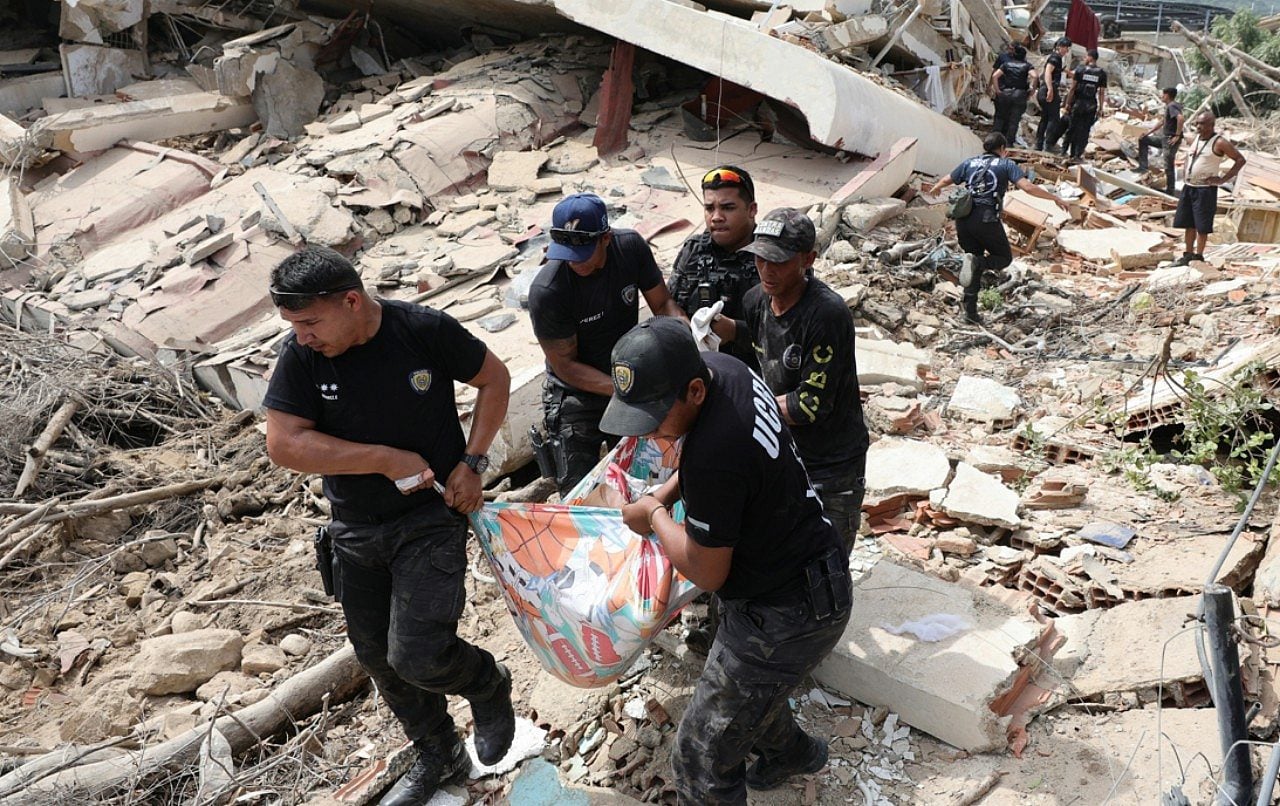
The recent earthquake that devastated the northwest of Venezuela on the 24th has already killed 1,430 people, as announced by the president of the National Assembly, Jorge Rodríguez, made on June 27th. More than 3,200 individuals suffered injuries. Rescue operations are intensified against the clock, exceeding the critical 72-hour period, after which the chances of finding survivors under the rubble decrease drastically.
The International Organization for Migration (IOM) reported, on June 27, that the disaster may have impacted up to 6.76 million Venezuelans. Of this total, around 2 million people live in the capital, Caracas alone, one of the epicenters of the tremor. At the same time, an online platform used by Venezuelan citizens outside the country to monitor the situation of loved ones already records 50,000 people as missing and without contact.
The Venezuelan government confirmed the occurrence of more than 430 aftershocks, which worsened the situation, especially in the state of La Guaira, neighboring the capital. Search and rescue teams, made up of more than 2,000 rescuers from approximately 30 nations, including the United States, European countries, and Central and South America, face significant challenges due to a lack of adequate equipment.
The emergency situation led to around 3,100 families being relocated to temporary evacuation centers. Furthermore, more than 30,000 professionals, including military personnel and medical teams, are committed to providing direct assistance and support to earthquake victims.
Venezuela was already facing a scenario of political instability even before the earthquake, a reality that the natural catastrophe is now exacerbating. In this context, the leader of the opposition, Maria Machado, last year’s Nobel Peace Prize winner and exiled with support from the United States, sought out American government authorities to facilitate her return to the country after the disaster. Political observers suggest that she may be seeking to reactivate her political role by coordinating humanitarian aid efforts, transforming the crisis into a possible inflection point for the national political framework.





