

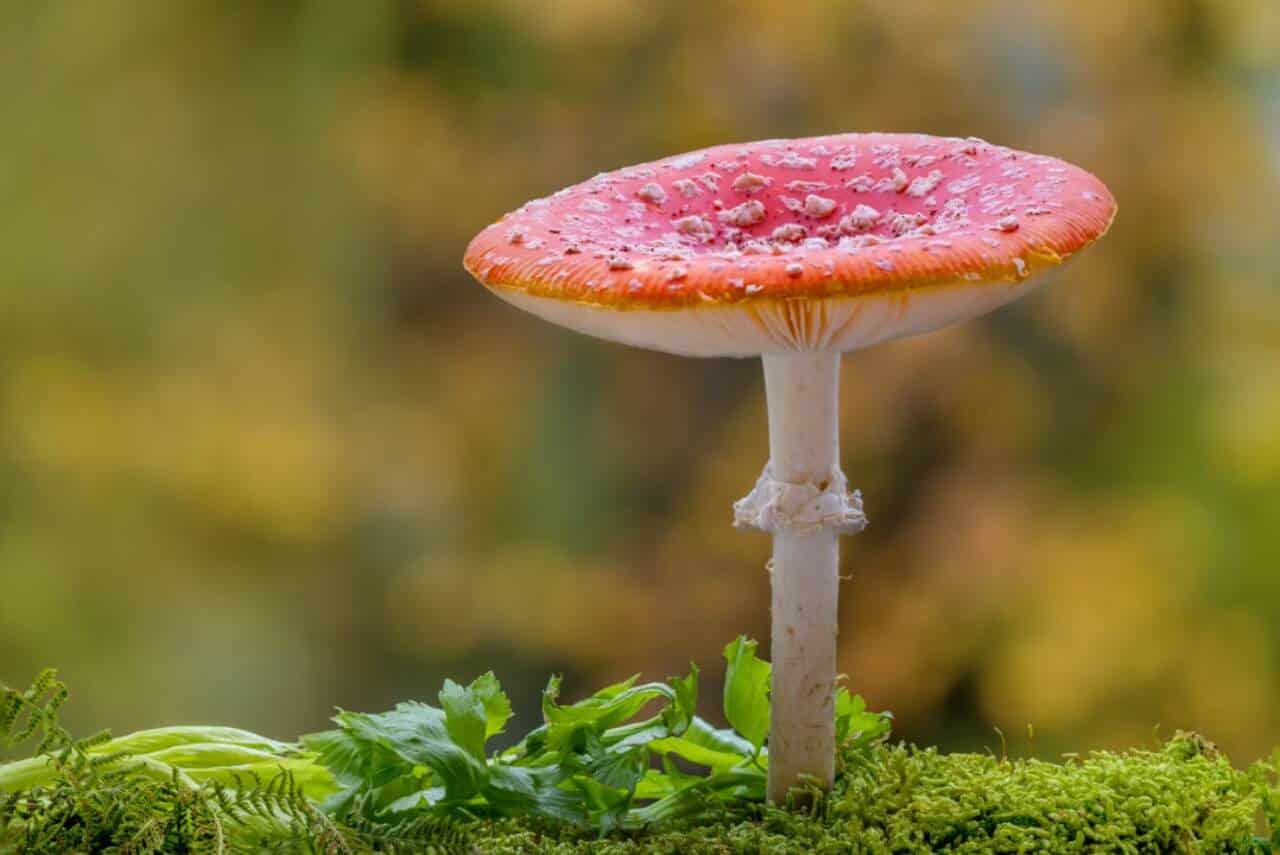
Research recently published in the scientific journal Mycologia brought new information about the fungus Lanmaoa asiatica. This mushroom is capable of generating visions of tiny beings in its consumers, an unusual effect not observed in any other known species of fungus.
Forget psilocybin for a moment; a different psychoactive compound is attracting attention. According to an article recently published in Mycologia, a unique fungus induces its users to hallucinate with reduced-sized human figures, a peculiarity that distinguishes it from all other hallucinogenic mushrooms.
Common hallucinogenic fungi generally have psilocybin or psilocin as active ingredients. Its impacts usually manifest themselves in approximately thirty minutes, causing psychedelic experiences such as intensified colors, objects that appear to vibrate or the visualization of geometric patterns in movement. Additionally, physical reactions such as pupil dilation, tachycardia, nausea and some difficulty in coordination are common.
However, Lanmaoa asiatica works differently. The vast majority of individuals who consume it do not experience these usual symptoms. They demonstrate apparent sobriety and the surrounding environment remains stable, with the exception of the constant presence of miniature people.
To date, this is the only fungus, and even the only food, across the globe that has been proven to cause this form of hallucination. The mystery persists, as the scientific community still does not understand the mechanism behind this unique phenomenon, making it an intriguing object of study in the search for new psychoactive substances.
“Even today, science has not revealed what happens in the brain to generate such visions, nor how to intervene. This mushroom is the only substance we know capable of producing this effect consistently,” said researcher Colin Domnauer, from the University of Utah, in an interview with Livescience. He detailed that the figures, described as gnomes, appear between 12 and 24 hours after consumption and can persist for days.
“These are not indistinct hallucinations, but rather three-dimensional representations with rich details that are embedded in the observer’s environment,” explained Domnauer. “In addition, these figures interact with elements of the physical world, such as climbing chairs and tables or passing under doors.”
Lanmaoa asiatica, a type of boletus mushroom, originates from pine forests located in southwestern China and northern Philippines. In these regions, it is collected wildly and sold in local markets for consumption in typical dishes. Despite numerous reports of hallucinations over decades – often attributed to inadequate preparation – the species was officially recognized by science approximately a decade ago, according to Domnauer, one of the main scholars of the Lanmaoa genus.
“Reports indicate that these small creatures are commonly dedicated to teasing, interacting playfully or, at times, bothering those who see them,” observed Domnauer.
However, the reaction of the local population to this phenomenon is not surprising, according to him. “Everyone is aware that this mushroom has this peculiarity and can induce the vision of tiny people, but, even so, they continue to consume it, as they do not show fear of this effect”, highlighted the expert, revealing a unique cultural aspect surrounding the fungus.
Domnauer’s research focuses on unraveling the mechanism behind this peculiar effect. While studies on psilocybin have advanced significantly in recent decades, the impacts of L. asiatica remain, unfortunately, little explored. The main reason for this scientific gap is the difficulty in isolating and identifying the psychoactive compounds that cause hallucinations.
Thus, the substance present in L. asiatica responsible for the hallucinations of tiny figures – called Lilliputian hallucinations, in a clear reference to the characters in Jonathan Swift’s classic “Gulliver’s Travels”, published in 1726 – remains a mystery to the scientific community. Domnauer aims to change this reality through the genetic sequencing of all mushrooms belonging to the Lanmaoa group.
Although the genes associated with the production of psychoactive compounds in conventional hallucinogenic mushrooms are widely known, Domnauer’s team did not identify any similar genes in L. asiatica.
“No known psychoactive compounds were present, suggesting the existence of a new, yet undiscovered hallucinogenic substance, as there is no match to anything in our current databases,” the researcher explained about the complexity of the analysis.
So far, experiments carried out on rats have narrowed the search to “a few candidates” who are responsible for the effect. However, there is still a long way to go before the substance is definitively identified and confirmed that it acts identically in humans.
On the other hand, Domnauer limits himself to commenting on the effects of L. asiatica based on reports from third parties. He does not plan to consume the hallucinogenic mushroom raw, as this could compromise several days of his research work in search of a direct experience.
For now, the scientist will continue to ingest the fully cooked version of the fungus. “It has a very pleasant flavor and an excellent palate”, he added.





