Microscopic animal surprises researchers by returning to life after spending years frozen and resisting extremes

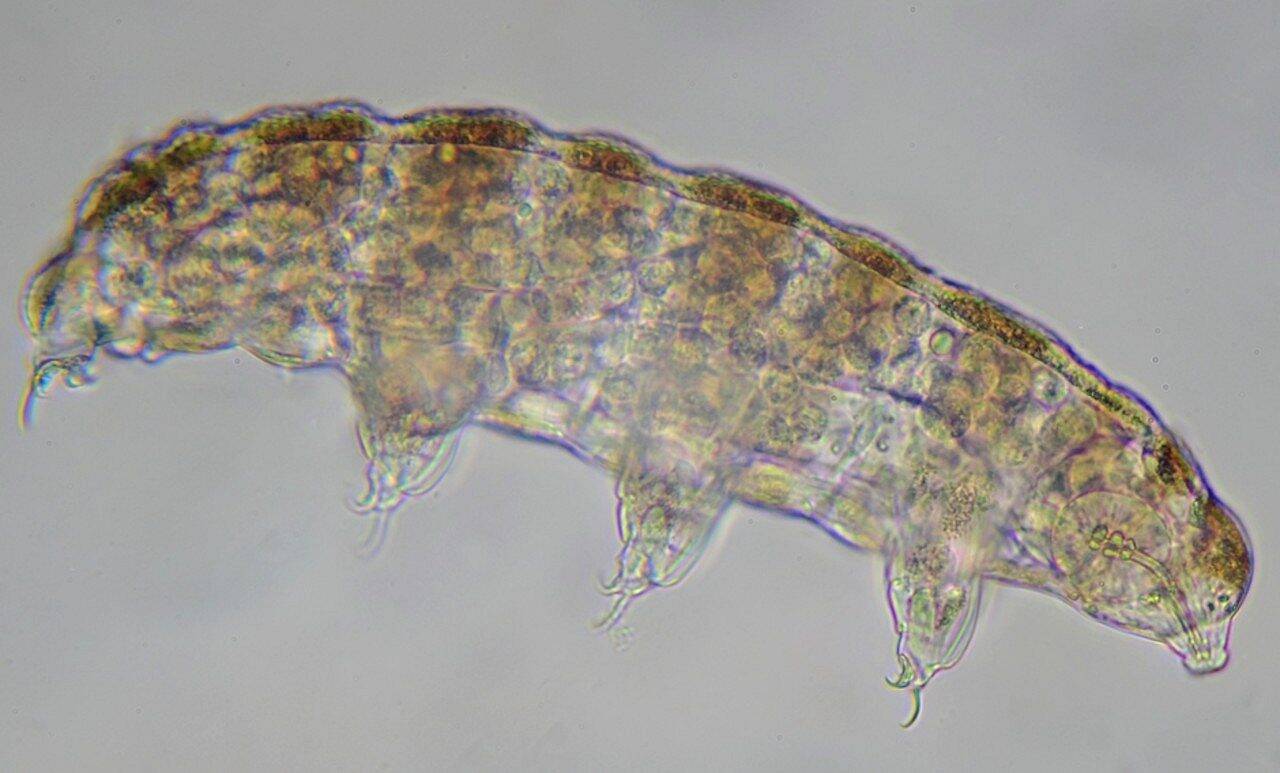
The ability to spend long periods in a state of suspension and later resume vital activities is a remarkable feat in nature. This scenario, which evokes science fiction plots, is a reality documented in the tardigrade, a small invertebrate that intrigues scientists globally. Its extraordinary resilience places it among the most adaptable life forms known to research.
Uncovering the tardigrade’s impressive survivability
The small animal adopts a special state called cryptobiosis, where its metabolic activity is significantly reduced. During this period, the organism’s biological functions are almost paralyzed, waiting for the surrounding conditions to become more conducive to life.
In this phase of inactivity, certain proteins play a crucial role, shielding the cells and internal components of the tardigrade against damage resulting from low temperatures, water shortages and even exposure to radiation.
Understand the tardigrade’s “hibernation” mechanism
In situations of drastic drop in temperature or absence of water, the tardigrade’s body expels a considerable portion of its moisture, contracting into a compact form. This process can be compared to the standby mode of an electronic device, aiming to conserve energy.
When the availability of water is reestablished and the environment becomes favorable, the tardigrade reabsorbs liquid into its tissues, resuming its usual functions and movements. This rapid reversal is still a point of great curiosity for the scientific community.

New discoveries about cryptobiosis and its extreme resistance
Recent research indicates that certain varieties of tardigrades not only withstand freezing, but also survive environments with high pressure and high levels of radiation. This combined ability to withstand multiple adverse conditions, including space vacuum, elevates the tardigrade to a fundamental study organism for understanding the persistence of cellular life.
Scientists are currently analyzing how these remarkable adaptations could be key to developing innovations in biological conservation methods, designing new drugs, and even planning future space endeavors.
- Cryptobiosis:Tardigrades enter a state of low metabolic activity to survive hostile environments.
- Cold tolerance:The organism has the ability to withstand prolonged freezing without suffering lethal damage.
- Scientific relevance:Its incredible adaptations serve as inspiration for investigations in biology and the field of space exploration.
Practical implications of tardigrade resistance for society
Understanding the cellular protection mechanisms used by the tardigrade can boost the advancement of new technologies, with the potential to optimize the preservation of immunizers, delicate biological materials and several other sensitive inputs.
Additionally, these investigations deepen our understanding of the limits of existence and the ways in which different forms of life persist under harsh environmental conditions.
Next steps in scientific research into tardigrades
Currently, researchers are dedicated to in-depth study of the genomes, proteins and molecular systems that give tardigrades this remarkable resilience. Such analyzes have the potential to discover new applications in the medical sector, in the area of biotechnology and even in long-term space expeditions that will be carried out in the future.