
NASA space equipment discovers that celestial body 3I/ATLAS predates the creation of our Sun

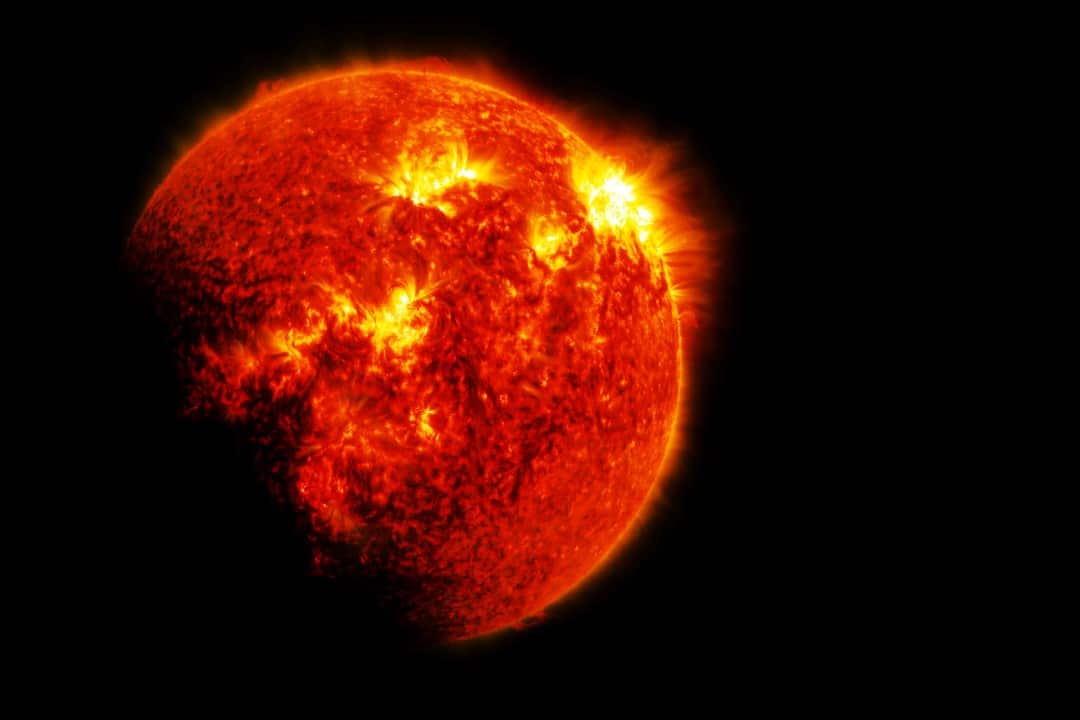
The space super telescope managed by the American agency has brought to light unprecedented information about the genesis of the celestial body 3I/ATLAS. Experts estimate that the space rock appeared about 10 to 12 billion years ago, an impressive milestone considering that the universe itself is approximately 13.8 billion years old, which makes this traveler much older than our central star and the entire known planetary neighborhood.
During the month of December 2025, the orbital equipment captured precise data about the object’s chemical signature as it began its path away from our star. This time frame proved to be perfect for data collection, as the rock had just crossed its perihelion, at which point the extreme heat converted its frozen surface into a thick, luminous cloud of gas, simplifying the researchers’ work.

The first surveys indicate that the relationship between carbon and deuterium present in the visitor’s structure differs drastically from the pattern seen in bodies formed in our cosmic neighborhood. Deuterium, which acts as a more robust version of hydrogen, functions as a true fossil thermometer, revealing the exact climatic and environmental conditions of the region where the block of ice and dust first took shape.
Understand the origin of the name given to the new space traveler
The technical nomenclature carries a specific meaning: the beginning “3I” indicates that this is the third errant body proven to come from outside the borders of our stellar domain. The “ATLAS” add-on pays homage to the continuous sky monitoring program, financed with resources from the American government, which managed to track the visual anomaly in a pioneering way.
According to Martin Coldiner, a specialist in space chemistry at the Goddard base and leader of the study, the current scenario offers a rare chance to investigate primitive fragments ejected from remote galaxies. The researcher highlighted that these pieces of matter carry secrets from ages before the birth of our own planetary backyard.
All the details of this scientific exploration appeared in the pages of the prestigious academic publication Nature. The complete material was made available to the international community from June 22nd, generating great repercussion among academics in the area.
To reach such conclusions, the group of astronomers used the NIRSpec spectrograph coupled to the state-of-the-art observatory. This highly sensitive sensor was designed to decode near-infrared radiation and map the periodic table floating in the dark vacuum.
Thanks to the precision of this technological lens, academics noticed that the level of the heavy isotope was thirty times higher than the normal level recorded in local neighbors. This chemical anomaly raises the strong suspicion that the rock was born in a sector of absolute cold, during the beginnings of galactic evolution.
The most accepted theory now suggests that the object’s raw material suffered a severe bombardment of cosmic radiation, but without going through prolonged heating cycles. This perpetual freezing ensured that heavy water was preserved in its original state, creating a molecular configuration very different from the water we consume on the globe.
Another intriguing fact captured by the orbital lenses was the scarcity of the isotope carbon-13 when compared to carbon-12, which has a lower mass. This imbalanced ratio works like an ancient birth certificate, as stars’ nuclear furnaces require multiple generations to manufacture and spread the heavier carbon throughout outer space.
For comparison, the space bubble that houses Earth has a notable abundance of this denser material. This makes perfect astronomical sense, as our cosmic address is considered relatively young, having started agglomerating dust and gas around 4.5 billion years ago.
Extreme conditions that shaped rock in the distant past
Scholars believe that the physical consolidation of the wandering body took place in the phase known as “cosmic noon”, a temporal window where the universe produced new stars at a frantic pace. Environments capable of forging structures with this chemical signature probably still remain hidden in icy and compact nebulae spread throughout the immensity of the dark.
To confirm the veracity of the numbers, a parallel team used the power of the Very Large Telescope, a structure operated by the European consortium in the Chilean desert. Under the leadership of Syriel Opitham, linked to the University of Edinburgh, this second survey focused on unraveling the fluctuations of nitrogen and carbon trapped in the visitor’s cyanide molecules.
What the discovery teaches about biology beyond Earth
Scientist Stephanie Milam, also linked to the Goddard center, made a point of highlighting that mapping these rare isotopes opens fundamental doors for astrobiology. Understanding this primordial chemistry helps piece together the puzzle of the basic ingredients that may have seeded living organisms in other corners of the Milky Way.
In her official statement, the researcher recalled that humanity still deals with a very restricted sample of biological data. To date, science has only been able to prove that the chemical soup resulted in complex biology in a single point of infinity: our own blue world.
According to the expert’s view, dissecting the anatomy of interstellar intruders that cross our path represents the best current strategy for astronomy. Only through this space archeology will it be possible to discover whether the recipe for life is a rule spread throughout the galaxy or just an isolated statistical miracle.





