
Scientific research deepens knowledge about an Asian fungus that induces hallucinations of tiny beings, opening new fronts in neuroscience

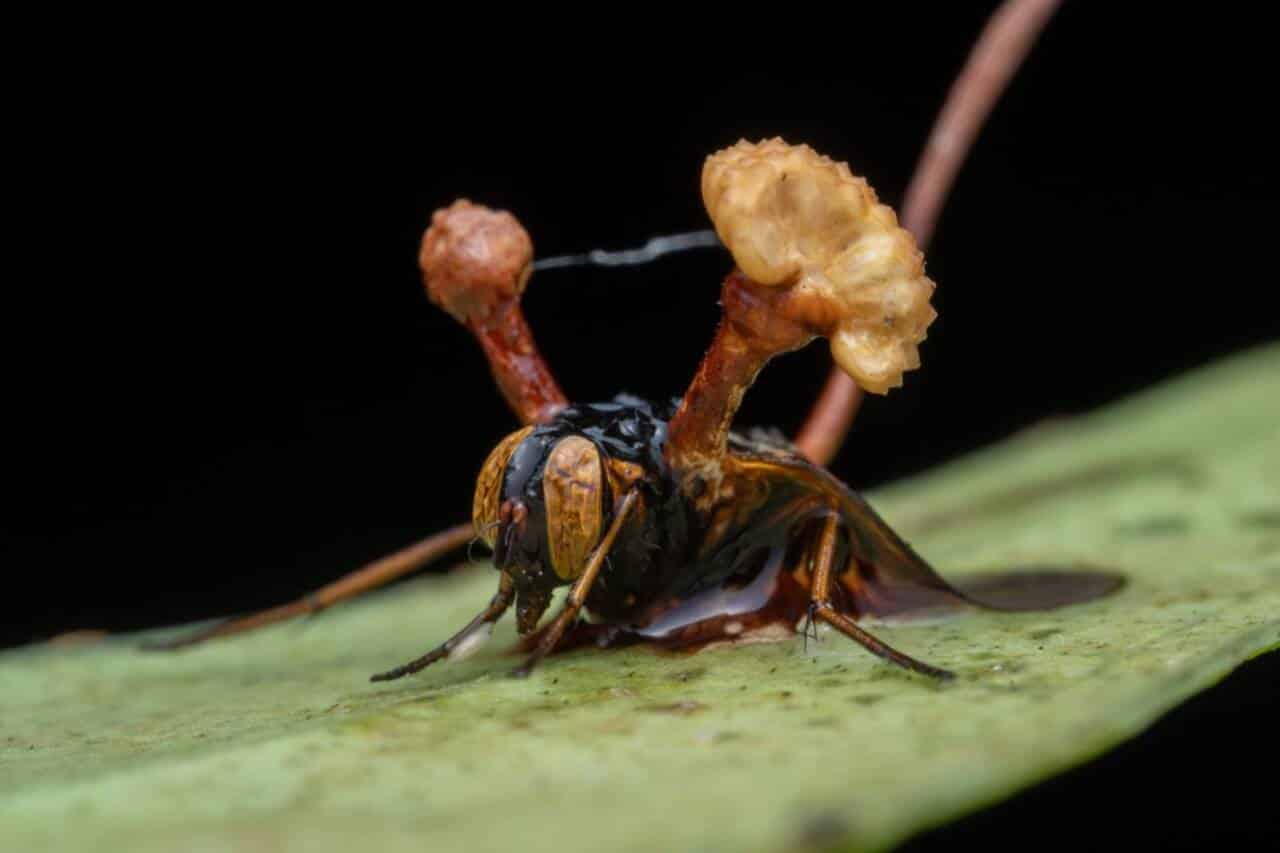
For years, the Western scientific community considered stories of hallucinations involving tiny people to be fanciful, a phenomenon popularly known as mushroom-induced Lilliputian visions. These accounts, which describe miniature figures dressed in vibrant colors interacting with their real surroundings, were often dismissed as mere tales.
In contrast to typical experiences of psychedelic substances, which alter colors, make objects pulsate, or generate geometric patterns, the hallucinations caused by this specific mushroom are distinct. Hundreds of people who have sought out clinics in Yunnan, China, during the summer mushroom season report a clear and largely unchanged view of the world.
The notable exception are the appearances of numerous tiny figures, such as elves, gnomes or clowns, who peek under doors, dive into bowls of soup and perform mischievous gestures. These unique experiences are reported by 90% of individuals who become ill after ingesting a single species of boletus mushroom, *Lanmaoa asiatica*, raw or undercooked.
These fantastic claims were ignored for decades, dismissed as “mushroom madness,” until Colin Domnauer, a graduate student taking an elective course on fungi, came across the rumors. Now a doctoral candidate at the University of Utah, Domnauer turned the search for and analysis of this mushroom into the central objective of his thesis.
His investigation took him to regions of China and the northern Philippines, hoping to identify a hallucinogenic compound that was probably unknown to science. Live Science magazine interviewed Domnauer to understand more about *L. asiatica*, the strange revelations it can bring to our perception of reality and the enigmatic fungal universe.
The species Lanmaoa asiatica: a fungus peculiar to Asia
Colin Domnauer is a doctoral student in ethnobotany at the University of Utah and the Utah Museum of Natural History whose research into a little-documented psychedelic mushroom is revealing an entirely new hallucinogenic compound.
*Lanmaoa asiatica* is a species of mushroom originating from Yunnan province, China. Although it was only described by science in 2015, it had been sold in local markets for many decades before being formally recognized as a distinct species.
Through Domnauer’s research, it was possible to conclude that this species is responsible for the unusual reports of hallucinations experienced by people consuming wild mushrooms in China and other parts of the world.
This mushroom establishes a mycorrhizal symbiotic relationship with pine trees, which means it cannot be cultivated artificially. Its presence is restricted to natural habitats, making its distribution difficult, but it is relatively common and valued in the places where it thrives.
Notable and prolonged effects of accidental consumption
For those who ingest a significant amount of *L. asiatica* raw or undercooked, researchers have not yet determined the exact dosage needed to trigger the phenomenon. Consumption usually occurs accidentally, as part of the diet, and psychoactive effects are seen as an involuntary consequence of overeating or insufficient cooking.
However, if a substantial amount is consumed, the best-known effects are Lilliputian hallucinations, which manifest approximately 12 to 24 hours after ingestion. These visions consist of highly detailed three-dimensional figures of people or tiny animals that populate the individual’s outer environment.
Hallucinatory creatures are not vague, but are perceived interacting with real-world objects, such as climbing on chairs and tables or passing under doors. Science, to date, does not understand the brain mechanisms that cause this phenomenon nor how to treat it, with this mushroom being the only one capable of producing such an effect consistently.
In southwest China’s Yunnan province, *Lanmaoa asiatica* is prized for its rich umami flavor, despite its side effects.
Initially, the scientific community dismissed these views as mere folktales or implausible. However, hundreds of people are affected annually in Yunnan, and numerous hospital reports document the effects. A specific study analyzed around 400 cases in one year, revealing that 90% of patients reported Lilliputian hallucinations, confirming them as a characteristic symptom of this mushroom.
Although not a frequently reported aspect, in some cases, both in China and other cultures, there have been mentions of verbal interaction.
The tiny beings are often described as playful, teasing, or mischievous, and rarely threatening, although some people occasionally feel uncomfortable.
In addition to visions, there are other clinically proven effects on the mind and body. Approximately 50% of consumers reported some gastrointestinal discomfort, although it is unclear whether this was caused specifically by the mushroom or other foods consumed.
An important aspect observed is that affected individuals often feel tired and delirious, symptoms that may provide clues about the mechanisms of action of this unknown compound. The effects are very different from those of already known psychedelic compounds, and hallucinations can persist for several days, unlike other substances.
Despite the intensity and duration of the effects, the hundreds of hospital reports curiously did not record any deaths or fatalities, nor abnormalities in the functioning of vital organs. Although it appears physiologically safe, this observation may be influenced by the fact that the data only come from patients who were hospitalized and received treatment.
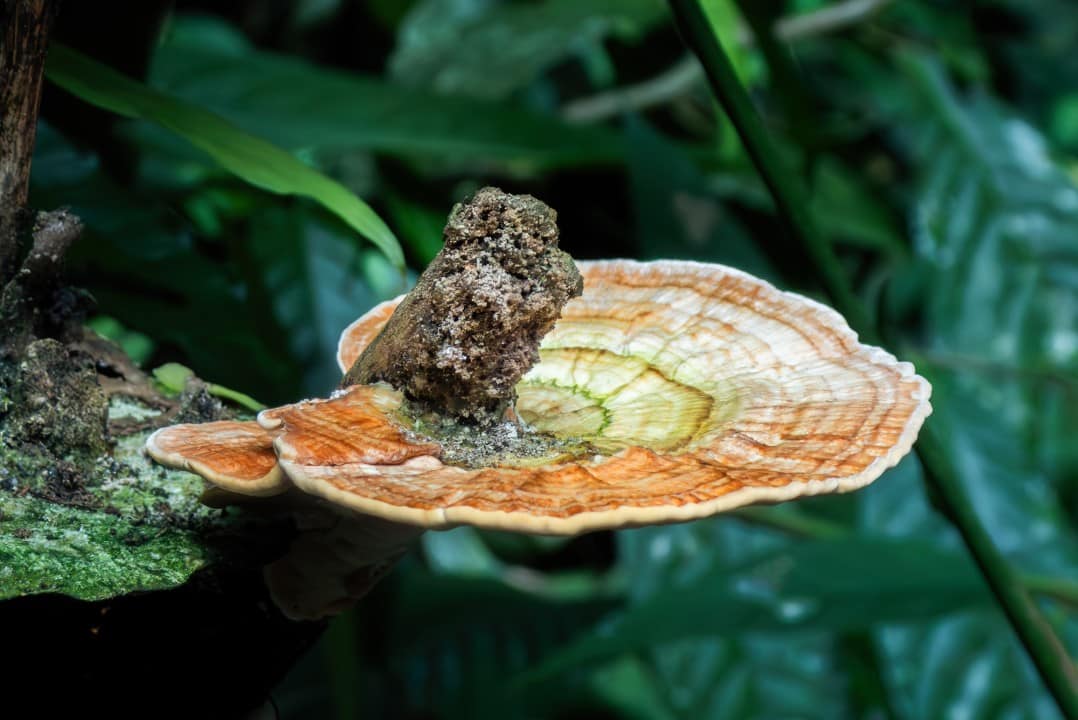
Cultural presence and the mystery of its scientific neglect
The *Lanmaoa asiatica* mushroom is found both in the Yunnan province of China and in the northern Philippines, where Colin Domnauer also personally identified it. In these places, the fungus is considered a tasty food with a great aroma, and is highly appreciated.
Interestingly, *L. asiatica* has never been incorporated into spiritual or religious practices due to its psychoactive effects. Hallucinations are seen as an accidental and, in a way, fun side effect of the food. Local communities do not intentionally seek these effects, but they also do not fear or avoid them.
Knowledge about the hallucinogenic property of the mushroom is widespread in these regions; people know that it can induce visions of tiny beings. Even so, they continue to consume it without fear, although they do not seek additional information about the phenomenon.
Yunnan province is famous as China’s wild mushroom capital, with the Mushuihua trading center offering more than 200 species of edible fungi.
It is intriguing that such a peculiar phenomenon has gone unnoticed by science for so long, with the mushroom having been scientifically described just a decade ago, and its psychoactive properties barely mentioned.
The first records of psychoactive billets date from the 1930s to 1960s in Papua New Guinea, a period before the recognition of psilocybin mushrooms. While psilocybin consumption has exploded globally over the last century, this mushroom has taken the opposite path and fallen into oblivion.
The reasons for this would be twofold: scientists who studied the mushroom in Papua New Guinea were unable to isolate any psychoactive compound or identify the species responsible. Furthermore, the symptoms, such as visions of tiny people, seemed so bizarre and fanciful that many believed that “mushroom madness” was just a social act, a myth, or an excuse for unusual behaviors, with no real physiological activity on the part of the fungi.
However, more recent reports from other cultures, such as China and, in the last two years, the Philippines, have begun to describe the same specific type of hallucination. Domnauer was able to demonstrate, through DNA sequencing, that both cases were caused by the same mushroom, confirming an underlying physical cause.
The path to discovery: from anecdote to molecular confirmation
Domnauer reported that his first contact with *L. asiatica* occurred during an undergraduate elective on mushrooms. The professor briefly mentioned an article about fungi in China that supposedly caused this effect.
The article described a mycologist’s experience in Yunnan, where locals commented that “these mushrooms make you see little men if you don’t cook them.” However, the mycologist was unable to identify the fungi and published his story as an anecdote, highlighting the need for more attention to the subject. Domnauer, upon researching further, realized that no one was studying the topic, which had been ignored or discarded for decades.
The strange and novel nature of the case, even with a small chance of being true, convinced him that it was worth investigating. It was then that he decided to dedicate his doctoral project to answering this question.
His first step was to travel to China, where the mushroom was better known and popular. Immediately, he realized that local residents had much more in-depth knowledge about the phenomenon than scientists. It was a common and well-known occurrence.
When talking to mushroom traders, he would ask which mushrooms caused small people to see, collect the ones he pointed out, and take them to his laboratory in Utah. There, he managed to sequence the mushrooms and determine their identity, discovering that they all belonged to the same species, which became the first major clue.
There were still no known psychoactive compounds that could explain the effects, suggesting that a new hallucinogen was waiting to be discovered.
For Colin Domnauer, embarking on a doctorate was an uncertain and risky endeavor. During his trip to China, he wondered if he would actually find something or if it would be a complete waste of time.
However, it was immediately clear that the phenomenon was incredibly well-known. When talking to locals and mentioning the mushroom, their faces would light up and they would share amazing stories. Far from being an obscure myth, it was an important part of their knowledge and cultural practices related to mushrooms, which was confirmed during their stay in China.
The definitive proof came years later, when Domnauer heard remarkably similar reports of mushrooms causing Lilliputian hallucinations in a completely different region of the world, the northern Philippines.
This sparked his interest: was it the same species from China or something completely different? As there was no sequencing or prior study of mushrooms in that region, he traveled there and, on the last day in the field, managed to find the mushroom that local residents associated with the sight of “little men”.
When he received the results of the DNA sequencing, Domnauer experienced one of the most exciting moments of his research. The mushroom was, in fact, the same species found in China, a completely unexpected find, as it was believed that *L. asiatica* existed only there. Now, there is a new record in a country that independently discovered the same psychoactive properties specific to this species.
In search of the compound: challenges and pharmacological advances
The most recent research, published this month by Colin Domnauer, focused on sequencing the complete genome of not just *L. asiatica*, but of all species in the group. The objective was to understand which psychoactive substances could be causing the effect and whether they were exclusive to this species or present in other fungi, requiring an understanding of the group’s evolutionary relationships.
When sequencing the genome, the team looked for genes known for the synthesis of psychoactive compounds, such as those needed to produce psilocybin, and found their notable absence. This discovery was confirmed by the analysis of a chemical extract from the mushroom, which also showed no traces of psilocybin.
The absence of any known psychoactive compounds strongly suggests that a new hallucinogen is waiting to be discovered, as nothing in the current database matches what has been found.
To isolate the psychoactive compound, Domnauer’s work involves a long and meticulous process. The task is to transform a complex organism, with hundreds of molecules, into a single molecule capable of causing a specific effect. The team tested chemical extracts on mice, administering the mushroom extract and a placebo to observe behavioral changes. With *L. asiatica*, the mice behaved significantly differently from the control group, demonstrating the presence of a bioactive effect.
Next, the mushroom contents are extracted and divided into approximately 20 fractions, each containing a different subset of chemical compounds. When testing each of these fractions in rats, it was observed that 19 had no effect, while one of them did. This method helps identify the chemical compound responsible for the effect.
There are also other more complex methods being investigated, but, to date, the chemical substance responsible has not yet been definitively identified.
Although the list of possible causes for the activity seen in rats has been narrowed down to a few candidates, it is uncertain whether what causes this activity in rodents is the same as what causes hallucinations in humans.
Mushrooms can have a variety of different bioactive effects, and more testing is needed to confirm whether candidates possess the specific hallucinogenic property. There is the possibility that they are following a false trail, which highlights the long time needed to definitively determine an active biochemical substance.
Uncovering the neuroscience behind Lilliputian views
Very little is still known about the parts of the brain activated during Lilliputian hallucinations. Although these hallucinations have been documented for over a century, occurring for non-mushroom-related causes such as alcohol withdrawal or in neurological conditions associated with old age (dementia, Charles Bonnet syndrome), there is no effective treatment.
Psychiatrists and neurologists lack effective treatment for these people because they do not understand how the phenomenon acts on the brain, keeping it a mystery to this day. It is hoped that more neuroscientists can use this mushroom as a study tool.
It is hoped that this fungus can offer a consistent tool to reliably reproduce these effects, providing crucial information about the brain and body mechanisms that trigger these Lilliputian hallucinations, something that science currently lacks to develop effective treatments for similar conditions.
Unlike psychedelics like DMT, LSD, and magic mushrooms, which generally affect serotonin receptors, there is no evidence that *L. asiatica* act in the same way. It cannot be said whether it acts at some earlier point in the nervous system, but the peculiar symptoms, which take 12 to 24 hours to begin and can last for several days, are distinct from any known receptor interactions of classic psychedelics, suggesting a more complex process in the body.
Colin Domnauer has not tried the mushroom himself, but notes that visual hallucinations, remarkably striking and completely integrated into the real environment, can become a valuable tool for understanding the mechanisms of perception and how we process reality in the absence of drugs.
He highlights that he does not know of any other substance capable of producing hallucinations that are so realistic and integrated into the real world. The expectation is that this singularity can provide insights into how the perception of reality normally works.
Other psychedelics often cause people to see real objects altered or to create patterns where none exist, being a distorted version of elements already present in the visual field. In the case of *L. asiatica*, the visual field remains unchanged, with the notable addition of hundreds of tiny, mischievous people.
It’s a truly different experience; While others alter existing objects or transport the mind to an internal world, this mushroom’s hallucinations are unique.
Seeing, with open eyes, the world as it normally appears, but with the addition of realistic human figures that other people don’t notice, is a truly impressive phenomenon.
Threats to fungal biodiversity and the urgency of conservation
The persistence of similar reports in Papua New Guinea intrigues researchers, who wonder whether *L. asiatica* is also present there or whether another mushroom is causing similar effects.
It is a big unknown, as there are no records of the occurrence of *L. asiatica* in Papua New Guinea, although it is possible that mycologists simply have not documented it, given that mycology is still a developing discipline and there are many parts of the world where fungal diversity is unknown.
The alternative would be the existence of a completely different mushroom with similar effects, which would be equally interesting, as it would indicate that the compound responsible may be more widespread and not exclusive to a single species, requiring further research.
The cultural use and consumption of these wild mushrooms in Papua New Guinea has declined significantly since the 1960s, when they were common. There have been no records of new cases of “mushroom madness” for decades, which can be attributed to the loss of local tradition or the deforestation of forests, a great mystery to be solved.
Some of the earliest 20th-century reports of Lilliputian hallucinations came from the Western Highlands province of Papua New Guinea.
Considering that mycology is a relatively recent field, with estimates of only 3% to 10% of the world’s fungal species ever described, the question of what else might exist is a fascinating one.
Domnauer shares this curiosity, which led him to the field of mycology. Initially fascinated by astronomy and exploring the unknown, he realized that an entire universe of life on Earth — fungi — had not yet been explored, directing his studies towards them.
He is certain that there are many other unusual, promising and interesting fungi just like this one, but points out that it is impossible to cite specific cases if they are not already known.
The researcher hopes that others can also replicate his findings.
Domnauer questions whether the “window of opportunity” for these discoveries will last, given that forests are being cut down, and the mushroom depends on a mycorrhizal symbiosis with trees.
He states that in addition to the loss of forests, cultures that hold traditional knowledge about these fungi are also being decimated, resulting in the loss of a vast accumulation of wisdom about the natural world, forged over thousands of years of experimentation, which is a tragedy.
The situation is compared to setting fire to a library that contains millions of years of evolution and thousands of years of cultural knowledge. Mushrooms go extinct daily, and many of them could contain promising new medicines, innovative substances that would change our understanding of ourselves and the world, or even offer solutions to environmental problems.
It is, without a doubt, a race against time, and Domnauer emphasizes that fungal conservation, cultural preservation and respect are essential measures.
The risks of experimenting and the researcher’s caution
When asked if he had ever consumed *L. asiatica* raw or rare to experience the visions, Domnauer admitted that he once wanted to. However, he never did so intentionally for two crucial reasons. First, the effects can last for several days and apparently cause delirium that can be quite unpleasant, constituting a serious experience.
Secondly, the exact dose of mushroom needed to induce the effects is unknown. People accidentally consume it with meals, and in some cases, experience psychoactive effects. Determining the quantity would require careful experimentation, gradually increasing the intake of raw mushrooms, a process that would require a lot of time and a large amount of fungi.
Although he is very curious, which led him to study the mushroom, he does not feel the need to prove himself, given the existence of hundreds of reports. Personally, at the moment, he considers it not worth the effort to experience hallucinations for several days.





