
Understand the new model that explains the construction of a complex brain from a single cell

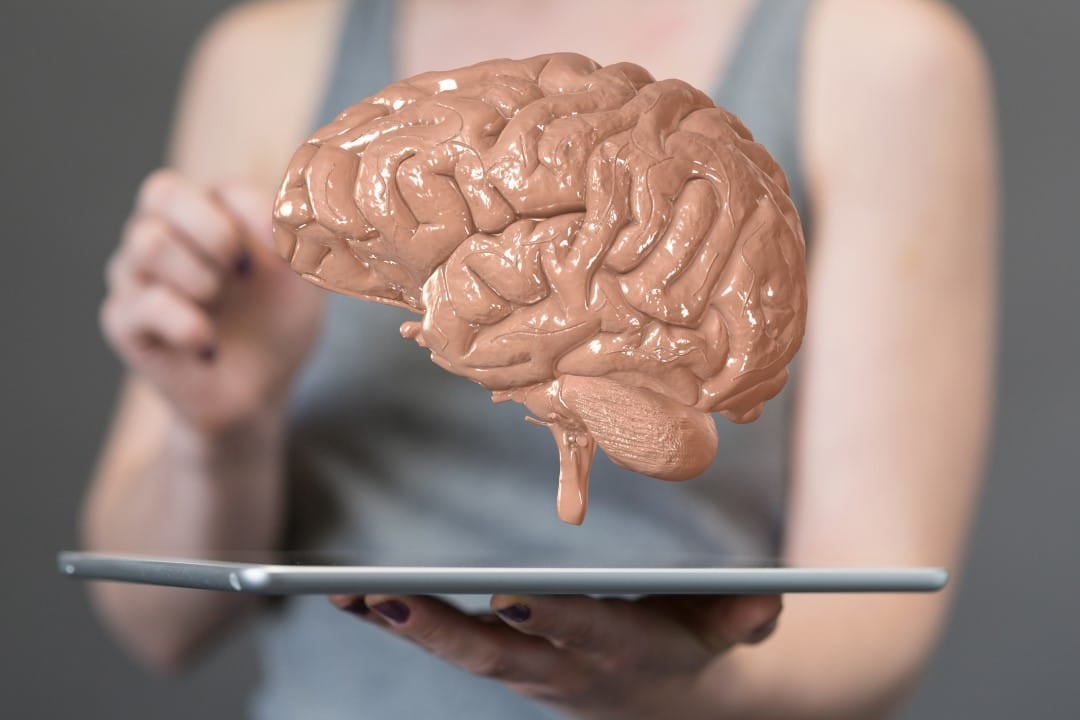
Researchers reveal a fundamental principle that could unravel how an isolated cell is capable of forming a brain with billions of meticulously organized neurons. The new hypothesis suggests that brain cells use their origin, that is, their cellular “family tree”, as a system of positional coordinates.
The human body begins in a single cell. Over time, this primordial structure generates an organ of extraordinary complexity, housing around 170 billion cells. One of the big unknowns in developmental neuroscience is how all these cells position themselves correctly to create a functioning brain.
Scientists at Cold Spring Harbor Laboratory (CSHL) now believe the answer to this complexity may be surprisingly straightforward. Recent discoveries offer new knowledge about brain organization during development and may, in the future, influence studies in several areas, from biology to artificial intelligence.
How brain cells define their position in development
The challenge is understood in terms of spatial information, as detailed by Stan Kerstjens, postdoctoral researcher in Professor Anthony Zador’s laboratory. He explains that “the only thing a cell ‘perceives’ is itself and neighboring cells.” However, your destination is tied to your location. A cell in an inappropriate place develops incorrectly, preventing proper brain development. Therefore, each cell needs to answer two essential questions: “Where am I?” and “What do I need to become?”
In a paper published in the journal *Neuron*, Kerstjens, Zador and a team of collaborators from Harvard University and ETH Zurich present a novel theory that describes how the developing brain achieves this impressive level of organization.
Going beyond communication through chemical signals
For many decades, the scientific community widely believed that cells convey location information through chemical signals. According to Kerstjens, this explanation works well in smaller systems, with a limited number of cells.
However, the growing brain contains billions of neurons, and each of them must reach its exact location. As chemical signals lose intensity as they propagate, researchers have long questioned how cells located in the deepest layers of a developing brain can determine their position accurately.
Kerstjens points out that part of the solution may lie in a process that resembles the way human populations disperse over generations.
“Think about how human populations spread across a country over several generations”, explains the researcher. “Descendants settle close to their parents, which results in people who share ancestors ending up in neighboring regions, creating large-scale geographic structures without the need for long-range communication. Our proposal is that a similar principle operates in the developing brain: cells that descend from the same progenitor tend to remain close to each other.”

Testing an innovative pedigree-based model
To investigate this hypothesis, the researchers devised what they describe as a “scalable lineage-based positional information model.”
Initially, theoretical calculations were used to verify the feasibility of the concept. Next, gene expression patterns were analyzed in developing mouse brains, encompassing both single cells and larger cell clusters. The model was later applied to zebrafish, revealing similar findings and suggesting that the mechanism can operate in brains of different sizes.
The findings indicate that both chemical signaling and cell lineage can act together to provide crucial positional information during development.
Ramifications for biology and artificial intelligence
Although the research is focused on brain development, Kerstjens notes that the fundamental principle can be applied to many other developing tissues, including tumor processes.
The theory may also have relevance for future self-replicating artificial intelligence systems. In the same way that brain cells can inherit information across generations, future AI models that transmit data from one generation to the next could potentially be based on similar organizational principles.
Perhaps the most significant implication is what the work can reveal about intelligence itself. Understanding how a single cell turns into a highly organized brain can help scientists answer some of the deepest questions about the human mind.
“Somehow the brain makes us smart,” says Kerstjens. “How did he manage to accumulate this ability, not just during his development, but over evolutionary time? This is one part of this great enigma.”





