
At 41 years old, Cristiano Ronaldo is still central in Portugal but the use of Martínez generates criticism

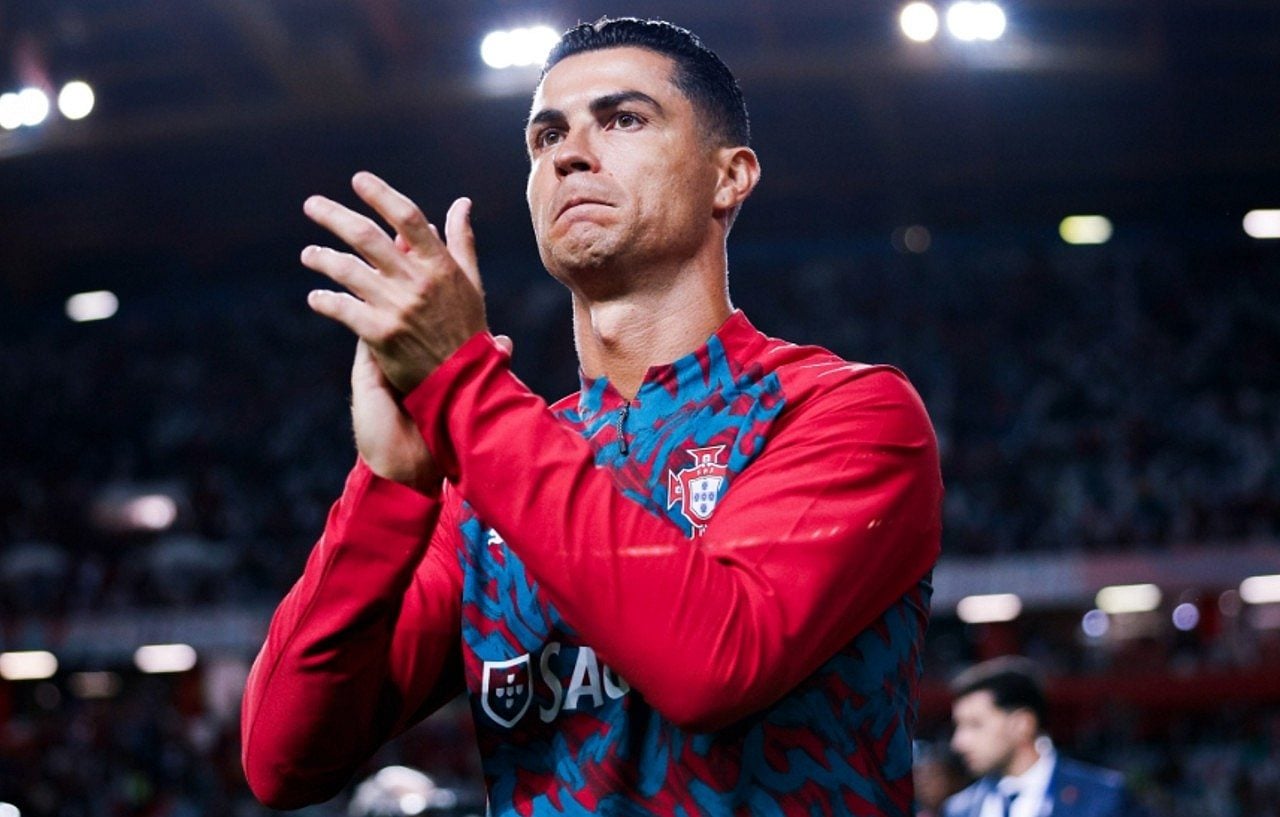
Cristiano Ronaldo’s name continues to be at the center of discussions in the Portugal national team, on the eve of a decisive knockout clash against Croatia.
At 41 years old, the Portuguese star is no longer treated like an ordinary athlete. Every appearance on the field by the number 7 now comes accompanied by rigorous evaluation.
When he scores, he reaffirms his unquestionable value. However, the lack of goals quickly raises the question: is the Portuguese team developing an excessive dependence on Cristiano Ronaldo?
The recent 0-0 draw against Colombia intensified this discussion. In that match, Ronaldo had just 35 touches of the ball, remaining almost isolated in the offensive sector and with little effective participation in the penalty area.
It is important to highlight that it was not a confrontation where Ronaldo received a lot of support. When midfield and defensive athletes fail to get into gear, even the best-positioned attacker finds obstacles in making a difference.
However, the central issue lies in another aspect. Ronaldo played the full 90 minutes in all three group stage games. Even in Portugal’s 5-0 victory over Uzbekistan, with the score already at 4-0 after 60 minutes and the star having already scored two goals, coach Roberto Martínez chose not to replace him. This type of decision goes beyond simple professional analyzes and raises questions about energy management and squad optimization for decisive phases, a crucial factor in modern high-intensity football.
Roberto Martínez declared that “playing the 90 minutes is not a problem for Cristiano”. From an individual fitness perspective, this statement could be true, given that Ronaldo is famous for his impressive stamina and exemplary professionalism. However, today’s top-level football requires more than just the ability to run for an entire match. The crucial point is whether the team can optimize its game pace, marking intensity, squad rotation and the vitality of its athletes for the knockout matches.
It is no coincidence, therefore, that the comparison with Lionel Messi arose. Messi was rested in a game against Jordan, entered the field afterwards and scored with a free kick. Ronaldo, on the contrary, was on the field uninterruptedly. Martínez rejected this comparison, classifying it as “childish”. However, managing the physical condition of a star player in today’s football is not a simple task; It is an integral part of a well-defined strategy.
Roberto Martínez’s tactical decisions cause disagreements about the use of CR7 on the field
The challenge for Portugal lies in the fact that Ronaldo’s impact remains unquestionable. He is not on the field just to wait for the ball and finish. Martínez has insisted on the player’s role inside the area, attracting opposing defenders and opening spaces for Bruno Fernandes or Vitinha to infiltrate from the second line. In a team with so many creative midfielders, Ronaldo’s positional obedience is seen as an essential tactical tool.
However, this difference only manifests itself when the tactical scheme works cohesively. If Ronaldo is isolated, as happened in the game against Colombia, Portugal will not only lose a striker, but also a fundamental tactical element in the second half. Under these circumstances, keeping him on the field for the entire 90 minutes becomes a very questionable choice.
Confrontation with Croatia revives Cristiano Ronaldo’s milestones and tests coach
For the clash against Croatia, Martínez indicated that there is room for changes in the team. However, it is difficult to imagine that Ronaldo would not start in a direct elimination game if he were fully fit. This opponent even brings back several memorable memories for the attacker. He already found the back of the net against Croatia on one occasion, scoring his 900th Nations League goal. In the five previous duels against the Balkan national team, Ronaldo recorded three wins, one draw, one defeat and scored three goals.
The next clash with Luka Modric, therefore, does not just represent the reunion of two great football icons. It is also a true test of Martínez’s personality. An excellent coach not only respects the legacy of a superstar, but must be shrewd enough to prioritize the collective interests of the team above any individual preference in the player lineup.
Cristiano Ronaldo still has the ability to decide a match in the blink of an eye. However, Portugal, which aims to go far in the competition, cannot depend exclusively on this perception. For Martínez, the real question is not whether Ronaldo deserves to be a starter, but rather whether he will have the courage to integrate him as part of a tactical scheme, rather than allowing the team’s entire strategy to revolve around the player.





