

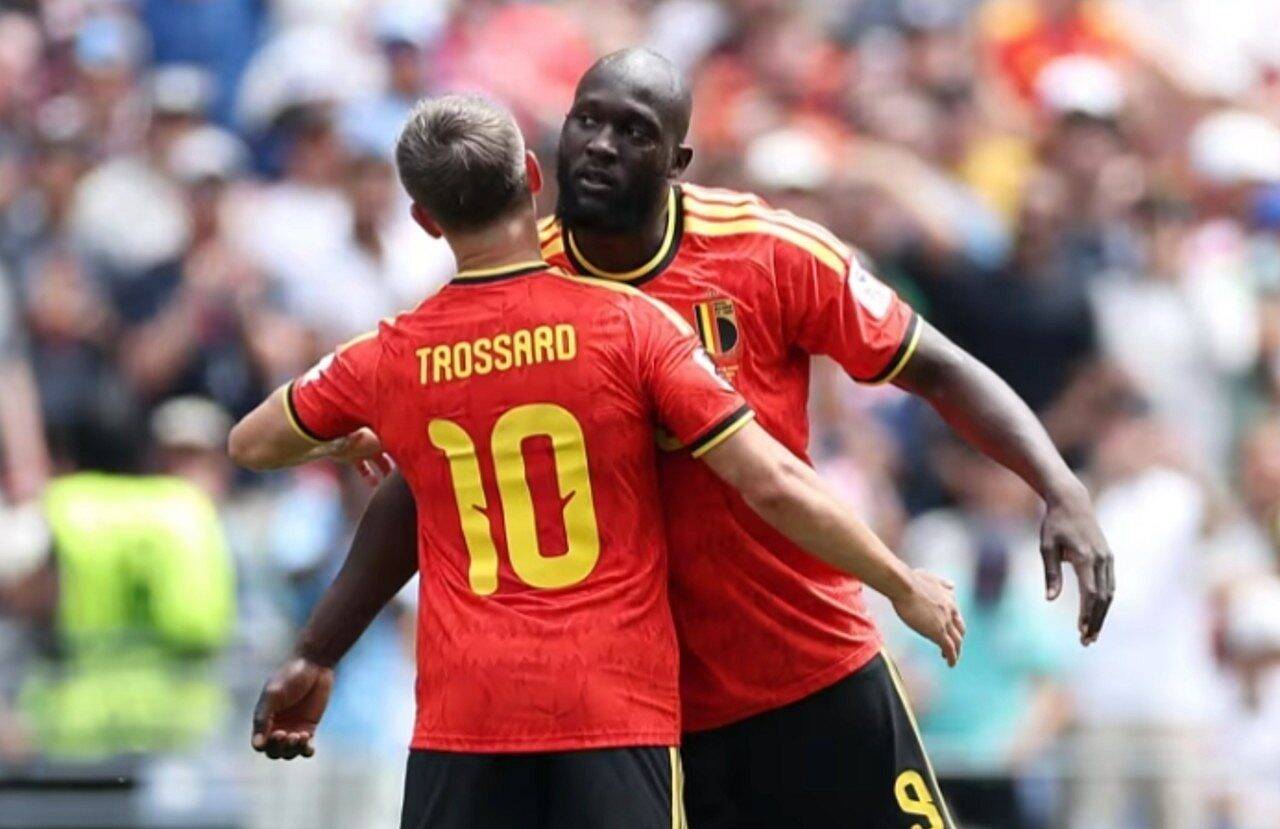
Romelu Lukaku, Belgium’s main offensive star in the current World Cup, boasts a deep connection with Brazil. The European team’s top scorer not only speaks Portuguese, but is also a declared admirer of Adriano Imperador and shows great appreciation for Brazilian cuisine, such as feijoada and guaraná. Your team is preparing to face Senegal this Wednesday, July 1st, at 5pm (Brasília time), in a game valid for the second phase of the tournament.
The previous Monday, the 29th, the attacker surprised by answering a question in Portuguese during a press conference. This fluency is not new; Lukaku developed it almost 15 years ago, when he became friends with Brazilian midfielder Kanu, then his teammate at Anderlecht and now at KVV Zelzate. Since then, he has cultivated friendships with countless Brazilian players wherever he has been.
During the same interview, Lukaku expressed his affection for Brazil and the country’s players. “I have many friends from Brazil”, he declared. He recalled his time at Chelsea, where he had David Luiz as a colleague: “In my first year at Chelsea, I was with David Luiz a lot. Every day with him, I learned many things about professional football. He is truly a partner with whom I have a very good relationship. Many thanks to him too”, said the player in Portuguese, when commenting on the match against Senegal.
Lukaku’s connection with Brazil dates back to his childhood, driven by a deep admiration for former player Adriano Imperador. The Belgian, who idolized the “Emperor” during his time at Inter Milan, developed a style of play with notable similarities to that of the Brazilian. Years later, when he also wore the Italian club’s shirt, Lukaku had the opportunity to discuss these similarities with his idol.
In addition to football, Romelu Lukaku enjoys typically Brazilian flavors, such as guaraná and feijoada. It is common for him to share photos with Brazilian friends whenever he consumes the national soft drink. For him, the flavor of the beans is reminiscent of Congolese dishes, which connects him to his family’s roots.
Contrary to admiration, there was a moment when the connection between Lukaku and Brazilian football became a point of pain. In the 2018 World Cup, in the quarter-finals, the Belgian striker played a decisive role by acting versatilely, leaving the area to create opportunities. His assist resulted in Kevin De Bruyne’s goal that eliminated the Brazilian team from the tournament. In the current competition, however, his performance is marked by a phase of recovery from physical problems, which has made him start games on the bench, in contrast to his protagonism in other editions, raising questions about his decisive impact on Belgium’s campaign. This time, a confrontation between the two teams would only be possible in a possible final.
Lukaku’s impressive linguistic range places him as a true polyglot, mastering at least eight languages. In addition to Portuguese, he communicates in German, Spanish, French, Dutch, English, Italian and Lingala, the latter one of the Bantu languages originating in the Democratic Republic of Congo, the country of his parents.
At 33 years old, this edition of the World Cup could represent the number 9’s last participation in World Cups. He has faced constant fitness problems, resulting in a recent season of just one goal in seven games for Napoli. He arrived at the championship in a recovery phase, which led him to start on the bench in two of the three group stage matches.




