
Hyundai Motor Group and KAI restart AAM aircraft project from scratch for 2034 launch


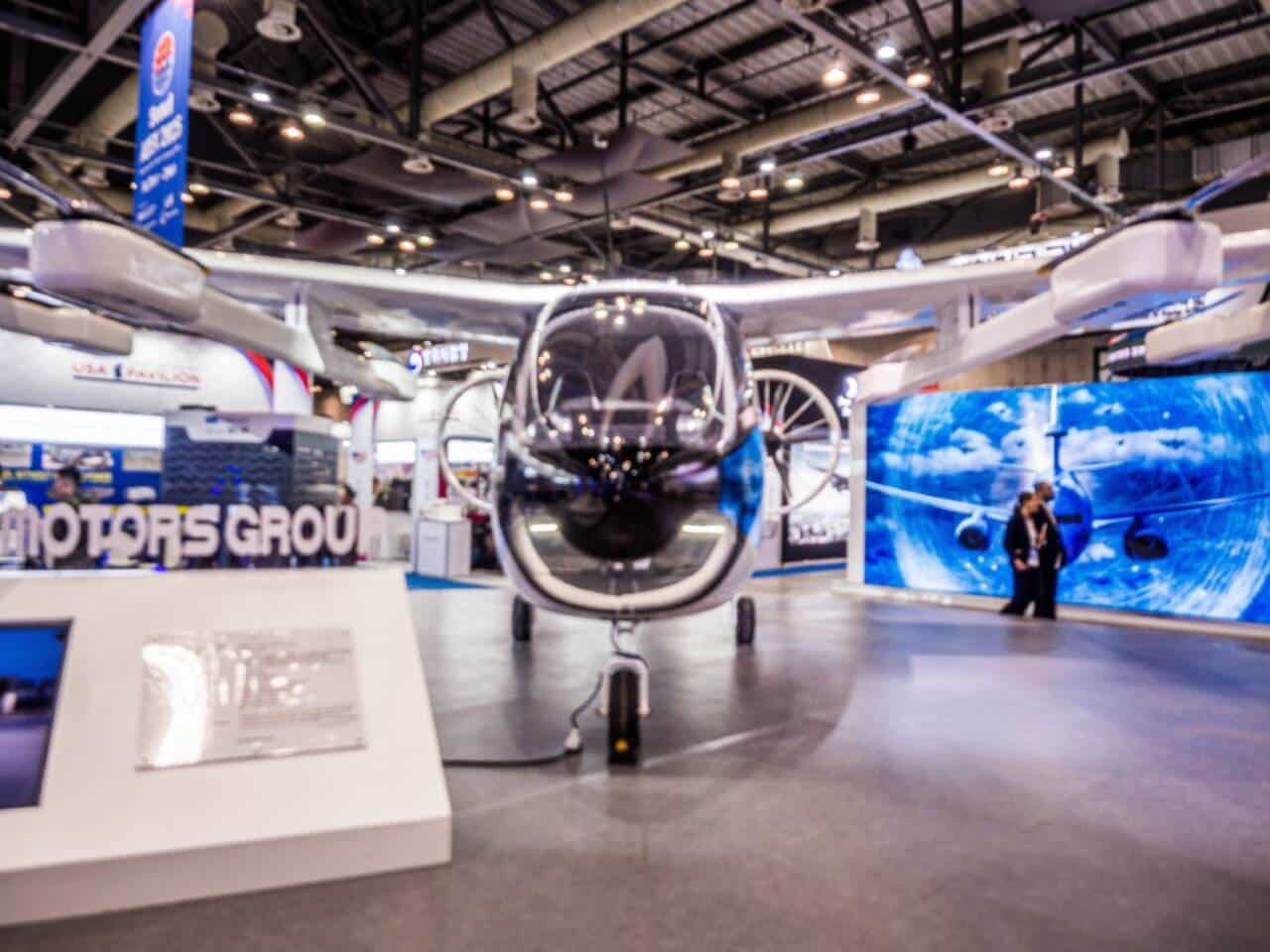
Hyundai Motor Group and Korea Aerospace Industries (KAI) are resuming and completely refocusing their Advanced Air Mobility (AAM) efforts in South Korea. After a period of stagnation in the sector, the companies opted for a collaborative project, establishing an ambitious strategic plan that aims for commercialization by 2034. This partnership represents a significant boost to the development of Urban Air Mobility (UAM) in the country, marking a transition from individual approaches to a joint effort, which the companies hope will increase the chances of success.
AAM Aircraft Development Seeks Certifications, Expanded Use
According to industry information dated June 25, Hyundai Motor Group and KAI are in the discussion phase for the creation of Advanced Air Mobility (AAM) aircraft, with the primary objective of obtaining certifications from the US Federal Aviation Administration (FAA) and the South Korean Ministry of Land, Infrastructure and Transport by 2034. Furthermore, the initiative intends to expand the scope of application, transforming the platform into a dual-use system. It will cover everything from urban passenger transport to cargo transport, the removal of patients in emergencies to island regions and also reconnaissance and military supply operations.
Discussions about cooperation, including the possibility of a joint venture (JV), have been taking place since May last year, when a Memorandum of Understanding (MOU) was signed for joint development. AAM is conceived as an evolution of Urban Air Mobility (UAM), representing a next generation aviation platform capable of going beyond passenger transport in urban environments, also encompassing military and logistics purposes.
Since 2023, KAI had carried out numerous modifications to its own AAM airframe design, with seven revisions and numerous flight, wind tunnel and computational fluid dynamics (CFD) tests, but without achieving the desired performance. Given this, the decision to collaborate with the Hyundai Motor Group led to the agreement to redesign the fuselage completely from scratch, abandoning the previous design. The expected schedule indicates the completion of the joint fuselage project by 2027, with the Type Certification (TC) request to the American and Korean authorities scheduled for 2028. The goal is for the system to be ready for commercialization in 2034, after completion of the certification process, which requires approximately six years.
This new commercialization timeline is two to three years behind KAI’s initial 2031-2032 forecast, when the company was still operating independently. The adjustment is due to the time required to completely redesign the aircraft’s shape, which in itself can take around a year.
Roles defined for Hyundai Motor Group and KAI in the project
The expectation is that the union of efforts will overcome the difficulties faced by both companies in their autonomous developments. KAI, for example, faced a substantial internal development burden after recording four failures in preliminary feasibility studies for its national AAM R&D project. Independent development was found to have inherent limitations, considering that creating a single airframe could cost approximately 800 billion won.
Hyundai Motor Group also attempted development on its own through its US-based subsidiary Supernal, but faced delays in development and certification deadlines, which resulted in organizational restructuring and staff reductions. At one point, there was even speculation about Hyundai’s possible exit from the AAM segment.
Learning from past challenges, the two companies converged on “collaboration” as the primary strategy. The plan is to combine Hyundai Motor Group’s electrified propulsion systems and global business expertise with KAI’s extensive experience in developing aircraft systems, conducting flight tests and certification processes. KAI is also evaluating the possibility of integrating low-orbit communications satellites, currently under development with the Ministry of Science and ICT and the Electronics and Telecommunications Research Institute (ETRI), to establish the AAM control and communications networks.
An important decision was to employ a fully electrified propulsion system for the aircraft, which will be based on the concept of electric vertical takeoff and landing (eVTOL) aircraft. As noted by an industry expert, the transition of domestic companies from individual development to a collaborative system is a milestone. “With the transition of domestic companies from individual development to a joint development system, the probability of success in K-UAM development is expected to increase,” he stated, highlighting that “this collaboration could represent a significant turning point for the domestic AAM industry.”





