

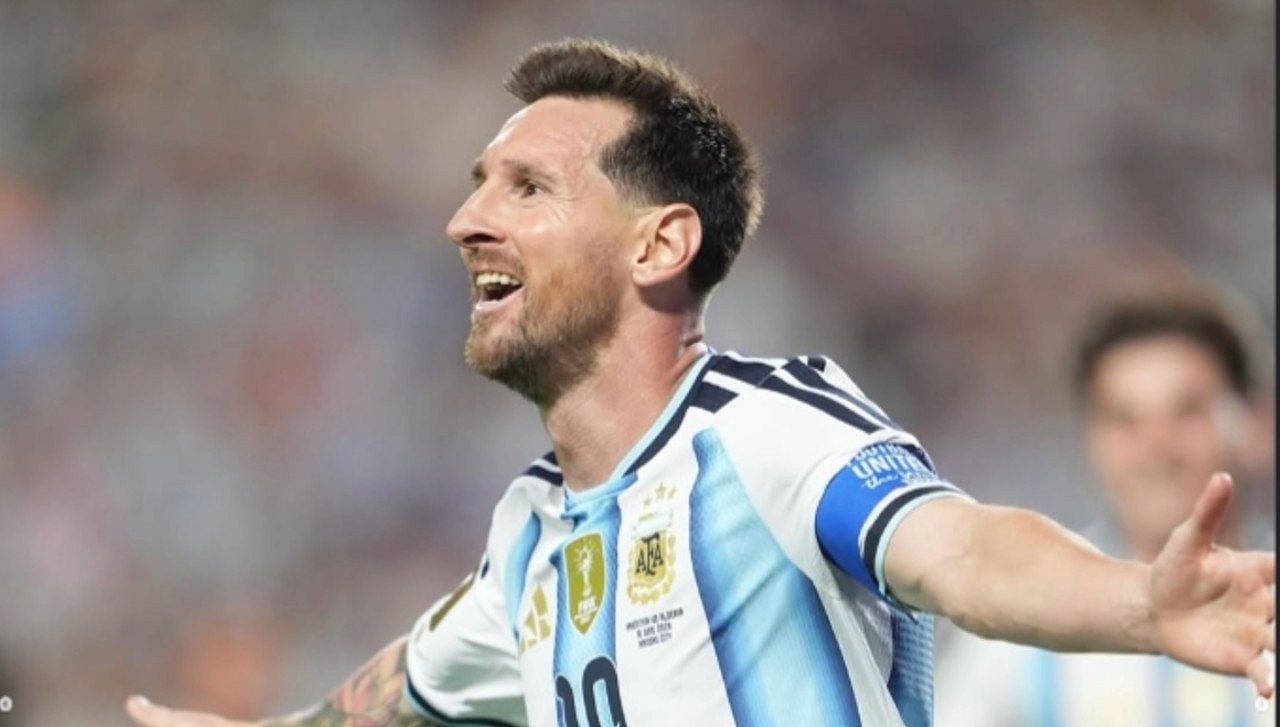
Lionel Messi, who recently turned 39, demonstrates at the 2026 World Cup that success in elite football does not just depend on speed and intense physical vigor, defying the expectations of contemporary sport. Data from the company Opta indicated that the Argentine captain had the lowest displacement rate among all line athletes monitored in the opening phase of the tournament.
Opta’s analysis revealed that Messi covered an average of just 8.1 kilometers every 90 minutes of play. This mark placed him in last place among the 618 outfield players who spent at least 90 minutes on the field during the group stage, showing how his tactical intelligence and positioning overcome the need for continuous running, a trend that is increasingly valued in the sport.
Even with the lower intensity of movement, Messi is among the top scorers of the 2026 World Cup, with a total of six goals scored in his three performances in the initial phase. French player Kylian Mbappé equaled that mark with six goals, after scoring two in the 3-0 defeat of Norway, in a second phase clash. Argentina’s next challenge is scheduled for this Friday, against Cape Verde.
In his debut in the championship, the Argentine star was the scorer of the three goals that sealed Argentina’s 3-0 victory against Algeria, being taken off the field in the 35th minute of the second half. With this performance, he reached the feat of German Miroslav Klose, becoming one of the greatest scorers in the history of the World Cup, with 16 goals.
Later, in the clash against Austria, where Argentina won 2-0 in the second round, Messi played for the entire match. He scored two goals, with the second being converted in the final minutes, consolidating him as the absolute record holder for goals in World Cups.
In the third and final match of the group stage, against Jordan, Messi started on the bench, only entering 15 minutes into the second half. Even with limited participation, he managed to find the net once again, confirming the 3-1 victory and increasing his remarkable tally to 19 goals in World Cups.
Without counting stoppage time, Messi spent 200 minutes on the field in the group stage, which is equivalent to an average of 66 minutes per game. Impressively, he scored a goal every 33 minutes played, attesting to his high effectiveness and influence, even with a strategy that prioritizes minimizing constant running.




