
Brain under general anesthesia processes language and predicts words, challenging concepts of consciousness


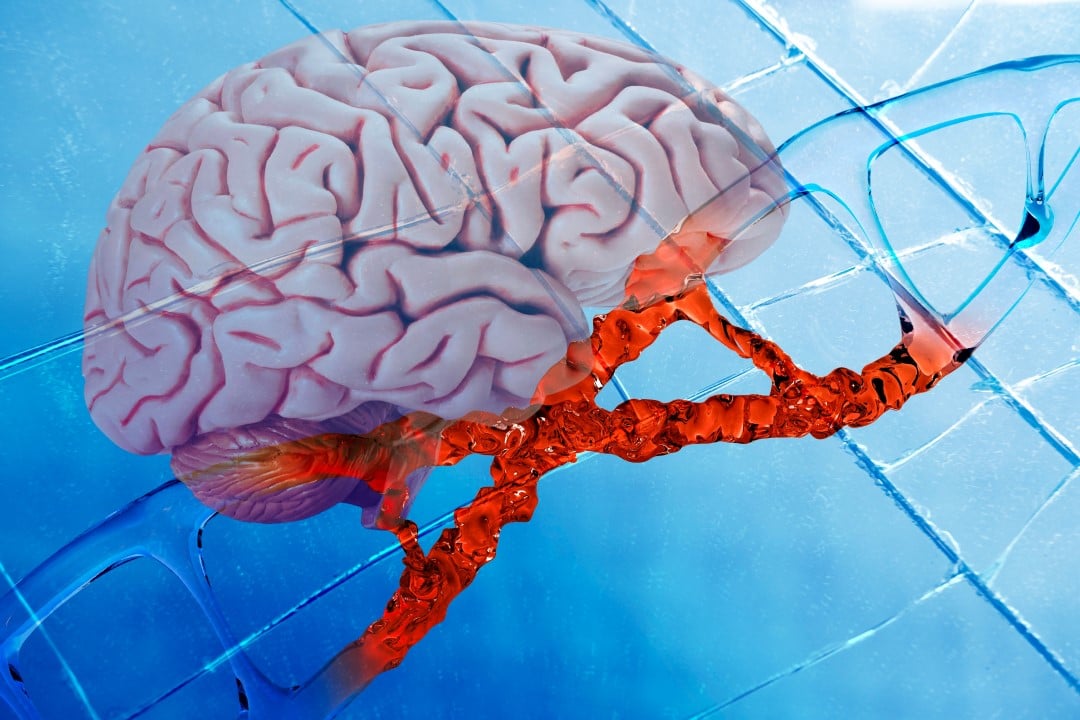
The human brain, even in a state of deep unconsciousness induced by anesthesia, demonstrates a much greater capacity than previously imagined, as new research reveals. Patients under general anesthesia were able to process language at a sophisticated level, distinguishing parts of speech and even predicting future words, indicating that neural activity may be more complex than previously thought. The discoveries, led by experts at Baylor College of Medicine, question traditional notions about consciousness and pave the way for the development of new brain-computer interfaces.
The team of researchers from Baylor College of Medicine identified that the brain organ can perform surprisingly complex linguistic activities, even when the individual is completely unconscious. These results, detailed in an article published in the renowned journal Nature, break with long-held assumptions about the link between conscious perception and cognitive function. Furthermore, the findings offer important directions for future studies in fields such as memory, speech understanding, and neural interface technologies.
“Our observations indicate that the mind is considerably more active and alert during the period of unconsciousness than previously believed,” said Dr. Sameer Sheth, professor and holder of the Cullen Foundation Chair in Neurosurgery at Baylor. “Even when individuals are completely sedated, their brain circuits continue to analyze environmental stimuli.”
Understanding the complex brain activity during anesthesia
To investigate the brain’s abilities in an unconscious state, Sheth and his collaborators recorded the activity of hundreds of isolated neurons in the hippocampus region. This area is crucial for memory formation and was monitored while patients underwent epilepsy surgery under general anesthesia. Such procedures offered a unique chance for researchers to directly examine this essential part of the brain.
The experts used Neuropixels probes, a cutting-edge technology that had never been applied to the hippocampus for this specific type of study. This innovation made it possible to observe how the brain reacted to different sounds and language itself, even in the absence of any awareness on the part of the patients.
An initial experiment exposed participants to sequences of repetitive tones interspersed with unexpected sounds. The researchers noticed that neurons in the hippocampus consistently identified these unusual tones. Most notably, the brain’s efficiency in recognizing them increased over time, suggesting an ongoing learning process or neural plasticity, even during anesthesia.
Subsequently, the complexity of the study was expanded, with stories being reproduced for patients while brain activity continued to be recorded. The hippocampus exhibited clear signs of real-time language processing. Neural activity patterns demonstrated that the brain was capable of differentiating between different grammatical classes, such as nouns, verbs and adjectives.
The research team also made a remarkable discovery. They found that neural signals can be used to anticipate words that would still be spoken, even before they are emitted.
“The brain seems to predict what’s coming in a narrative, even without any conscious awareness of it,” commented Sheth, who also directs the Gordon and Mary Cain Pediatric Neurology Research Foundation Laboratories at the Duncan Neurological Research Institute at Texas Children’s Hospital. “This form of predictive coding is something we usually associate with wakefulness and mindfulness, but it’s occurring here in a state of unconsciousness,” added Dr. Benjamin Hayden, professor of neurosurgery at Baylor.
Implications of the study for understanding consciousness
The results indicate that significant cognitive abilities, including the ability to understand language and make predictions, may not be entirely dependent on consciousness. Instead, consciousness itself perhaps arises from the interaction and communication between multiple brain regions, rather than from the isolated activity of a single area, such as the hippocampus. The researchers also drew parallels between the brain’s predictive behavior and the way artificial intelligence (AI) works, noting that just as large language models generate text by anticipating the next word, the hippocampus appears to make similar predictions during language processing. Understanding these shared principles can enrich understanding of biological and artificial intelligence, accelerating the development of new technologies.
This work could also bring significant advances to future communication technologies, such as the creation of speech prostheses. These innovations could benefit individuals who have lost the ability to communicate verbally.
“Can we use these signals to implant and operate a speech prosthesis in areas of the brain that have been damaged by a stroke or injury? These are questions that we can now consider in relation to this specific region of the brain,” asked Dr. Vigi Katlowitz, first author of the study and neurosurgery resident at Baylor.
Challenges and the future of research into the unconscious brain
The researchers emphasize that the findings must be interpreted with caution. The study only looked at one type of general anesthesia, which means the results may not be applicable to other conditions of unconsciousness, such as natural sleep or coma. Furthermore, the investigation focused on a single area of the brain, and the extent to which these processes occur throughout the organ remains to be fully clarified.
“This study motivates us to reevaluate the very definition of being conscious,” concluded Sheth. “The brain performs many more activities behind the scenes than we understand in its entirety.”





