

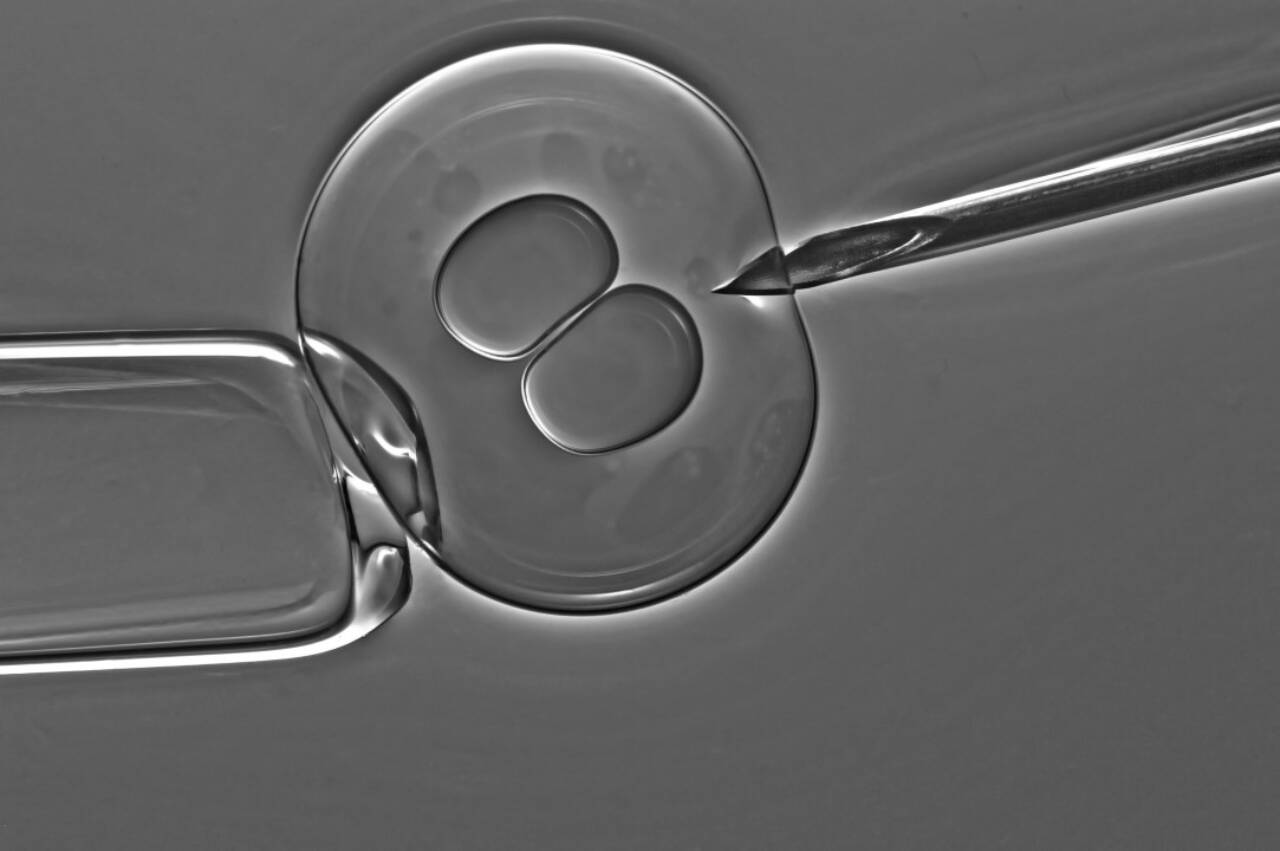
A recent investigation conducted at Columbia University, located in the United States, explored an innovative methodology for gene editing in human embryos. The study used a technique known as base editing, which proved to be more effective and pose less risk compared to previous strategies, by modifying genetic sequences linked to sickle cell anemia and cardiovascular conditions, paving the way for the development of future therapies against hereditary genetic diseases.
Researcher and embryologist Marcos Iuri Kulmann, the only Brazilian scientist participating in the international project, explained that the team’s main focus was to verify the feasibility of editing human embryos, minimizing the complications that were observed in pre-existing genome editing technologies.
In a statement about the research, Kulmann emphasized that although the findings represent a fundamental step forward, clinical application of these findings will require many additional years of research and validation.
“This research serves as an initial project to understand whether this technology could safely adjust embryos. Although we have a long way to go, we have already started this journey”, declared embryologist Marcos Iuri Kulmann.
Kulmann was part of the research team during his doctorate in the Czech Republic and clarified that all trials were conducted strictly in laboratory environments. The results of this study are currently under rigorous analysis by other scientists in the peer review phase.
The embryos used in the experiments were donated by couples who had completed their in vitro fertilization treatments and had no further intention of using them. After the analyzes were completed, none of the embryos were transferred to a uterus.
The researcher pointed out that, currently, no nation authorizes the implantation of embryos that have been genetically modified. According to Kulmann, “Our study was carried out in New York, where couples who no longer wish to use their embryos can donate them to specific research projects. These embryos can be genetically manipulated, but not implanted.”

Unraveling the mechanics of the innovative genetic approach
To understand this discovery, it is helpful to view DNA as a comprehensive “instruction manual” for the organism. This map contains all the information that directs the functioning of cells and defines the individual characteristics of each human being. When an error occurs in these instructions, diseases of genetic origin arise.
According to Kulmann, the most widely recognized method for making these corrections is CRISPR-Cas9, which received the Nobel Prize in Chemistry in 2020. This tool acts like “molecular scissors”, capable of identifying a specific segment of DNA and “cutting” the two strands that make it up, allowing the cell to carry out the repair.
However, in human embryos, the repair process does not always proceed as expected, and the modification of a gene can sometimes result in the loss or alteration of an entire chromosome. It was exactly this difficulty that the new study set out to overcome.
Instead of cutting both strands of DNA, the technique improved by the team of scientists promotes a much more subtle change. It modifies only one of the strands and replaces a single “letter” in the genetic code, which facilitates the repair process by the cell itself.
“It is no longer scissors as it was before. It is, we could say, a pair of scissors, because it cuts just one strand of DNA and promotes the change of a single nucleotide”, explained Kulmann.
This intervention occurs when the embryo still consists of a single cell, shortly after in vitro fertilization. At this initial stage, the researcher emphasizes that editing a single cell is significantly simpler than trying to modify millions of cells in an already developed organism.
“The technology is introduced into the egg at the same time that the sperm is injected. In this way, from the beginning of development, the DNA of that embryo is already being edited”, explained the specialist.
Kulmann revealed that the embryos used in the investigation were able to progress normally to the blastocyst stage and also generated embryonic stem cells. This demonstrates that, in the early stages of development, the technique did not affect the growth of the embryos.
Potential benefits and ethical challenges of technology
For researcher Kulmann, the main promise of the technique lies in the possibility of, in the future, correcting genetic mutations responsible for hereditary diseases even before the embryo develops. This is especially relevant for conditions caused by a single genetic change, such as sickle cell anemia, cystic fibrosis, and Huntington’s disease.
At the same time, he warns that there is still not enough evidence to transpose this technology into routine clinical practice. “We need further investigations for other genes and diseases, in order to confirm whether the safety we identified in this study can be consistently replicated”, he pointed out.
The scientist also emphasizes that the technique, at its current stage, is not a strategy to increase longevity or postpone aging. Although, in theory, genes related to longevity could be targets for future research, Kulmann says that this perspective raises important ethical debates.
“These results encourage us, as a society, to have in-depth discussions to establish clear guidelines on in which contexts this technology can be applied,” noted Kulmann.
He argues that employing gene editing to alter human characteristics, such as intelligence or life expectancy, would shift the technology away from treating disease and toward what is called “human enhancement.” This topic, in turn, still divides the scientific and bioethics community. “It will be imperative to clearly define the limits for the application of each of these technologies”, concluded Kulmann.




