


Scientists have dedicated nearly a century to studying the life cycles and collapses of massive stars. The cataloging of these events in modern astrophysics began in the 1930s. Researchers Fritz Zwicky and Walter Baade were pioneers in differentiating between typical supernovae and smaller novae, associating these large explosions with the formation of ultra-dense neutron stars. Later, in 1941, astronomer Rudolph Minkowski collaborated with Baade to classify supernovae based on their unique light signatures.
Cosmic taxonomy was expanded significantly in the 2010s, when astronomers detected superluminous supernovae. These rare events, sometimes referred to as hypernovae, are notable for their intensity, surpassing the brightness of conventional supernovae by a hundred times. They occur when the core of a star collapses under its own gravity, which results in the fragmentation of its outer layers and the formation of a black hole or neutron star.
Data analysis reveals details about the cosmic engine behind explosions
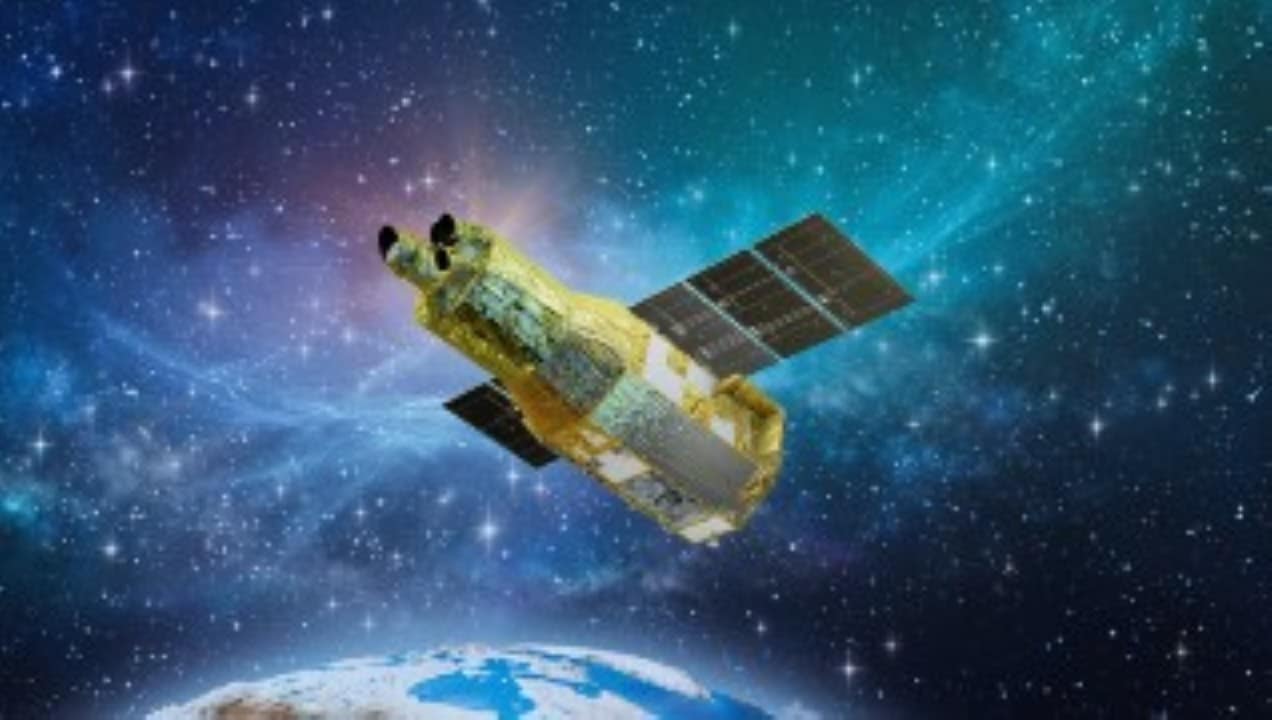
A team of international researchers was dedicated to analyzing data provided by NASA’s Fermi Gamma-Ray Space Telescope. The objective was to better understand these exceptionally bright stellar explosions. The study was led by Fabio Acero, a researcher at the French National Center for Scientific Research (CNRS) and the French Alternative Energies and Atomic Energy Commission (CEA), and its conclusions were published in May 2026 in the journal Astronomy & Astrophysics.
Researchers were able to successfully identify gamma-ray emissions originating from a superluminous supernova called SN 2017egm. This impressive event occurred in the galaxy NGC 3191, which is located approximately 440 million light-years from Earth, in the constellation Ursa Major.
The Fermi satellite recorded the presence of gamma rays several months after the initial visual flash appeared. This particularity differentiates the phenomenon from the more common gamma ray bursts, which generally disappear in a matter of minutes. The months-long lag offered the team an unprecedented opportunity to investigate the residual energy source driving the explosion.
Magnetars stand out as most likely explanation for extreme supernovae
Traditionally, astrophysicists employ two main models to explain the occurrence of superluminous supernovae. One of the proposed scenarios involves the presence of a dense circumstellar medium, where the star, in an advanced stage of its life, expels several layers of gas thousands of years before its final collapse. When the star explodes, the high-speed debris collides with these older layers of gas, and subsequent shock waves compress and heat the gas, converting the kinetic energy into intense light radiation.
The second theory postulates an internal energy source, such as a newly formed black hole or magnetar. A magnetar is a neutron star that rotates at high speed and has an extremely powerful magnetic field. Its rotation takes place in milliseconds around its own axis, generating a strong wind of high-energy particles that injects an immense amount of energy into the expanding layer of the supernova.
The gamma-ray data collected by Acero’s team provides strong support for the magnetar hypothesis over the gas collision model. The satellite recorded an intrinsic gamma-ray glow that was nearly equivalent to the supernova’s visible light emission, a level of gamma radiation so intense that it could not be generated by thermal processes resulting from collisions between layers of gas alone. Furthermore, the gamma rays escaped precisely at the moment when the expanding debris cloud became sufficiently rarefied to allow the high-energy light to pass through. This timing aligns perfectly with the mathematical predictions of the magnetar model, offering new insight into how these extreme events release so much energy.
Opening a new perspective for the study of extreme physics in the universe
This discovery represents a milestone, being the first time that astronomers have possibly observed the emergence of a magnetar. Currently, gamma rays constitute the only viable method for investigating the internal mechanisms of these extreme magnitude stellar explosions.
Scientists plan to integrate future observations from the Fermi Space Telescope with data from the Cherenkov Telescope Array Observatory, which is still under construction in Chile and the Canary Islands. The goal is for the new observatory to be able to collect detailed information about gamma rays a few months after an explosion, enabling researchers to study these hyperbright events more regularly.




