
Portugal overturns Croatia with an unprecedented goal from Cristiano Ronaldo and advances to the 2026 World Cup

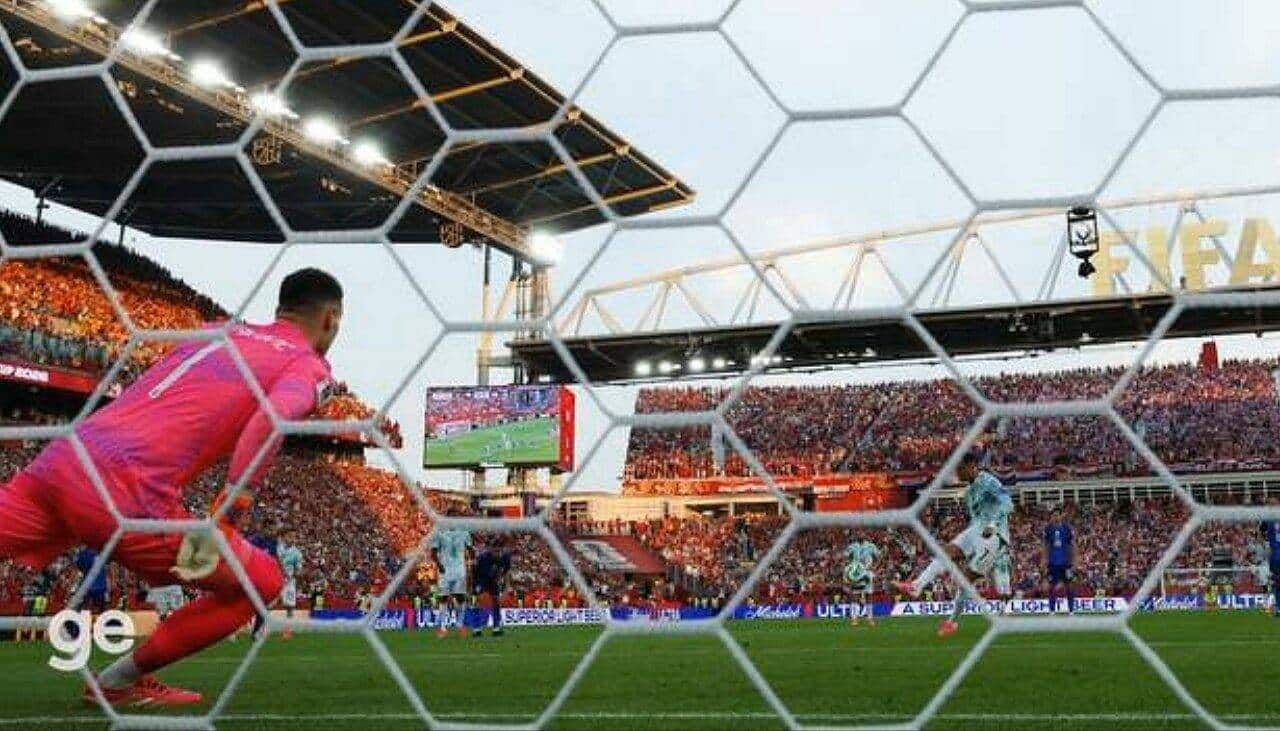
The Portugal team stamped their passport to the round of 16 of the 2026 FIFA World Cup after a high-voltage clash against the Croatian team. The Toronto Field pitch was the scene of a match that was decided only in the final moments, culminating in a 2-1 score for the Lusitanians. The confrontation required enormous resilience from the Portuguese squad, who had to seek the result after falling behind on the scoreboard during the second stage.
The tournament based in North America has provided games of great physical exhaustion, and this European duel was no exception. The two teams had an intense tactical contest from the opening whistle, with defensive systems prevailing throughout the first forty-five minutes. The need for victory to guarantee classification without depending on other results forced both teams to adopt more aggressive stances after the break.
Fans present in the Canadian stands witnessed a second half that concentrated all the emotion absent in the initial stage. The dynamics of the game changed drastically, transforming a studied match into a true test of the hearts of football fans, with technology interventions, disallowed goals and an unusual amount of extra minutes.
Opening of the scoreboard and the initial scare for the Portuguese defensive system
The match script took on dramatic contours just seven minutes into the second half. The Croatian team, known for its efficiency in short-shooting competitions, managed to break through the opponent’s block with a precise finish from Perisic. The goal forced Portugal’s bench to immediately rethink its strategy, as the partial defeat put the plan drawn up for the tournament at risk.
The disadvantage on the scoreboard tested the maturity of the Portuguese team, which needed to advance its lines without offering space for the opponent’s dangerous counterattacks. Possession of the ball began to be managed with greater urgency, seeking infiltrations from the flanks of the field. The nervousness was evident, but the tactical organization was maintained as the players tried to find a gap in the solid Croatian defense.
It was through an infiltration move that the scenario began to change. In the 19th minute, midfielder Renato Veiga invaded the penalty area and ended up being grabbed by Vlasic. The field referee initially let the game continue, but the VAR team recommended reviewing the move. After checking the monitor at the edge of the pitch, the maximum penalty was confirmed in favor of Portugal.
Video arbitration intervention and the historic milestone of the Portuguese captain
The responsibility for the charge fell to Cristiano Ronaldo. In the 22nd minute, the veteran striker showed his usual coolness and hit the goal firmly, without giving any chance of defense. The draw not only put his team back in the game, but also broke an uncomfortable taboo in the athlete’s career: this was his first goal scored in a knockout phase in the history of World Cups, a feat that was missing from his vast international resume.
The exhaustion caused by the intensity of the match and the weather required a break right after the celebration. At 24 minutes, the referee stopped the match to allow the athletes to hydrate. The brief break served for the coaches to adjust the positioning of their players, preparing the ground for what would be an absolutely unpredictable final stretch of the game.
Equality on the scoreboard gave the Portuguese confidence back, but Croatia did not show any dejection. The game became a straightforward duel, with both teams looking for the winning goal at all costs, aware that a draw could complicate their hopes of qualifying depending on the future bracket.
European pressure, ball on the post and the protagonism of goalkeeper Diogo Costa
Portugal’s defensive system went through moments of extreme instability right after the draw. In the 29th minute, Kovacic found space and fired a shot that exploded off the post. On the rebound from the same play, the Croatian midfielder himself tried again, but was stopped by a spectacular save from goalkeeper Diogo Costa, who stepped up to keep the score equal.
The Portuguese archer’s star shone again just two minutes later. Matanovic received the ball inside the area with freedom to finish, but Diogo Costa made another providential intervention. The opposing pressure was suffocating and the feeling in the stadium was that the Croatian comeback could happen at any moment.
The drama reached its peak in the 34th minute, when Sucic found the net for Croatia. The celebration, however, was interrupted by an offside call, maintaining the Portuguese side’s relief. Shortly after, in the 36th minute, Portugal’s coaching staff decided to withdraw Cristiano Ronaldo for Rúben Neves. The captain left the pitch showing clear frustration with the substitution, while the team tried to reinforce the midfield to contain the rival attacks, which were still frightening with a dangerous header from Pasalic in the 43rd minute.
Decisive cross in stoppage time and relief with confirmation of place
Regulatory time came to an end with the appointment of ten minutes of extra time, reflecting the VAR stoppages and the hydration break. It was exactly in this extra period that Portugal found the way to victory. In the 48th minute of the second half, Rafael Leão executed a millimetric cross from the left side of the attack.
Striker Gonçalo Ramos, demonstrating excellent time on the ball, rose higher than the pair of Croatian defenders and tested firmly, beating goalkeeper Livakovic. The turning goal caused an explosion of joy in the Portuguese bench, crowning the team’s insistence on seeking the result even in moments of greatest defensive difficulty.
The final minutes were marked by pure tension and successive stoppages. Perisic was cautioned with a yellow card in the 52nd minute. In the 60th minute, well beyond the initially scheduled extra time, Croatia had another goal disallowed by VAR, this time due to Pasalic being offside after Matanovic’s touch. The final whistle only echoed at Toronto Field in the 63rd minute of the second half, sealing the dramatic Portuguese classification.
X-ray of the match shows control of ball possession by the winning team
The final numbers of the confrontation help explain the dynamics established on the Canadian lawn. The Portuguese team managed to translate their game volume into real opportunities, keeping the ball under their control most of the time and dictating the pace of offensive actions.
The official statistical survey by the tournament organization detailed the collective performance of the two teams during the more than one hundred minutes of ball rolling:
- The Portugal team recorded 16 total shots, hitting the target on 8 occasions.
- The Croatian team took 12 shots at the opponent’s goal, requiring saves from the goalkeeper on 6 occasions.
- Control of ball possession ended with the Portuguese advantage, scoring 56% against 44% for the Croatians.
- Precision when exchanging passes was a Portuguese distinguishing feature, reaching 90% accuracy in a total of 559 attempts.
- The Croatian team completed 404 passes throughout the duel, maintaining an accuracy rate of 83%.
The disciplinary balance also marked the clash, with both teams committing a similar number of infractions and receiving few warnings from the referee. The victory guarantees the continuity of the Portuguese project in the world competition, while the technical committee now turns its attention to the physical recovery of the squad before the next challenge in the knockout phase.





