
Possible prehistoric buried ring discovered in Scotland that could be a monument similar to the famous Stonehenge

In the heart of one of Scotland’s most significant prehistoric regions, researchers have identified evidence of a likely circle of stones or wooden posts, previously hidden beneath a layer of peat. This finding has the potential to integrate yet another element into a complex of ritual constructions that has intrigued the scientific community for decades.
The structure, which has not yet been confirmed by excavation, is located underground at Machrie Moor on the Isle of Arran, Scotland. This area is already recognized for its abundance of menhirs, burial sites and places of worship dating back to a period between 3500 and 1500 BC. The geophysical survey, conducted by experts from Historic Environment Scotland with devices that detect magnetic variations without intervention in the soil, was crucial for identification.
Initially, the research aimed to evaluate the efficiency of contemporary archaeological tools in terrain with dense peat cover. However, what was revealed was the surprising discovery of this hidden circle.
“It is undeniable that there are still many archaeological remains to be uncovered at Machrie Moor, but the identification of a new circle has completely exceeded our projections,” said Nick Hannon, senior heritage registration manager at Historic Environment Scotland, in a June 30 press briefing.
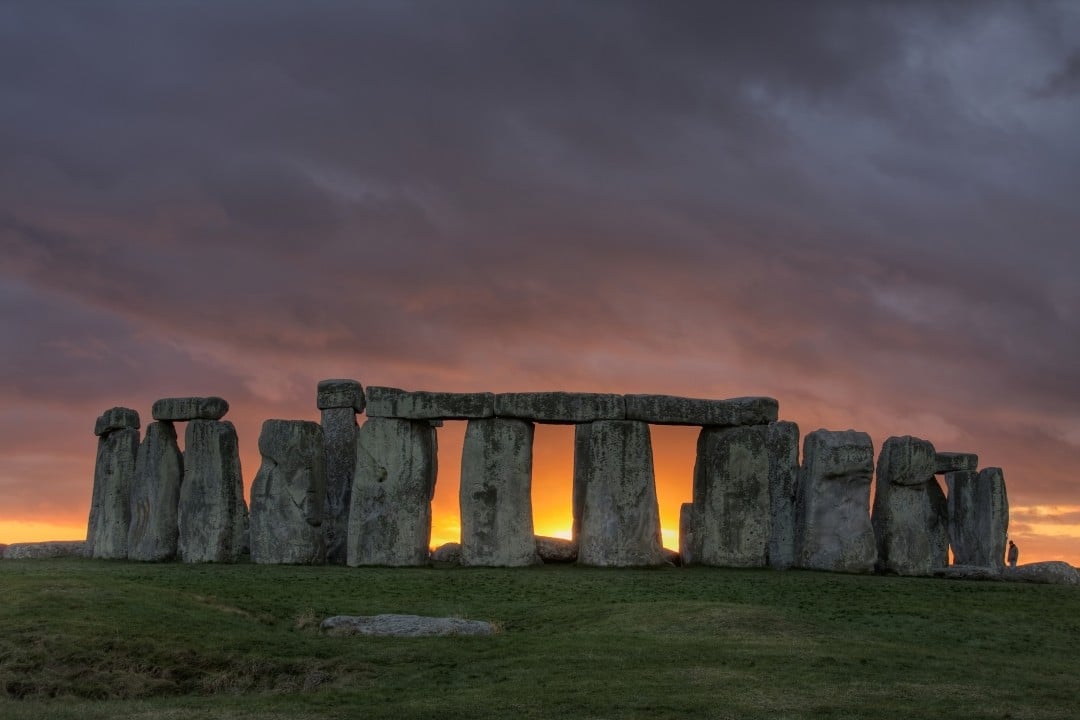
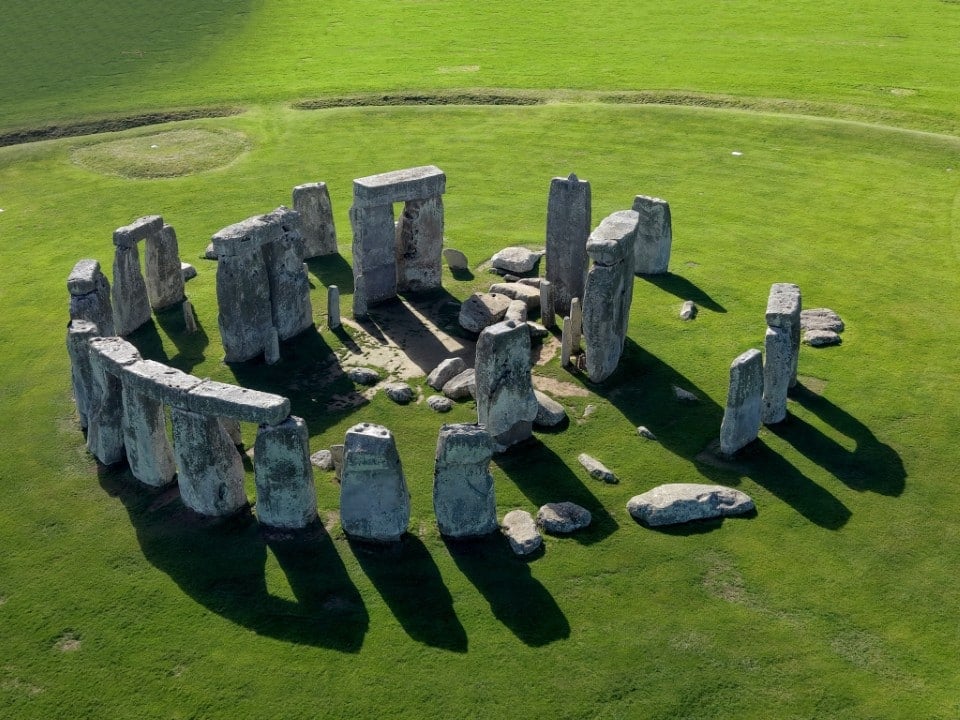
While Stonehenge is the best-known circular prehistoric monument globally, it represents just one of countless circles built in Britain and other parts of continental Europe in the Neolithic and Bronze Age periods. Machrie Moor, in turn, stands out as one of the most complete sets of these ceremonial landscapes, having recorded six similar circles since the 1980s. This density of finds highlights the cultural and ritualistic importance of the region for ancient civilizations, which dedicated great efforts to the construction of places aligned with natural and celestial phenomena.
Additionally, archaeologists found that there is additional information to be explored about already recognized monuments. At Machrie Moor Circle 2, for example, the research team detected a set of anomalies indicating that the formation could have been composed of 14 stones, instead of the seven or eight estimated in previous reconstructions.
A notable feature is the common orientation of these circles: they are aligned with a specific point in Machrie Glen, where the sun rose during the summer solstice. This pattern suggests that astronomy possibly played a crucial role in the rituals conducted in these spaces.
Details about newly found archaeological anomalies
Unlike other circles previously detected in this area, the monument that has just been identified has not yet been excavated. Instead of direct intervention, experts mapped a pattern of magnetic anomalies, which are small distortions in the terrain often associated with the presence of archaeological elements, such as ditches or holes that housed posts.
According to the published report, the structure presents 12 circular-shaped anomalies, similar to moats, forming a circle approximately 28 meters in diameter. These depressions are spaced approximately 6.5 meters apart. Two unusually wide openings suggest, in the researchers’ assessment, the possible existence of two extra pits that have already degraded. If this hypothesis is confirmed, the monument would have originally been composed of 14 posts or menhirs.
“To date, there is no evidence that any of these anomalies contain stones,” the scientists recorded in the document, which leads to the conclusion that the circle may have been built with wooden posts or menhirs, which were removed at a later period.
Previous excavations have already shown that several other stone circles at Machrie Moor had their origins as wooden formations. Later, around 2000 BC, the wooden posts were replaced by stones. Furthermore, traces of cremations and human burials were found within some of these structures, indicating an evolution in the monuments’ purposes throughout their existence.
“It is quite likely that the most recently discovered circle was built at a similar time to the other circles still present at the site,” said representatives of Historic Environment Scotland in their official statement.





